South & Southeast Asia
Hyderabad State
At a glance
- Founded in 1724 by the Mughal viceroy Nizam-ul-Mulk, Asaf Jah I, who made the Deccan his hereditary domain.
- A British ally under a subsidiary alliance from 1798, it became the largest and richest princely state in India.
- Its last Nizam sought independence in 1947; India annexed the state in Operation Polo in September 1948.
Rise & Fall
- 1724Nizam-ul-Mulk defeats Mubariz Khan at Shakar Kheda
- 1728Baji Rao I defeats Nizam-ul-Mulk at Palkhed
- 1763Nizam Ali Khan moves the capital to Hyderabad
- 1798Subsidiary alliance with the East India Company
- 1853Berar’s revenues assigned to the British; Salar Jung I becomes chief minister
- 1918Mir Osman Ali Khan founds Osmania University
- 1948The Indian army takes over the state in Operation Polo
- 1956Hyderabad State is divided on linguistic lines
Foundation
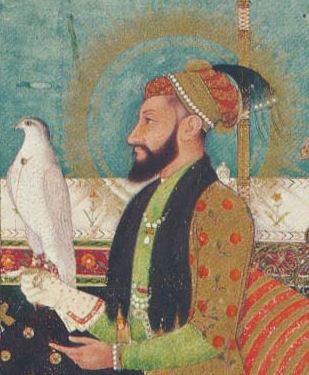
Hyderabad State grew out of the Mughal administration of the Deccan, the plateau of south-central India conquered by Aurangzeb in the 1680s, when the sultanates of Bijapur and Golconda fell. Its founder, Mir Qamar-ud-din Khan (1671–1748), was a noble of Central Asian descent who had served Aurangzeb and received the title Nizam-ul-Mulk. Appointed viceroy of the six Mughal provinces of the Deccan in 1713, he seized control of the region again in 1720 and then served as imperial chief minister (wazir) from 1722, but he became disillusioned with the factional politics of Delhi. In 1724 he left the capital without permission, and when the governor favoured by the court, Mubariz Khan, opposed him, Nizam-ul-Mulk defeated and killed him at the Battle of Shakar Kheda in October 1724. From then on he governed the Deccan as a hereditary ruler, while continuing to acknowledge the Mughal emperor, issuing coins in the emperor’s name and avoiding the title of king. He received the title Asaf Jah, which gave the dynasty its name, and made Aurangabad his capital. The state that emerged was large but under constant pressure from the Marathas, and its boundaries shifted repeatedly during the eighteenth century. In 1763 Nizam Ali Khan moved the capital to the old Qutb Shahi city of Hyderabad.
Socioeconomy
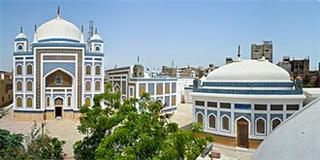
Hyderabad was the largest and most populous of the Indian princely states, covering some 214,000 square kilometres and home to more than sixteen million people at the census of 1941. Its society was marked by a sharp divide between rulers and ruled. The court, nobility and much of the administration were Muslim and Urdu-speaking, while over four-fifths of the population was Hindu and spoke Telugu, Marathi or Kannada. Great nobles, including the paigah families and other jagirdars, held vast estates, and land in the Telangana districts was dominated by landlords (deshmukhs) who extracted rent and forced labour (vetti) from peasants. The economy was overwhelmingly agricultural, producing rice, millets, cotton and oilseeds, and the region had been famous for diamonds from the Golconda mines, though these were largely worked out by the eighteenth century. Hyderabad city was a centre of craft production and banking, where Hindu merchant and banking families financed the state. In the late nineteenth and twentieth centuries the state built its own railway, postal service and currency, the Osman Sagar and Himayat Sagar reservoirs after the Musi flood of 1908, and textile and other industries, while the personal wealth of the nizams in jewels and gold became legendary.
Military
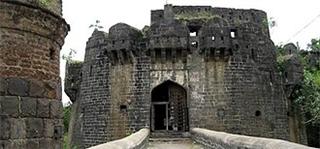
The early Asaf Jahi state relied on a cavalry army of Mughal type, led by nobles who maintained troops from their land assignments and supplemented by artillery and mercenaries, including Arab and Afghan soldiers. It proved weaker than the mobile Maratha armies. At the Battle of Palkhed in 1728 the Peshwa Baji Rao I outmanoeuvred Nizam-ul-Mulk and forced him to recognise Maratha rights to collect revenue (chauth and sardeshmukhi) in the Deccan, and at the turn of 1737–1738 Baji Rao defeated him again near Bhopal. After Asaf Jah’s death in 1748 his sons and grandson fought over the succession with French and British backing, and Salabat Jung owed his throne to the French commander the Marquis de Bussy. Defeats by the Marathas at Udgir in 1760 and Kharda in 1795 cost the state large territories. Hyderabad fought alongside the British against Tipu Sultan of Mysore in 1790–1792 and again in 1799. Nizam Ali Khan built up a French-trained corps under Michel Raymond, but in 1798 the British required its disbandment under the subsidiary alliance. Thereafter British troops stationed at the Secunderabad cantonment and the Hyderabad Contingent, paid for by the state, guaranteed its security. In 1948 the state army, assisted by the irregular Razakars, collapsed within days before the Indian army.
Governance & Law

The nizams ruled as autocrats through a chief minister (diwan), a system inherited from Mughal provincial government, with Persian as the language of administration until it was replaced by Urdu in the 1880s. The rulers formally acknowledged the Mughal emperor until 1858, and afterwards they were the foremost of the princes under British paramountcy, entitled to a 21-gun salute and, from 1918, the style ‘His Exalted Highness’. The subsidiary alliance of 1798, extended in 1800, placed a British Resident at the court and made the state’s foreign relations a British concern; to pay for the troops Hyderabad ceded the territories later known as the Ceded Districts in 1800, and in 1853 it assigned the revenues of Berar to the British. The most significant reformer was Salar Jung I, chief minister from 1853 to 1883, who reorganised revenue collection, created district administration on modern lines and founded new departments for justice, police and education. Mir Mahbub Ali Khan (r. 1869–1911) and Mir Osman Ali Khan (r. 1911–1948) presided over a modernising bureaucracy, though political participation remained limited: an Executive Council was created in 1919, but legislative bodies had only advisory or restricted powers. Government favoured Urdu-speaking Muslims for office, a source of growing tension in the twentieth century.
Global & Regional Impact
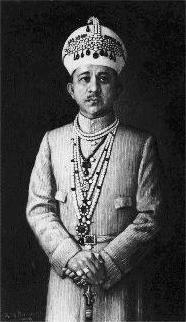
Hyderabad was the most important successor state of the Mughal Empire in the south and preserved a version of Mughal court culture until the mid-twentieth century. The city of Hyderabad became a major centre of Urdu literature and of a composite Deccani culture blending Persianate, Telugu and Marathi elements, visible in its cuisine, dress and architecture. The nizams and their nobles were patrons of poets, scholars and builders. Osmania University, founded in 1918, was among the first modern universities in India to teach in an Indian language, Urdu, and its translation bureau rendered large numbers of scientific and legal texts into it. The state also supported the Dairatul Maarifil Osmania, which published Arabic manuscripts, and nobles such as Salar Jung III assembled the collections now in the Salar Jung Museum. Hyderabad’s alliance with the British in 1798 helped them defeat Tipu Sultan and exclude the French from the south, and its loyalty in 1857 was an important support of British rule. At the same time, the landlord system of Telangana and the exclusion of the majority from power fed the communist-led Telangana rebellion and shaped the politics of the region after independence. The fate of the state in 1948 remains a sensitive subject in the history of Indian integration and of Hindu–Muslim relations.
Decline & Fall
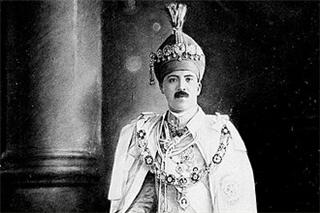
The end of British rule in 1947 left Hyderabad, surrounded by the new Dominion of India, with a choice between accession and independence. Mir Osman Ali Khan declared that he would remain independent, and in November 1947 he signed a one-year Standstill Agreement with India while negotiations continued. Inside the state tension mounted. The Majlis-e-Ittehadul Muslimeen under Qasim Razvi organised the Razakars, a paramilitary force that attacked opponents of the regime and Hindu villages, while the State Congress campaigned for accession and the Communist Party led a peasant insurrection in Telangana against the landlords and the state. On 13 September 1948 the Indian army launched Operation Polo, officially termed a police action, and the Hyderabad forces surrendered on 17 September. The Nizam submitted, and the state was placed under a military governor, Major General J.N. Chaudhuri. The operation and its aftermath were accompanied by large-scale killings of Muslims, which a government-appointed inquiry, the Sunderlal Committee, estimated in the tens of thousands. From 1950 Hyderabad was a state of the Indian Union with Osman Ali Khan as its Rajpramukh, until the reorganisation of 1956 divided it on linguistic lines among Andhra Pradesh, Bombay State and Mysore State. Its Telugu districts today form the core of the state of Telangana.
Hyderabad, the largest and wealthiest of India’s princely states, carried Mughal government and Persianate court culture into the twentieth century under the Asaf Jahi nizams, and its forcible integration into India in 1948 remains one of the most debated episodes of Indian independence.
Test yourself
5 questions on this page, from its key events and facts.
The questions open here once the page has loaded.
References
- Bawa, V.K. (1992) The Last Nizam: The Life and Times of Mir Osman Ali Khan. New Delhi: Viking.
- Benichou, L.D. (2000) From Autocracy to Integration: Political Developments in Hyderabad State, 1938–1948. Chennai: Orient Longman.
- Copland, I. (1997) The Princes of India in the Endgame of Empire, 1917–1947. Cambridge: Cambridge University Press.
- Dalrymple, W. (2002) White Mughals: Love and Betrayal in Eighteenth-Century India. London: HarperCollins.
- Leonard, K.I. (1978) Social History of an Indian Caste: The Kayasths of Hyderabad. Berkeley: University of California Press.
Connections
Open the full connections map →