Religion / idea · religion
Theravada Buddhism
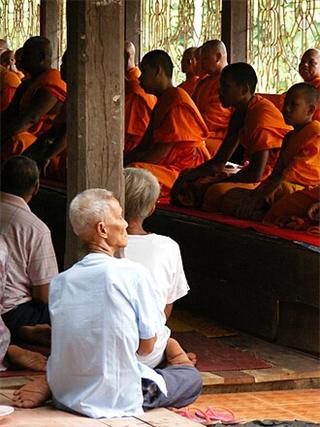
Theravada Buddhism is the branch of Buddhism that relies on the Pali canon and became dominant in Sri Lanka and mainland Southeast Asia. Its spread in the later period of the Khmer Empire emphasised monastic communities and individual merit. The rise of Theravada Buddhism reduced the emphasis on divine kingship and large-scale temple construction, altering the state's ideological basis.
Mentioned in 13 profiles
Khmer EmpireGovernance, DeclineKingdom of MagadhaImpactPagan KingdomSocioeconomy, Impact, SummarySukhothai KingdomSocioeconomy, Impact, SummaryAyutthaya KingdomFoundation, Socioeconomy, SummaryLan XangFoundation, Socioeconomy, SummaryRestored Toungoo KingdomSocioeconomy, ImpactKonbaung dynastySocioeconomyRattanakosin KingdomSocioeconomyFrench IndochinaSocioeconomyMyanmarSocioeconomyBuddhismBeliefs, Texts, Spread, Community, Legacy, SummarySanskritSpeakers, Change
Mentioned in 12 state histories
See also





Cite this entry
- APA
- The Epoch Institute. (2026). Theravada Buddhism. In The Epoch Institute Encyclopedia. https://the-epoch-institute.org/encyclopedia/theravada-buddhism
- MLA
- “Theravada Buddhism.” The Epoch Institute Encyclopedia, The Epoch Institute, 2026, https://the-epoch-institute.org/encyclopedia/theravada-buddhism. Accessed .
- Chicago
- The Epoch Institute. “Theravada Buddhism.” The Epoch Institute Encyclopedia. 2026. https://the-epoch-institute.org/encyclopedia/theravada-buddhism.
- Harvard
- The Epoch Institute (2026) ‘Theravada Buddhism’, The Epoch Institute Encyclopedia. Available at: https://the-epoch-institute.org/encyclopedia/theravada-buddhism (Accessed: ).
Last reviewed October 2026Random entry ↻