South & Southeast Asia
Konbaung dynasty
At a glance
- Founded in 1752 by Alaungpaya, a village headman who reunited Burma within a few years and founded Rangoon.
- Its armies destroyed Ayutthaya in 1767, repelled four Qing invasions and conquered Arakan, Assam and Manipur.
- Three wars with Britain, in 1824–1826, 1852 and 1885, stripped it of territory and ended in annexation.
Rise & Fall
- 1752Alaungpaya proclaims himself king at Moksobo (Shwebo)
- 1757Alaungpaya captures Pegu and reunites Burma
- 1767Burmese armies destroy Ayutthaya
- 1769The last of four Qing invasions ends in the peace of Kaungton
- 1785Bodawpaya conquers Arakan
- 1826Treaty of Yandabo ends the First Anglo-Burmese War
- 1857Mindon founds Mandalay
- 1885British forces take Mandalay; King Thibaw is exiled
Foundation
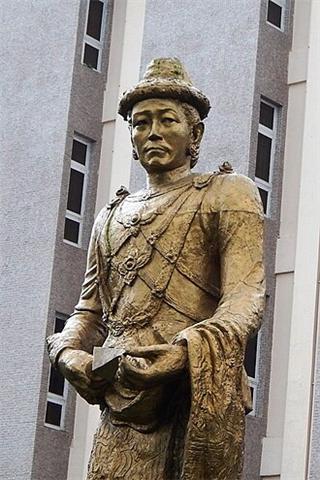
The Konbaung dynasty arose in 1752 from the resistance of Upper Burma to the Restored Hanthawaddy Kingdom, whose forces had just captured Ava and ended the Restored Toungoo dynasty. Aung Zeya, the headman of the village of Moksobo north of Ava, refused to swear allegiance to the southern conquerors, rallied the surrounding villages and proclaimed himself king under the name Alaungpaya, ‘future Buddha’. He renamed Moksobo Shwebo and made it his capital. In a series of rapid campaigns he drove the Hanthawaddy garrisons from Upper Burma, retaking Ava at the turn of 1753–1754, and then advanced into the delta. In 1755 he took Dagon, renaming it Yangon (Rangoon), ‘end of strife’; in 1756 he stormed Syriam, where French traders had supported the Mon; and in May 1757 he captured and destroyed Pegu, ending the Hanthawaddy kingdom. Alaungpaya then subdued Manipur in 1758 and invaded Siam, but in 1760 he fell ill during the siege of Ayutthaya and died on the march home. Within eight years a village headman had reunited the whole Irrawaddy basin. His sons Naungdawgyi, Hsinbyushin and later Bodawpaya extended the realm into the most powerful state in mainland Southeast Asia of its time.
Socioeconomy
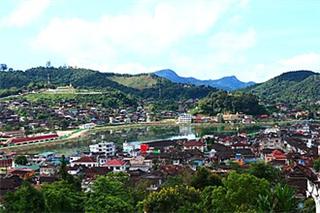
Konbaung society was organised around the distinction between crown servicemen (ahmudan), who held land in return for military and labour service, and taxpaying commoners (athi), alongside debt-bondsmen and pagoda servants attached to religious foundations. Most people were rice farmers; the irrigated lands of Kyaukse and Minbu fed the court, while the delta, depopulated by the wars of the 1750s, was gradually resettled. The kingdom exported teak, cotton, rubies from Mogok and oil from the wells of Yenangyaung, and imported Indian textiles, silver and firearms. Overland trade with Yunnan in cotton and silk revived after the war with the Qing, and Rangoon grew as the main seaport until its loss to Britain in 1852. After that the kingdom was landlocked and dependent on river trade through British-held Lower Burma, and Mindon sought new revenue through royal monopolies and the thathameda, a household tax. Theravada Buddhism was central to social and political life. Monasteries provided schooling to most boys, and the court sponsored reforms of the monastic order and great building projects, including Bodawpaya’s gigantic unfinished pagoda at Mingun and Mindon’s Kuthodaw Pagoda at Mandalay, where the Pali canon was inscribed on 729 marble slabs. Royal patronage also supported a rich court culture of drama, music and poetry.
Military
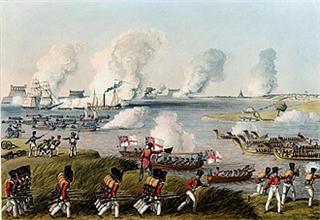
Konbaung armies combined ahmudan regiments, provincial levies and Shan contingents with foreign specialists, including French gunners captured at Syriam in 1756, and they were capable of long campaigns far beyond Burma’s borders. Hsinbyushin (r. 1763–1776) launched a two-pronged invasion of Siam that destroyed Ayutthaya in April 1767, ending a kingdom that had lasted four centuries. At the same time Burma faced four invasions by the Qing Empire between 1765 and 1769; the Burmese defeated them all, destroying the army of Ming Rui at Maymyo in 1768 and surrounding the last Qing army at Kaungton, which led to a negotiated peace in 1769. Bodawpaya (r. 1782–1819) conquered Arakan in 1784–1785 but lost a great invasion of Siam in 1785–1786. Burmese generals occupied Assam and Manipur between 1817 and 1822, bringing Burma to the frontier of British Bengal. The First Anglo-Burmese War (1824–1826), in which the general Maha Bandula was killed at Danubyu in 1825, showed that Burmese armies could not match British artillery and steamships, and the wars of 1852 and 1885 were decided quickly in Britain’s favour. The army never fully modernised, despite Mindon’s efforts to acquire modern weapons and to train officers along European lines.
Governance & Law

The Konbaung kings ruled as Buddhist monarchs from palace cities laid out as cosmic centres, moving the capital several times, from Shwebo to Sagaing, Ava and Amarapura, and finally to Mandalay, founded by Mindon in 1857. Royal authority was exercised through the Hluttaw, the council of ministers (wungyi), and the Byedaik, the inner privy council, with appointed governors (myowun) in the provinces and hereditary headmen (myothugyi) in the localities. Bodawpaya ordered revenue inquests (sittan) in the 1780s and in 1802 to record population, land and obligations, continuing a Toungoo practice. The Shan states, Manipur and other borderlands were ruled indirectly as tributaries. Succession was a recurring weakness: there was no fixed rule, and princes often fought or were executed when a king died. Mindon (r. 1853–1878), who came to power by deposing his half-brother Pagan Min during the Second Anglo-Burmese War, attempted a programme of modernisation. He introduced salaries for officials, a standard coinage, the thathameda tax, a telegraph network and small factories, and sent missions to Europe. His reforms faltered after the rebellion of 1866, in which his brother and heir, the Kanaung Prince, a leading reformer, was assassinated by two of Mindon’s sons.
Global & Regional Impact
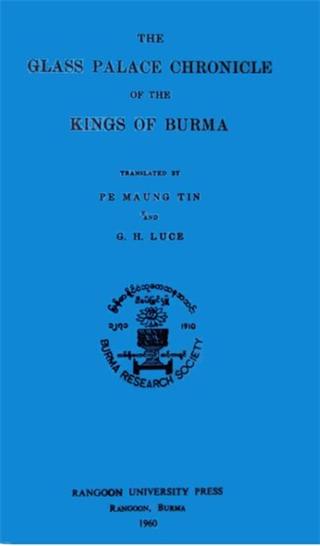
The Konbaung dynasty created the territorial core of modern Myanmar and much of its national memory. Alaungpaya’s reunification ended Mon independence for good and confirmed Burman dominance of the Irrawaddy delta, while the founding of Rangoon created the city that became the colonial and later national capital. Konbaung wars reshaped mainland Southeast Asia: the destruction of Ayutthaya in 1767 cleared the way for the rise of Thonburi and Bangkok under Taksin and the Chakri dynasty, and the Burmese victories over the Qing are remembered as one of the most successful defences against Chinese invasion. Burmese expansion into Arakan, Assam and Manipur brought the kingdom into conflict with British India, and the resulting Anglo-Burmese wars led to the incorporation of Burma into the British Empire, with consequences that shaped the borders and ethnic politics of the region. Culturally, the period produced the Hmannan Yazawin (Glass Palace Chronicle, 1832), legal compilations, court drama and poetry, and important Buddhist scholarship, including the Fifth Buddhist Council convened by Mindon in 1871. The Mahamuni Buddha image, brought from Arakan in 1785, remains one of the most venerated in the country, and Mandalay remains the cultural capital of Upper Burma.
Decline & Fall
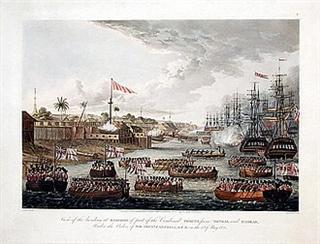
The kingdom’s decline was driven above all by conflict with British India. Burmese expansion into Assam and Manipur, and border disputes over Arakan, led to the First Anglo-Burmese War of 1824–1826. The Treaty of Yandabo of February 1826 forced King Bagyidaw to cede Arakan and Tenasserim, renounce claims to Assam and Manipur and pay an indemnity of one million pounds sterling. In 1852 the Second Anglo-Burmese War, provoked by disputes over British merchants at Rangoon, ended with the annexation of the province of Pegu, cutting the kingdom off from the sea. Mindon accepted the loss without signing a treaty and sought to strengthen what remained, but the rump kingdom depended on the river trade with British Lower Burma and on teak, oil and ruby revenues increasingly exploited by foreign firms. His successor Thibaw (r. 1878–1885) was placed on the throne by a palace faction led by the queen Hsinbyumashin and her daughter Supayalat, and the execution of dozens of royal relatives in 1879 damaged his reputation in Britain. In 1885 the court imposed a heavy fine on the Bombay Burmah Trading Corporation over teak extraction, while British officials feared growing French influence in Mandalay. A British force advanced up the Irrawaddy in November 1885 and took Mandalay within a fortnight. Thibaw was exiled to Ratnagiri in India, and Upper Burma was annexed on 1 January 1886.
The Konbaung dynasty reunited Burma in the 1750s, destroyed Ayutthaya, defeated four Qing invasions and expanded into Arakan, Assam and Manipur, creating the core of modern Myanmar, but three wars with Britain between 1824 and 1885 dismantled it and made Burma a province of British India.
References
- Charney, M.W. (2006) Powerful Learning: Buddhist Literati and the Throne in Burma’s Last Dynasty, 1752–1885. Ann Arbor: Centers for South and Southeast Asian Studies, University of Michigan.
- Hall, D.G.E. (1950) Burma. London: Hutchinson’s University Library.
- Koenig, W.J. (1990) The Burmese Polity, 1752–1819: Politics, Administration, and Social Organization in the Early Kon-baung Period. Ann Arbor: Center for South and Southeast Asian Studies, University of Michigan.
- Lieberman, V. (2003) Strange Parallels: Southeast Asia in Global Context, c. 800–1830. Volume 1: Integration on the Mainland. Cambridge: Cambridge University Press.
- Myint-U, T. (2001) The Making of Modern Burma. Cambridge: Cambridge University Press.
Connections
Open the full connections map →