At a glance
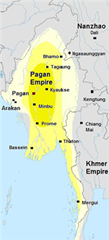
- The first state to unite the Irrawaddy valley, ruled from Pagan, a walled city on the middle Irrawaddy dated by tradition to 849.
- Its kings and subjects built some 10,000 Buddhist monuments on the plain of Bagan, and Theravada Buddhism became the faith of the realm.
- Tax-free gifts of land to monasteries weakened the crown, and Mongol invasions in the 1280s broke the kingdom apart.
Rise & Fall
- 849Traditional date for the fortification of Pagan
- 1044Anawrahta takes the throne
- 1057Anawrahta conquers the Mon city of Thaton, according to tradition
- 1113The four-language Myazedi inscription is set up
- c. 1183Narapatisithu’s Sulamani temple is built
- 1277Mongol forces from Yunnan defeat Pagan at Ngasaunggyan
- 1287King Narathihapate is murdered as Yuan forces invade
- 1297The Myinsaing brothers depose Kyawswa, ending the dynasty
Foundation
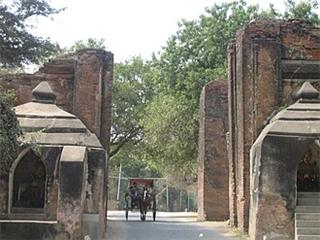
Pagan grew out of the migration of Burman, or Bamar, peoples from the north into the dry zone of central Myanmar during the ninth century, after the Pyu city-states that had dominated the region were weakened, partly by raids from the Yunnan kingdom of Nanzhao. The newcomers settled first on the irrigated plain of Kyaukse and then along the middle Irrawaddy, and the Burmese chronicles date the fortification of Pagan, on a bend of the river, to 849 under a king named Pyinbya. Little is known with certainty about the kingdom’s first two centuries, and the long royal lists of the chronicles cannot be confirmed from inscriptions. Pagan became a regional power under Anawrahta, who seized the throne in 1044. He extended royal control over the rice lands of Kyaukse and Minbu and, according to tradition, conquered the Mon city of Thaton in 1057, bringing back its king Manuha, monks, scriptures and craftsmen. The chronicles also credit him with campaigns into Arakan and the Shan hills and a chain of frontier forts facing the Shan country. Some historians, notably Michael Aung-Thwin, have questioned how far the Thaton conquest and Mon cultural influence are later elaborations, but by Anawrahta’s death in 1077 Pagan clearly ruled most of the Irrawaddy basin.
Socioeconomy
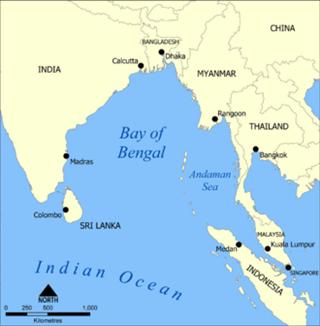
The kingdom’s economy rested on irrigated rice. The weirs and canals of Kyaukse, Minbu and the Mu valley produced surpluses that fed the capital, its armies and its monasteries, while dry fields grew millet, sesame and palm sugar. Society was ranked from the royal family and officials through crown servicemen and free commoners down to bonded people, many of whom were attached to temples and monasteries. Wealth was often measured in land, labour and silver by weight rather than coin. The most striking feature of Pagan society was the scale of religious donation. Kings, queens, officials and wealthy commoners gave land, cattle, workers and silver to the Buddhist sangha to earn merit, and between the eleventh and thirteenth centuries some ten thousand temples, stupas and monasteries were built on the plain around the capital, of which several thousand survive in some form. Theravada Buddhism, using Pali scriptures, became the dominant faith, though Mahayana, Hindu and local spirit cults also left traces. Trade was modest compared with the agrarian base but linked Pagan to Bengal, Sri Lanka and Yunnan, and the kingdom’s coastal provinces in the south gave it access to the Bay of Bengal. Literacy spread through monasteries, which became the main schools of the kingdom.
Military
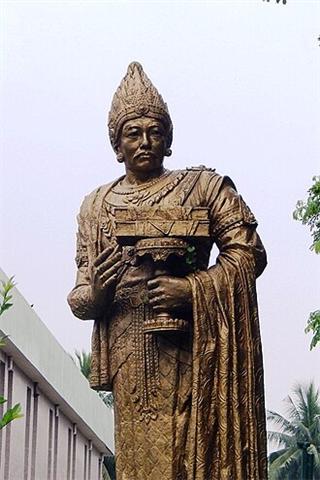
Pagan’s armies were raised from the population of the royal lands and from tributary chiefs, and combined infantry, cavalry and war elephants. Anawrahta’s campaigns, as described in the chronicles, created the kingdom’s frontiers: he subdued the Mon south, received the submission of parts of Arakan and secured the Shan uplands to the east with fortified settlements. After his son Sawlu was killed in a rebellion led by Nga Yaman Kan of Pegu, the general Kyansittha crushed the revolt and took the throne in 1084. Pagan maintained contacts with Sri Lanka, and Anawrahta is recorded as sending Buddhist monks to King Vijayabahu I to restore the Sinhalese ordination after the Chola occupation. Later kings fought on the margins of the kingdom, in Arakan and Tenasserim, but the core faced few serious external threats for two centuries. That changed when the Yuan dynasty of Kublai Khan demanded submission in the 1270s. Pagan’s refusal led to the Battle of Ngasaunggyan in 1277, near the Yunnan border, where Mongol troops defeated a Burmese army with elephants, a battle described by Marco Polo. Yuan forces took the frontier fort of Kaungsin in 1283, and in 1287 a further invasion coincided with the murder of King Narathihapate, after which the kingdom collapsed into fragments.
Governance & Law

The king stood at the centre of Pagan’s political and religious order, presented in inscriptions as a righteous Buddhist monarch, a future Buddha and lord of the land and its people. Royal power was strongest in the irrigated core around Kyaukse, Minbu and the capital, where officials managed land, water and the service groups that owed labour and military duty to the crown. Beyond the core, provinces were held by princes, royal kin and governors who drew income from their towns, and outer regions such as the Mon coast and Arakan were tied to Pagan as tributaries rather than ruled directly. Kyansittha, who ruled from 1084 to c. 1113, consolidated the state, completed the Shwezigon stupa and built the Ananda temple. His successor Alaungsithu, whose long reign lasted until c. 1167, is credited with a standard system of weights and measures and with the Thatbyinnyu temple. Narapatisithu, ruling 1174–1211, reorganised the palace guard and supported a reform of the monastic order in which monks ordained in Sri Lanka, led by Chapata, introduced the Mahavihara lineage. Succession disputes were common, and the royal court relied on the sangha both as a source of legitimacy and as an institution that recorded land grants and royal achievements in stone inscriptions.
Global & Regional Impact
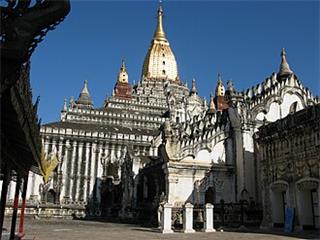
Pagan was the first state to unite the Irrawaddy valley and its peripheries, and later Burmese kingdoms, from Ava and Toungoo to the Konbaung dynasty, regarded it as the classical model of Burmese kingship. It made Theravada Buddhism the established religion of the Burmese lowlands and, with Sri Lanka, a centre from which that tradition spread through mainland Southeast Asia. Burmese emerged as a written language during this period: the Myazedi inscription of 1113, set up by Prince Rajakumar in memory of his father Kyansittha, records the same text in Pali, Mon, Pyu and Old Burmese, and it was the key to deciphering Pyu. Burmese script and orthography, law codes, monastic institutions and literary conventions all trace their roots to Pagan. Its architecture was its most visible legacy: temples such as the Ananda, Dhammayangyi, Sulamani, Htilominlo and Gawdawpalin, built of brick with stucco ornament and painted interiors, form one of the largest concentrations of Buddhist monuments in the world. The site suffered damage in the earthquakes of 1975 and 2016 and controversial restorations from the 1990s, but Bagan was inscribed as a UNESCO World Heritage Site in 2019, and it remains a major pilgrimage destination and symbol of Myanmar’s national identity.
Decline & Fall
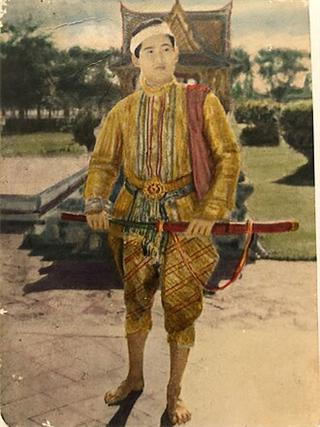
Pagan’s decline began long before the Mongol invasions. Generations of pious donors had transferred land and bonded labour to the sangha, and because religious land was largely free of tax and service, the crown’s base of revenue and manpower steadily shrank; this thesis, developed by Michael Aung-Thwin, is widely accepted though its weight is debated. In the thirteenth century kings tried to reclaim some religious lands without lasting success, and royal temple building slowed. Rising Shan chiefs pressed on the northern and eastern frontiers. The decisive crisis came under Narathihapate, who ruled from 1256. His rejection of Yuan demands for tribute brought defeat at Ngasaunggyan in 1277 and the loss of the north in the 1280s; he fled to Lower Burma, earning the name ‘the king who fled from the Chinese’, and was murdered by his son Thihathu at Prome in 1287. The Mon south broke away under Wareru, who founded the Hanthawaddy Kingdom, and Arakan went its own way. Narathihapate’s son Kyawswa reigned over a reduced realm as a Yuan vassal, while real power passed to the three Shan-Burman brothers of Myinsaing, who deposed him in 1297, ending the kingdom; their successors founded Pinya and later Ava.
The Pagan Kingdom united the Irrawaddy valley for the first time, established Theravada Buddhism and written Burmese, and covered the plain of Bagan with thousands of temples, creating the model of kingship and culture that every later Burmese dynasty claimed to inherit until its collapse under Mongol pressure.
References
- Aung-Thwin, M. (1985) Pagan: The Origins of Modern Burma. Honolulu: University of Hawaii Press.
- Luce, G.H. (1969–1970) Old Burma–Early Pagán. 3 vols. Locust Valley, NY: J.J. Augustin.
- Lieberman, V. (2003) Strange Parallels: Southeast Asia in Global Context, c. 800–1830. Volume 1: Integration on the Mainland. Cambridge: Cambridge University Press.
- Htin Aung, M. (1967) A History of Burma. New York: Columbia University Press.
- Harvey, G.E. (1925) History of Burma: From the Earliest Times to 10 March 1824. London: Longmans, Green.
Connections
Open the full connections map →