Europe
Duchy of Saxony
At a glance
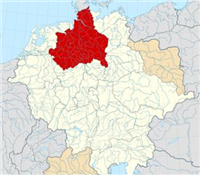
- A stem duchy of northern Germany between the Rhine and the Elbe, ruled by the Liudolfing, Billung, Welf and Ascanian families.
- Its dukes became German kings and emperors, from Henry the Fowler in 919 through the Ottonians to Lothair III.
- Henry the Lion made it a near-royal power, but his fall in 1180 broke up the duchy, which was finally divided around 1296.
Rise & Fall
- 852Count Liudolf and Oda found the convent of Gandersheim
- 919Duke Henry is elected king of East Francia
- 933Henry the Fowler defeats the Magyars at Riade
- 1115Saxon princes defeat Emperor Henry V at Welfesholz
- c. 1159Henry the Lion refounds Lübeck on the Baltic
- 1180Frederick Barbarossa deposes Henry the Lion and divides Saxony
- c. 1296The duchy splits into Saxe-Lauenburg and Saxe-Wittenberg
Foundation
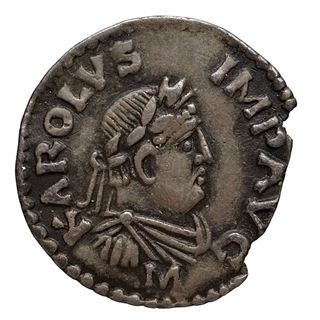
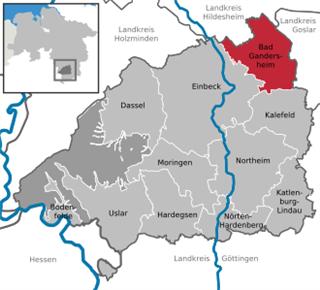
The Saxons of northern Germany, between the Rhine and the Elbe, were conquered by Charlemagne in a series of brutal wars between 772 and 804, during which the Saxon leader Widukind submitted and was baptised in 785. Saxony was then governed by Frankish counts and bishops, and Christianity was spread through new sees such as Paderborn, Bremen and Hildesheim. In the mid-ninth century one Saxon noble family rose above the others. Its founder, Count Liudolf, who died in 866, held lands in eastern Saxony and is described in some sources as dux; with his wife Oda he founded the convent of Gandersheim in 852, which became the family’s religious centre, and his daughter Liutgard married the Carolingian king Louis the Younger. His son Bruno led the Saxons against the Vikings and was killed fighting them in 880, and his younger son Otto the Illustrious held a dominant position in Saxony and Thuringia until his death in 912. Historians debate when the Liudolfings became dukes in a formal sense; their power grew from the defence of East Francia against Vikings, Slavs and Magyars. Otto’s son Henry succeeded him in 912 and in 919 was elected king of East Francia, beginning more than a century of Saxon kingship.
Socioeconomy
Saxony was a land of farming villages, forests and heaths, with few towns before the eleventh century, and its society long kept the sharp divisions between nobles, free men and the half-free lazzi that had existed before the Frankish conquest. Ottonian rule brought great changes. The kings endowed monasteries and convents such as Quedlinburg, Gandersheim and Corvey, which became centres of learning: the canoness Hrotsvitha of Gandersheim wrote Latin plays and poems in the tenth century, and the monk Widukind of Corvey wrote a history of the Saxons. The discovery of silver in the Rammelsberg near Goslar, traditionally dated to around 968, gave the kings a rich source of coinage, and Goslar became a favoured royal residence. Bishoprics such as Hildesheim flourished, and Bishop Bernward commissioned its celebrated bronze doors in 1015. In the twelfth century trade and towns expanded. Henry the Lion refounded Lübeck around 1159, opening the Baltic to German merchants and preparing the ground for the later Hanseatic League, and Brunswick and Lüneburg, with its salt works, grew into important towns. Settlers from Saxony, Westphalia and Flanders moved east of the Elbe into former Slav lands, changing the population, farming and economy of the region.
Military

Saxony’s military strength rested on its nobility of armoured horsemen and on the fortified places of the eastern frontier. Henry the Fowler, as king, prepared for the Magyar threat by negotiating a nine-year truce in 926, building fortifications and training cavalry, and defeated the Magyars at the Battle of Riade in 933. He also campaigned against the Slavs east of the Elbe, taking Brandenburg in the winter of 928–929. Under Otto I the Saxon frontier became a system of marches: Hermann Billung commanded on the lower Elbe and Margrave Gero in the middle Elbe lands, imposing tribute on the Slavs. The great Slav uprising of 983 destroyed much of this structure. In the eleventh century Saxony turned against the Salian kings: in the Saxon War the Saxon nobility rebelled against Henry IV, who defeated them at Langensalza in 1075, and in 1115 Saxon princes defeated Emperor Henry V at the Battle of Welfesholz. Under Henry the Lion Saxon expansion to the east resumed. He took part in the Wendish Crusade of 1147, conquered the lands of the Obotrites after the death of their prince Niklot in 1160 and founded Schwerin, while his rival Albert the Bear won Brandenburg for his own family.
Governance & Law
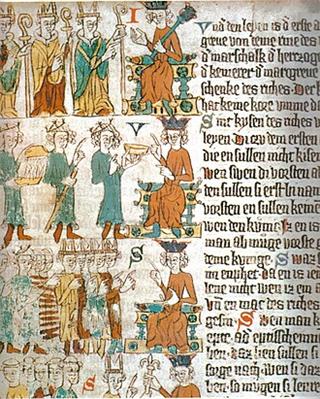
The stem duchy of Saxony was a loose structure. Its dukes held counties, estates and advocacies over churches, led the Saxon army and presided over assemblies of Saxon nobles, but they shared power with great bishops, such as those of Bremen, Hildesheim and later Magdeburg, and with counts who held their offices directly from the king. When Henry I and Otto I became kings, much of Saxony became royal land, administered from palaces such as Quedlinburg, Magdeburg and Werla. Otto I entrusted military command on the lower Elbe to Hermann Billung, whose family held the ducal title until Duke Magnus died without sons in 1106. Lothair of Supplinburg then became duke and, in 1125, king; his heir was his son-in-law Henry the Proud of the Welf family. Henry the Lion, duke from 1142 and also duke of Bavaria from 1156, built the most consolidated lordship Saxony had known, with ministerial officials, control of castles and towns, and a court at Brunswick, where he built the castle of Dankwarderode and set up the bronze lion around 1166. After 1180 the Ascanian dukes held only a small part of the old duchy. Saxon customary law was recorded around 1220–1235 by Eike von Repgow in the Sachsenspiegel, the most influential German law book of the Middle Ages.
Global & Regional Impact

Saxony’s greatest influence came through its dynasty. The Liudolfing dukes became the Ottonian kings and emperors, and from 919 to 1024 Saxony was the heartland of the East Frankish and German kingdom. Otto I’s victory over the Magyars at the Battle of Lechfeld in 955 and his imperial coronation in Rome in 962 created the Holy Roman Empire, and the church of Saxony, organised through the archbishopric of Magdeburg founded in 968, became the base for missions to the Slavs. Ottonian art and learning, from illuminated manuscripts to the bronze work of Hildesheim, flourished in Saxon monasteries and cathedrals. In the twelfth century Henry the Lion’s foundations shaped the urban map of Germany: Lübeck became the leading city of the Hanseatic League, and Munich, founded in his Bavarian duchy around 1158, became the Bavarian capital. The eastward settlement that he and other Saxon princes promoted transformed Holstein, Mecklenburg and Brandenburg. The Sachsenspiegel and the related Magdeburg town law spread Saxon legal custom across central and eastern Europe, as far as Poland and Ukraine. The name Saxony itself travelled: carried by the electoral title of Saxe-Wittenberg to the Wettin lands on the upper Elbe, it now names a German state far from the original duchy, whose heartland became Lower Saxony and Westphalia.
Decline & Fall

The old duchy was destroyed by the fall of Henry the Lion. His power in Saxony and Bavaria made him the greatest prince in the empire and alarmed the Saxon bishops and nobles. In 1176 he refused Emperor Frederick Barbarossa military help in Italy, shortly before the emperor’s defeat at Legnano, and Saxon princes then brought complaints against him. Having failed to answer the summonses, Henry was condemned, and in 1180 the Gelnhausen charter divided Saxony: the western part became the Duchy of Westphalia, granted to the archbishop of Cologne, and the ducal title with the eastern lands went to Bernhard of Anhalt, a son of Albert the Bear of the Ascanian family. Henry submitted in 1181 and went into exile at the court of his father-in-law Henry II of England, keeping only his family lands around Brunswick and Lüneburg, which later became the Duchy of Brunswick-Lüneburg. Bernhard’s duchy was small and scattered, consisting chiefly of lands around Lauenburg on the lower Elbe and Wittenberg on the middle Elbe. After the death of Duke Albert I in 1260 his sons ruled jointly, and around 1296 the duchy was divided into Saxe-Lauenburg and Saxe-Wittenberg. The Golden Bull of 1356 confirmed the electoral vote for Saxe-Wittenberg, which passed in 1423 to the Wettin margraves of Meissen.
The Duchy of Saxony was the homeland of the Ottonian kings who founded the Holy Roman Empire, the base of German expansion east of the Elbe and, under Henry the Lion, the founder of Lübeck; its break-up in 1180 reshaped the map of northern Germany and carried its name up the Elbe.
References
- Arnold, B. (1991) Princes and Territories in Medieval Germany. Cambridge: Cambridge University Press.
- Bachrach, B.S. and Bachrach, D.S. (trans.) (2014) Widukind of Corvey, Deeds of the Saxons. Washington, DC: Catholic University of America Press.
- Fuhrmann, H. (1986) Germany in the High Middle Ages, c. 1050–1200. Cambridge: Cambridge University Press.
- Jordan, K. (1986) Henry the Lion: A Biography. Trans. P.S. Falla. Oxford: Clarendon Press.
- Leyser, K.J. (1979) Rule and Conflict in an Early Medieval Society: Ottonian Saxony. London: Edward Arnold.
- Reuter, T. (1991) Germany in the Early Middle Ages, c. 800–1056. London: Longman.
Connections
Open the full connections map →