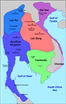
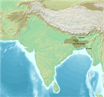
South & Southeast Asia
Ayutthaya Kingdom
At a glance
- A Siamese kingdom on an island in the Chao Phraya that dominated the central plain of Thailand from 1351 to 1767.
- Its wealth came from rice and royal trade, with Chinese, Japanese, Persian, Portuguese, Dutch and French merchants living in the capital.
- Burma conquered it in 1569 and destroyed it in 1767, but its institutions passed to Thonburi and Bangkok.
Rise & Fall
- 1351U Thong founds Ayutthaya and reigns as Ramathibodi I
- 1438Ayutthaya absorbs the kingdom of Sukhothai
- 1569Bayinnaung of Burma takes Ayutthaya after a long siege
- 1584Naresuan renounces allegiance to Burma
- 1593Naresuan defeats the Burmese at the Battle of Nong Sarai
- 1686The Siamese envoy Kosa Pan is received by Louis XIV at Versailles
- 1688Phetracha seizes power and expels the French garrison
- 1767Konbaung armies sack and burn Ayutthaya
Foundation

The Ayutthaya Kingdom was founded in 1351, the traditional date, by U Thong, a ruler with ties to the older Tai and Mon-Khmer centres of Lavo (Lopburi) and Suphannaphum, who took the regnal name Ramathibodi I. He built his capital on an island formed where the Lopburi and Pa Sak rivers meet the Chao Phraya, a site that could be defended by water in the flood season, commanded the rice lands of the central plain and lay within reach of seagoing ships from the Gulf of Siam. The new state drew on earlier traditions: Khmer court ritual and administrative vocabulary from Lavo, Theravada Buddhism shared with Sukhothai to the north, and the commercial connections of the lower Chao Phraya. Early politics were shaped by rivalry between the houses of Suphannaphum and Lavo, which competed for the throne until the Suphannaphum line prevailed with the accession of Intharacha in 1409. Ayutthaya soon pressed outward. Sukhothai became a tributary from 1378 and was absorbed in 1438, and armies under Borommarachathirat II attacked Angkor, traditionally in 1431, hastening the Khmer court's move south. Within a century of its foundation Ayutthaya had become the dominant power of the central plain and the core of what Europeans would call Siam.
Socioeconomy
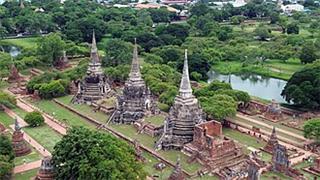
Ayutthaya's wealth rested on wet-rice agriculture in the flood plain of the Chao Phraya and on its position as an entrepôt between the Indian Ocean and the South China Sea. The crown claimed a large share of foreign trade through the royal warehouses, which bought and sold sappanwood, deerskins, tin, elephant tusks, rice and forest products. Deerskins went in quantity to Japan, while regular tribute missions to the Ming and later the Qing courts doubled as trading voyages. Merchant communities lived in their own quarters around the city: Chinese, Mon, Malays, Persians, Japanese, Portuguese, and later the Dutch East India Company, which opened a trading post in the early seventeenth century, followed by the English and the French. Society was ordered by the sakdina system, which assigned every person a numerical rank expressed in units of land, from princes and nobles down to commoners and slaves. Most commoners were phrai, registered under a patron and liable to corvée labour and military service. Theravada Buddhism was the state religion, and royal and noble patronage filled the capital with monasteries such as Wat Phra Si Sanphet and Wat Chaiwatthanaram. Literature in Thai, including court poetry and chronicles, flourished especially under King Narai.
Military
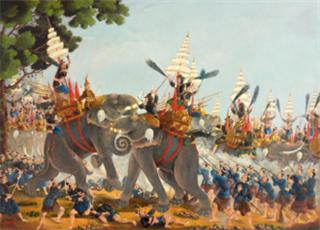
Ayutthaya's armies were raised through the corvée registers, which allowed the crown to mobilise large infantry levies, supported by war elephants that served as command platforms for kings and princes. Foreign specialists added firearms and expertise: Portuguese gunners served the kings from the sixteenth century, and a Japanese volunteer corps under Yamada Nagamasa fought for the court in the early seventeenth century. The kingdom's long wars were fought first against Sukhothai, Angkor and the northern kingdom of Lan Na, and then above all against Burma. In 1548 Tabinshwehti of the Toungoo dynasty besieged the capital, a campaign remembered for the death of Queen Suriyothai in combat. Bayinnaung forced Ayutthaya's submission in 1564 and took the city in 1569 after a long siege, making it a vassal. Prince Naresuan renounced allegiance in 1584 and defeated successive Burmese invasions; at the Battle of Nong Sarai in 1593 he killed the Burmese crown prince Mingyi Swa, according to the chronicles in single combat on elephant-back. Naresuan then carried the war into Cambodia and lower Burma. The city's walls and river moats made it hard to take, but in 1765–1767 Konbaung armies besieged it through the rainy season and finally breached its defences.
Governance & Law
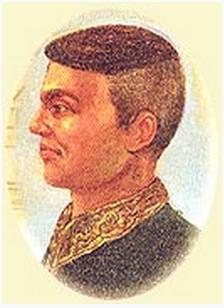
Ayutthaya's kings combined the roles of Buddhist dhammaraja, the righteous ruler who upholds the religion, with Khmer-derived conceptions of divine kingship expressed in Brahmanical court ritual and an elaborate royal vocabulary. King Borommatrailokkanat (r. 1448–1488) is traditionally credited with the reforms that gave the state its lasting shape: a division between civil affairs under the Mahatthai and military affairs under the Kalahom, four ministries for the capital, palace, treasury and lands, and the codified sakdina ranks of officials. He also ruled for many years from Phitsanulok to manage the war with Lan Na. Provinces were graded by their distance from the capital, the outer ones governed by hereditary lords or princes who sent tribute, and Malay states such as Pattani and Kedah acknowledged Ayutthaya's overlordship. There was no fixed rule of succession, so the death of a king often led to violent contests among princes and great officials, as in the usurpations of Prasat Thong in 1629 and Phetracha in 1688. Law drew on the Indian Dharmashastra tradition adapted to local custom, and much of Ayutthaya's legislation survives in the Three Seals Code compiled at Bangkok in 1805. The Phra Khlang, the minister of trade and foreign affairs, managed relations with foreign merchants.
Global & Regional Impact
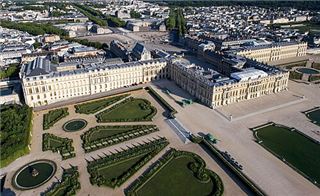
For four centuries Ayutthaya was one of the principal powers of mainland Southeast Asia, and its institutions, court culture and Buddhism shaped the region well beyond its borders. Its rivalry with Burma framed the political history of the mainland, while its overlordship reached at times over Cambodia, parts of Lan Na and the northern Malay peninsula. Under King Narai (r. 1656–1688) the court engaged actively with Europe: the Greek adventurer Constantine Phaulkon rose to high office, a French embassy under the Chevalier de Chaumont arrived in 1685, and the Siamese envoy Kosa Pan was received by Louis XIV at Versailles in 1686. The reports of French and Dutch visitors made Siam one of the best-described Asian kingdoms in early modern Europe. King Borommakot (r. 1733–1758) presided over a Buddhist revival, and in 1753 Siamese monks sent at the request of the king of Kandy restored the higher ordination in Sri Lanka, founding the Siyam Nikaya, which remains the island's largest monastic order. The Thonburi and Bangkok kingdoms consciously rebuilt Ayutthaya's model: Bangkok was laid out in imitation of the old capital, its laws and administration continued Ayutthaya's, and modern Thailand traces its history through Ayutthaya. The ruins of the city became a World Heritage Site in 1991.
Decline & Fall
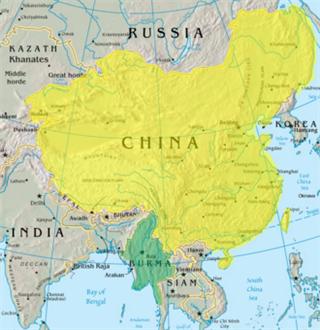
Ayutthaya's fall came suddenly, after a long period of prosperity. The eighteenth century brought strong rice and Chinese junk trade, but also recurring succession struggles that divided the royal family and the nobility, and weakened control of manpower as commoners evaded corvée registration by attaching themselves to private patrons. In Burma the new Konbaung dynasty reunited the country and turned on its old rival. Alaungpaya besieged Ayutthaya in 1760 but withdrew when he fell ill, dying on the retreat. His son Hsinbyushin sent two armies in 1765, which converged on the capital and besieged it for more than a year. Ayutthaya fell in April 1767; the city was looted and burned, the last king Ekkathat died, and thousands of captives, including members of the royal family, were taken to Burma. The Burmese did not stay to rule the country, partly because a Qing invasion of Burma demanded their armies. Siam briefly broke into rival regimes at Phitsanulok, Phimai, Sawangkhaburi and Nakhon Si Thammarat, until the general Taksin, who had escaped the siege, drove out the remaining Burmese garrison, founded a new capital at Thonburi and reunited the kingdom, whose successor, the Chakri dynasty's Bangkok, continues the Siamese state today.
Ayutthaya matters as the Siamese kingdom that for over four centuries combined Theravada Buddhist kingship, the sakdina order and a cosmopolitan royal trade to dominate mainland Southeast Asia, survived Burmese conquest under Naresuan, and passed its institutions to Thonburi, Bangkok and modern Thailand.
Test yourself
5 questions on this page, from its key events and facts.
The questions open here once the page has loaded.
References
- Baker, C. and Phongpaichit, P. (2017) A History of Ayutthaya: Siam in the Early Modern World. Cambridge: Cambridge University Press.
- Baker, C. and Phongpaichit, P. (2009) A History of Thailand. 2nd edn. Cambridge: Cambridge University Press.
- Wyatt, D.K. (2003) Thailand: A Short History. 2nd edn. New Haven: Yale University Press.
- Lieberman, V. (2003) Strange Parallels: Southeast Asia in Global Context, c. 800–1830. Volume 1: Integration on the Mainland. Cambridge: Cambridge University Press.
- Cushman, R.D. (trans.) and Wyatt, D.K. (ed.) (2000) The Royal Chronicles of Ayutthaya. Bangkok: Siam Society.
Connections
Open the full connections map →