Americas
Tlaxcala
At a glance
- A confederation of four Nahua city-states east of the Valley of Mexico, governed by its rulers and lords in council.
- It resisted the Aztec Triple Alliance for generations despite the flower wars and a reported embargo on salt and cotton.
- Its alliance with Hernán Cortés in 1519 supplied the warriors and support that brought down Tenochtitlan in 1521.
Rise & Fall
- 1348Traditional date for the foundation of Tlaxcala by Teochichimec migrants
- c. 1384Quiahuixtlan completes the confederation of four altepetl
- c. 1454The Triple Alliance begins the ‘flower wars’ against Tlaxcala and its neighbours
- c. 1504Large-scale war with the Aztecs and Huexotzinco begins under Moctezuma II
- 1519Tlaxcala fights Hernán Cortés, then allies with him on 23 September
- 1520The Spaniards shelter in Tlaxcala after La Noche Triste and the Battle of Otumba
- 1521Tlaxcalan forces help take Tenochtitlan, which falls on 13 August
Foundation
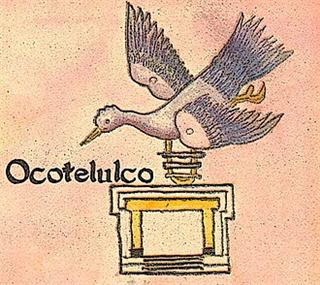
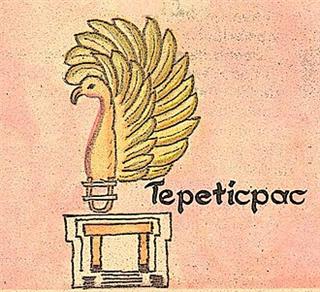
Tlaxcala, or Tlaxcallan, grew up in the hills of the northern Puebla-Tlaxcala Valley, east of the Basin of Mexico and near the volcano now called La Malinche. Its founders were Nahuatl-speaking migrants whom the chronicles call Teochichimeca, who traced their origins to Chicomoztoc, the ‘place of seven caves’, and had lived for a time beside Lake Texcoco before being driven out. Led, according to tradition, by Culhuatecuhtli Quanex, they defeated the Olmeca-Xicalanca who held the valley and founded Tepeticpac on a hilltop later protected by a long ditch and watchtowers. Chronicles and modern reconstructions date these events anywhere from the late thirteenth to the later fourteenth century, and one tradition places the foundation in 1348. Quanex’s brother Teyohualminqui founded Ocotelolco on lower ground, and the later foundations of Tizatlan and Quiahuixtlan completed a confederation of four altepetl, or city-states, probably by the 1380s. Their settlements grew together into a single sprawling capital spread over hilltops, terraces and valley floor, and the confederation’s territory of some 1,400 square kilometres included Otomí as well as Nahua towns. The patron god of the Tlaxcalans was Camaxtli, a god of the hunt and of war closely linked to Mixcoatl, although finds at Tepeticpac suggest that Tezcatlipoca was also prominent there.
Socioeconomy
Tlaxcala was a land of maize farmers on cool, high plains and slopes, and its name is usually explained as ‘place of maize bread’. Society was divided between nobles and commoners, and Otomí communities, some of them refugees from Aztec conquests, lived along its frontiers. Hernán Cortés, who entered the city in September 1519, wrote to Charles V that it was larger than Granada and held more people, and that its market drew more than 30,000 people a day, who traded food, clothing, gold, silver, precious stones, featherwork, pottery, firewood and medicinal herbs; the city also had barbers’ shops and baths. Its leaders told him that the Aztecs had surrounded them for generations, so that they ate no salt and wore no cotton, which their cold country could not grow. Later writers, above all the mestizo historian Diego Muñoz Camargo, describe a trade embargo begun under Moctezuma I in the mid-fifteenth century on salt, cotton, tropical feathers, cacao, gold and silver. Archaeology tempers this picture. Obsidian from Tepeticpac and from a workshop at Cinco Santos shows that Tlaxcala went on drawing on the same sources as before, including quarries in Aztec-controlled territory, so the embargo was probably far less effective than the chronicles suggest, even if it restricted some goods.
Military
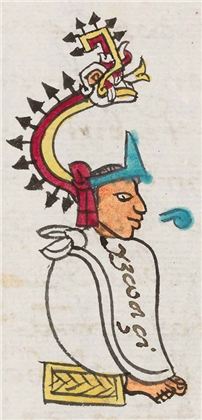
Tlaxcala was one of the few powers of central Mexico that never fell to the Aztec Triple Alliance. In 1428, according to Texcocan tradition, its warriors joined the coalition with which Nezahualcoyotl of Texcoco and Itzcoatl of Tenochtitlan overthrew the Tepanecs of Azcapotzalco, but the alliance created by that victory soon became Tlaxcala’s chief enemy. From about the 1450s the Aztecs fought ‘flower wars’ against Tlaxcala, Huexotzinco and Cholula, pre-arranged battles said to provide captives for sacrifice and training for young warriors, which the historian Ross Hassig interprets as a way of wearing down enemies too costly to conquer outright. Otomí communities guarded the frontiers, and Cortés found a stone wall nine feet high and twenty feet thick closing a valley on Tlaxcala’s border. From about 1504, under Moctezuma II, the fighting grew fiercer. Tlaxcalan forces drove back a Huexotzinca army at Xiloxochitlan, where the Ocotelolco commander Tizatlacatzin was killed, and then ravaged Huexotzinco, whose rulers turned to the Aztecs for help; by about 1516 the exhausted Huexotzinca had broken with the empire. In September 1519 Xicotencatl the Younger, son of the lord of Tizatlan, led the Tlaxcalan army against Cortés and his Totonac allies in a series of hard-fought battles, until the rulers of Tlaxcala chose peace.
Governance & Law
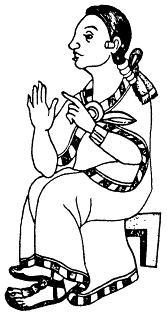
Tlaxcala had no single king. Each of its four altepetl had its own ruler: in 1519 Xicotencatl the Elder ruled Tizatlan, Maxixcatzin Ocotelolco, Tlehuexolotzin Tepeticpac and Citlalpopocatzin Quiahuixtlan. Matters of common concern, above all war and peace, were settled by the rulers and lords in council. Cortés told Charles V that the government was almost like that of Venice, Genoa or Pisa, since there was no one supreme ruler, that the many lords lived in the city and planned their wars together, and that Maxixcatzin was the most powerful of them. Justice was effective: when a Tlaxcalan stole gold from a Spaniard, the people of Maxixcatzin tracked the thief to Cholula and handed him over. Archaeology has added a new dimension. Surveys and excavations directed by Lane Fargher and Richard Blanton found plazas spread through all the neighbourhoods of Tlaxcallan but no clear royal palaces or royal tombs, and they argue that a council of some 50 to 200 lords, the teteuctin, governed the state, meeting at a civic centre on a hill outside the city. Membership was earned through service, especially in war, and was open to commoners as well as nobles, supported by religious traditions that favoured a comparatively collective regime, although how far Tlaxcala resembled a republic is still debated.
Global & Regional Impact
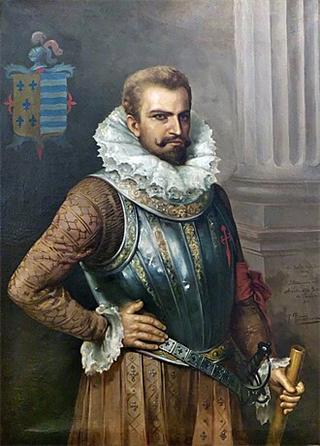
The alliance of Tlaxcala with Cortés changed the course of the Spanish conquest of the Aztec Empire. Historians now stress that the war against Tenochtitlan was fought above all by indigenous armies, and the Tlaxcalan army was the most important of them: Tlaxcala supplied warriors, porters and food, sheltered the Spaniards after their defeat in 1520 and built the brigantines that won control of Lake Texcoco. Tlaxcalan troops went on to fight in Spanish campaigns across Mesoamerica, including the conquest of Guatemala led by Pedro de Alvarado in the 1520s and the Mixtón War of 1540–1542. In 1591, under an agreement with Viceroy Luis de Velasco the younger, some 400 Tlaxcalan families settled the northern frontier, where San Esteban de Nueva Tlaxcala, now part of Saltillo, was one of their colonies. The Tlaxcalans recorded their own version of events in the Lienzo de Tlaxcala, painted in the mid-sixteenth century at the request of the city council, whose 87 scenes present Tlaxcala as the indispensable partner of Spain, and in the history of Diego Muñoz Camargo. In modern Mexico the alliance has often been condemned as betrayal, a view echoed in the title of the story ‘La culpa es de los tlaxcaltecas’ (‘It is the Tlaxcalans’ fault’) by Elena Garro, while historians see a people pursuing its own interests against an old enemy.
Decline & Fall
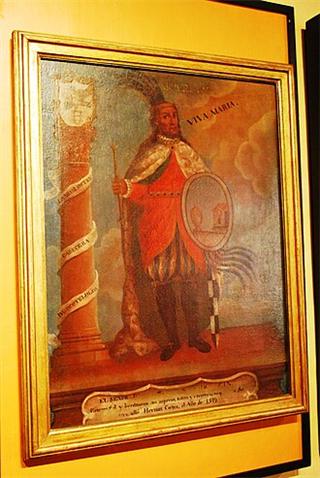
Independent Tlaxcala ended through the alliance that made it famous. After the fighting of September 1519, its rulers made peace with Cortés on 23 September and welcomed him into the city, and in October Tlaxcalan warriors joined the Spaniards in the massacre and sack of Cholula. When the Spaniards were driven from Tenochtitlan on La Noche Triste, 30 June 1520, many Tlaxcalans died with them, and after the Battle of Otumba on 7 July the survivors retreated to Tlaxcala. Xicotencatl the Younger urged his people to abandon the Spaniards, but the faction of Maxixcatzin prevailed, and Tlaxcalan forces helped to conquer the neighbouring Aztec province of Tepeaca. Smallpox then swept central Mexico, killing Maxixcatzin in 1520. Early in 1521 Tlaxcalan porters carried the brigantines in pieces to Texcoco, and Tlaxcalan contingents fought through the siege of Tenochtitlan, which fell on 13 August 1521. As the siege began, Cortés had Xicotencatl the Younger hanged for leaving the army, apparently with the assent of the Tlaxcalan council. Tlaxcala then became part of New Spain, governed by its own indigenous nobility under Spanish oversight. In 1535 Charles V granted it the title of city, and further privileges and a coat of arms followed. Today Tlaxcala is the smallest state of Mexico.
Tlaxcala, a confederation of four Nahua city-states governed by its lords in council, resisted the Aztec Triple Alliance for generations and in 1519 became the decisive ally of Hernán Cortés, supplying the warriors and support that brought down Tenochtitlan in 1521 and earning a privileged place in New Spain.
References
- Cortés, H. (1986) Letters from Mexico, trans. and ed. A. Pagden. New Haven: Yale University Press.
- Díaz del Castillo, B. (1963) The Conquest of New Spain, trans. J.M. Cohen. Harmondsworth: Penguin.
- Fargher, L.F., Blanton, R.E. and Heredia Espinoza, V.Y. (2010) ‘Egalitarian Ideology and Political Power in Prehispanic Central Mexico: The Case of Tlaxcallan’, Latin American Antiquity, 21(3), pp. 227–251.
- Hassig, R. (1988) Aztec Warfare: Imperial Expansion and Political Control. Norman: University of Oklahoma Press.
- Matthew, L.E. and Oudijk, M.R. (eds) (2007) Indian Conquistadors: Indigenous Allies in the Conquest of Mesoamerica. Norman: University of Oklahoma Press.
Connections
Open the full connections map →