South & Southeast Asia
Bahmani Sultanate
At a glance
- Founded in 1347 when Deccan nobles rebelled against Muhammad bin Tughluq and proclaimed Bahman Shah sultan.
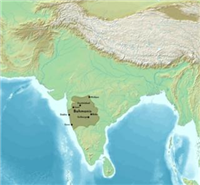
- Its Persianate court ruled from Gulbarga and Bidar and fought Vijayanagara for 150 years over the Raichur Doab.
- After Mahmud Gawan's execution in 1481 its governors broke away, founding the five Deccan sultanates.
Rise & Fall
- 1347Alauddin Hasan Bahman Shah is proclaimed sultan at Daulatabad
- 1367The Jama Masjid in Gulbarga fort is built
- 1420Firuz Shah is defeated by Vijayanagara at Pangal
- c. 1429Ahmad Shah I moves the capital to Bidar
- 1472Mahmud Gawan's forces take Goa and his madrasa at Bidar is built
- 1481Mahmud Gawan is executed on a forged charge of treason
- c. 1490The governors of Bijapur, Ahmadnagar and Berar become independent
- c. 1527The last Bahmani sultan, Kalimullah, flees Bidar
Foundation
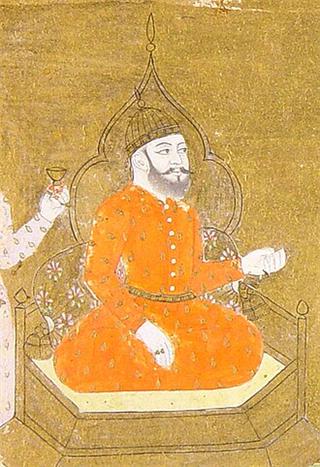
The Bahmani Sultanate was born from a revolt against the Delhi Sultanate. In the 1320s and 1330s Muhammad bin Tughluq had extended Delhi's rule over the Deccan and even moved much of the court and population of Delhi to Daulatabad, the former Yadava capital of Devagiri, but his harsh fiscal policies and suspicion of provincial officers provoked repeated rebellions. In 1345–1347 the foreign-born military commanders of the Deccan, known as the amiran-i sada, rose against his governors and took Daulatabad. On 3 August 1347 one of their leaders, Zafar Khan, also known as Hasan Gangu, was proclaimed sultan as Alauddin Hasan Bahman Shah. His dynastic name claimed descent from the legendary Persian king Bahman, although Ferishta's later story that he had once served a Brahmin named Gangu is probably a legend. He soon moved his capital to Gulbarga, which he renamed Ahsanabad, in the heart of the Deccan plateau. Tughluq armies failed to recover the region, and by his death in 1358 Bahman Shah controlled a kingdom stretching from the Arabian Sea coast to the borders of Telangana, bounded in the south by the Krishna and Tungabhadra rivers, where it faced the newly founded Vijayanagara Empire.
Socioeconomy

The Bahmani economy rested on agriculture in the black cotton soils and river valleys of the Deccan, producing millets, rice, cotton and oilseeds. Revenue was collected largely through local Hindu village and district officials who continued to manage the countryside much as before. Towns grew around the courts at Gulbarga and Bidar and around forts and markets, and textiles were a major product. The kingdom's western ports, such as Chaul and Dabhol, and after 1472 Goa, connected it to the Arabian Sea trade, importing horses from Arabia and Persia, which were essential for its cavalry, and exporting cloth and other goods. The Russian merchant Afanasy Nikitin, who stayed in Bidar around 1470, described the wealth of its nobles and the poverty of its peasants. Society was diverse. Most of the population was Hindu, while the ruling class included Deccani Muslims, descended from earlier settlers from northern India, and newcomers from Iran, Iraq, Central Asia and Arabia, known as Afaqis or "westerners", as well as Abyssinians. Sufi orders were influential; the Chishti saint Sayyid Muhammad Gesu Daraz settled at Gulbarga, where his shrine remains a major pilgrimage centre, and later sultans also patronised the descendants of the Persian Sufi Shah Nimatullah Wali. Persian was the language of the court and administration.
Military

The Bahmani army was built around cavalry, especially mounted archers on imported horses, commanded by nobles who held revenue assignments in return for maintaining troops. War elephants and infantry levies supported them, and by the fifteenth century firearms were in use, although the precise date of their introduction is debated. Great fortresses anchored Bahmani power, among them Gulbarga, Bidar, Parenda, Golconda and Raichur. For most of its history the sultanate fought the Vijayanagara Empire for control of the fertile Raichur Doab between the Krishna and Tungabhadra rivers. The wars began under Muhammad Shah I (r. 1358–1375) and were marked, according to Ferishta's later chronicle, by great slaughter on both sides. Firuz Shah (r. 1397–1422) won several campaigns, but in 1420 he suffered a heavy defeat at Pangal. In the east the Bahmanis fought the Musunuri Nayakas and other Telugu chiefs; Muhammad Shah I received the fortress of Golconda and a celebrated turquoise throne from Kapaya Nayaka, and Ahmad Shah I (r. 1422–1436) overran Warangal. In 1461–1462 Mahmud Khalji of Malwa invaded and besieged Bidar but was driven back with help from Gujarat. Under the minister Mahmud Gawan the army conquered the Konkan coast and took Goa from Vijayanagara in 1472.
Governance & Law
The sultan stood at the head of a court modelled on Persian and Delhi traditions, assisted by ministers such as the vakil-us-sultanat, or chief minister, and the amir-i jumla, in charge of finance. Muhammad Shah I organised the kingdom into four provinces, or tarafs, centred on Gulbarga, Daulatabad, Berar and Bidar, each under a governor, the tarafdar, who commanded the provincial army, collected revenue and appointed subordinates. This gave governors great power, and the rivalry between the Deccani and Afaqi nobility became the central political conflict of the court; in 1447 hundreds of Afaqi soldiers were massacred after a defeat at Chakan, and factional violence recurred. Ahmad Shah I moved the capital from Gulbarga to Bidar around 1429. The ablest administrator was Mahmud Gawan, a Persian merchant from Gilan who served as chief minister under Muhammad Shah III (r. 1463–1482). He divided the four provinces into eight smaller ones, reserved some districts in each for the crown, surveyed land for revenue assessment and tightened control over military assignments, reforms that reduced the governors' independence. His enemies among the Deccani nobles forged a letter implicating him in treason, and in 1481 the sultan had him executed, a decision he is said to have regretted bitterly before his own death the following year.
Global & Regional Impact
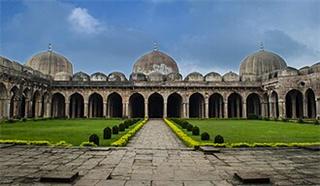
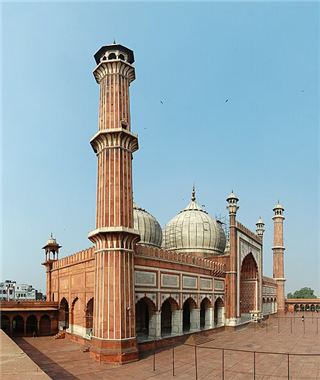
The Bahmani Sultanate established a lasting Islamic political culture in the Deccan, distinct from that of northern India and closely tied to Iran and the Arabian Sea world. Its five successor states, the sultanates of Bijapur, Ahmadnagar, Golconda, Berar and Bidar, carried on its institutions, Persianate court culture and wars with Vijayanagara, and three of them survived until the Mughal conquests of the 1630s to 1680s. Bahmani architecture blended Persian, Delhi and local Deccani elements. The Jama Masjid in the fort of Gulbarga, built in 1367, is unusual for having its entire courtyard covered by domes, while the madrasa built by Mahmud Gawan at Bidar in 1472, with its tile-faced minarets, and the painted royal tombs at Ashtur reflect strong Iranian influence. The court patronised Persian poetry and history, and the Deccani form of Urdu, which later flourished at Bijapur and Golconda, began to develop in this environment. The sultanate also left a long legacy of conflict: its wars with Vijayanagara shaped both states, and accounts of them, especially in Ferishta's history written around 1600, influenced later views of Hindu–Muslim relations in the south. The rivalry between Deccani and Afaqi elites continued in the successor kingdoms.
Decline & Fall
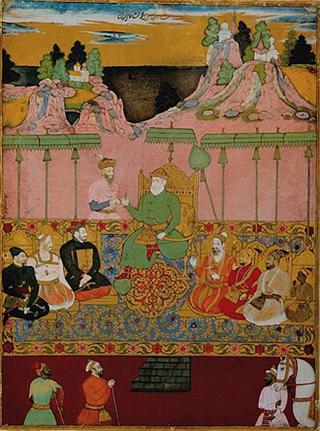
The execution of Mahmud Gawan in 1481 removed the minister who had held the kingdom together, and the death of Muhammad Shah III in 1482 left the throne to the young Mahmud Shah (r. 1482–1518), who never gained real authority. Power at Bidar passed to the Turkic noble Qasim Barid and later to his son Amir Barid, while the provincial governors acted on their own. Around 1490 three of them effectively declared independence: Yusuf Adil Khan at Bijapur, Ahmad Nizam ul-Mulk at Ahmadnagar and Fathullah Imad ul-Mulk in Berar, founding the Adil Shahi, Nizam Shahi and Imad Shahi dynasties. Quli Qutb ul-Mulk, governor of Telangana, made himself independent at Golconda around 1518, though he formally assumed royal titles only later. The Barid family kept the remaining Bahmani sultans as puppets at Bidar, while Krishnadevaraya of Vijayanagara exploited the disorder to take the Raichur Doab in 1520. After Mahmud Shah's death a series of short-lived sultans followed. The last, Kalimullah, fled Bidar around 1527 and sought help from Babur, the new Mughal ruler of Delhi, and later from Bijapur and Ahmadnagar, dying in exile. The Barid Shahis then ruled Bidar in their own name, and the Bahmani kingdom was divided among five Deccan sultanates.
The Bahmani Sultanate was the first independent Muslim state of the Deccan, whose Persianate court at Gulbarga and Bidar, administrative reforms under Mahmud Gawan and long wars with Vijayanagara shaped southern Indian politics and gave rise to the five Deccan sultanates that succeeded it.
References
- Briggs, J. (trans.) (1829) History of the Rise of the Mahomedan Power in India, till the Year A.D. 1612, by Mahomed Kasim Ferishta. London: Longman, Rees, Orme, Brown and Green.
- Sherwani, H.K. and Joshi, P.M. (eds) (1973) History of Medieval Deccan (1295–1724). Vol. 1. Hyderabad: Government of Andhra Pradesh.
- Eaton, R.M. (2005) A Social History of the Deccan, 1300–1761: Eight Indian Lives. Cambridge: Cambridge University Press.
- Eaton, R.M. and Wagoner, P.B. (2014) Power, Memory, Architecture: Contested Sites on India's Deccan Plateau, 1300–1600. New Delhi: Oxford University Press.
Connections
Open the full connections map →