South & Southeast Asia
Bengal Sultanate
At a glance
- An independent Muslim kingdom that united the Bengal delta in 1352 and ruled it from Pandua and Gaur until 1576.
- Rice, sugar, muslin and silk made it rich, and its ports of Chittagong and Satgaon traded from the Red Sea to China.
- Its sultans patronised Bengali literature and built distinctive brick and terracotta mosques.
Rise & Fall
- 1352Shamsuddin Ilyas Shah unites Bengal as an independent sultanate
- 1353–1354Firuz Shah Tughluq's invasion from Delhi ends in withdrawal
- c. 1375The Adina Mosque at Pandua is completed
- 1414A Bengali embassy presents a giraffe to the Yongle Emperor
- 1494Alauddin Husain Shah becomes sultan, ending the Habshi period
- 1538Sher Khan Sur takes Gaur
- 1576Daud Khan Karrani is defeated at Rajmahal and Bengal passes to the Mughals
Foundation

Muslim rule in Bengal began with the conquests of Bakhtiyar Khalji around 1204, and for more than a century the province was governed from Lakhnauti by governors of the Delhi Sultanate who often rebelled against their distant overlords. In the 1330s and 1340s, as Muhammad bin Tughluq's empire weakened, Bengal split into rival regimes at Lakhnauti, Satgaon and Sonargaon, the last ruled by Fakhruddin Mubarak Shah and his son. Shamsuddin Ilyas Shah, who seized power at Lakhnauti in the early 1340s, took Satgaon and then Sonargaon, and by 1352 had united the whole delta under one ruler for the first time. He styled himself Shah-i Bangalah, and the name Bangalah came to describe the unified country. Firuz Shah Tughluq of Delhi marched against him in 1353–1354 and besieged him in the fort of Ekdala, but withdrew without a decisive result. A second Tughluq invasion against Ilyas Shah's son Sikandar Shah in 1359 ended in a negotiated peace, and Delhi thereafter accepted Bengal's independence. The Ilyas Shahi dynasty governed from Pandua, and later the old city of Gaur again became the capital, with the delta's rivers serving as both highways and defences.
Socioeconomy

Bengal was among the most fertile and densely populated regions of Asia. Its flood-fed rice fields produced surpluses that were exported by sea, and the delta also yielded sugar, cotton and silk. Fine cotton cloth, including the muslins of the Dhaka region, was traded across the Indian Ocean, and the ports of Satgaon and Chittagong linked Bengal with Southeast Asia, China, the Persian Gulf and the Red Sea. The Moroccan traveller Ibn Battuta, who visited eastern Bengal in 1346 shortly before unification, remarked on the abundance and cheapness of its food, and the Chinese interpreter Ma Huan, who accompanied the Ming fleets in the early fifteenth century, described its markets and its silver coins. The sultans issued large quantities of silver tankas from mints across the delta, while cowrie shells served for small transactions. Society was mixed: a Persian-speaking Muslim ruling class of Turkish, Afghan, Abyssinian and local origin governed a mostly Hindu and Buddhist-descended population, and Sufi shaikhs, often granted land, were important in settling and cultivating the forested east. Hindu landholders and officials remained essential to administration, and in the countryside Bengali, not Persian, was the language of daily life and of a growing religious literature.
Military
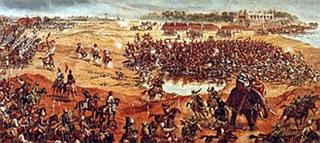
The sultans' military strength rested on the geography of the delta. Their armies combined infantry levies, known as paiks, with war elephants and river fleets, while cavalry horses had to be imported from the north and were always fewer than in the armies of Hindustan. Rivers and the monsoon were the best defence: invaders from Delhi in the 1350s found that they could not hold the country through the rains, and Ilyas Shah withstood Firuz Shah Tughluq by retreating into the fort of Ekdala. Bengal also fought its neighbours. The sultans contested Chittagong with Tripura and Arakan; in the 1420s and 1430s Bengal backed the Arakanese king Min Saw Mon in recovering his throne, and Arakan paid tribute for a time. Alauddin Husain Shah (r. 1494–1519) conquered the kingdom of Kamata in 1498 and campaigned in Orissa, Tripura and the Brahmaputra valley, though attempts to subdue the Ahom kingdom failed. The rise of the Mughals and Afghans in the north brought harder enemies: Babur defeated a Bengal army at the Battle of the Ghaghra in 1529, and Sher Khan Sur defeated the sultan's forces at Surajgarh in 1534 and twice besieged Gaur, taking it in 1538 despite Portuguese help to the last Husain Shahi sultan.
Governance & Law
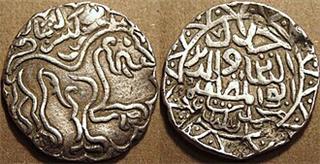
The sultans ruled as independent Muslim monarchs, reading the Friday sermon and striking coins in their own names, and some styled themselves caliphs on their coinage. Persian was the language of government. The kingdom was divided into provinces and districts under military governors and revenue officials, many holding assignments of revenue in return for service. Several dynasties succeeded one another. After the Ilyas Shahis, the Hindu landholder Raja Ganesha took power around 1414; his son Jadu converted to Islam and ruled as Jalaluddin Muhammad Shah until 1433. The Ilyas Shahi line was restored in 1435, but Abyssinian palace guards, introduced in large numbers in the later fifteenth century, seized the throne in 1487, and several Habshi rulers were murdered in quick succession. Order returned with Alauddin Husain Shah, an official said to be of Arab descent, chosen by the nobles in 1494, whose dynasty ruled until 1538. Husain Shah employed Hindus in high office, among them the brothers Rupa and Sanatana, who later became leading theologians of the Gaudiya Vaishnava movement of Chaitanya. The sultans also corresponded with foreign courts, exchanging embassies with the Ming emperors and, according to a well-known tradition, inviting the Persian poet Hafez to Bengal.
Global & Regional Impact

The sultanate's greatest legacy was the political and cultural unity of Bengal as a single country with its own identity, distinct from Hindustan. Its court patronised literature in Bengali as well as Persian: Maladhar Basu composed the Sri Krishna Vijaya under Rukunuddin Barbak Shah, Krittibas Ojha produced the most popular Bengali Ramayana in this era, and the governor of Chittagong under Husain Shah sponsored a Bengali rendering of the Mahabharata. Muslim poets such as Shah Muhammad Sagir adapted Persian romances into Bengali. The sultans also created a distinctive architecture of brick and terracotta, with curved cornices and many domes, seen in the Adina Mosque at Pandua, completed in the 1370s and among the largest mosques of the subcontinent, the Sixty Dome Mosque at Bagerhat, associated with the frontier magnate Khan Jahan Ali, and the Chhoto Sona Mosque and Dakhil Darwaza at Gaur. Bengal's diplomacy reached far: in 1414 a Bengali embassy presented a giraffe from East Africa to the Yongle Emperor in China. The sultanate also laid foundations for the later Islamisation of eastern Bengal, which historians such as Richard Eaton connect with land settlement on the forest frontier, a process that accelerated under the Mughals.
Decline & Fall
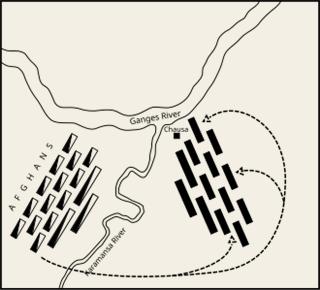
The independent sultanate ended in the struggle for northern India that followed the fall of the Lodi dynasty. Nasiruddin Nusrat Shah (r. 1519–1533) lost ground to Babur, and his successor Ghiyasuddin Mahmud Shah faced the Afghan leader Sher Khan Sur, who defeated his army at Surajgarh in 1534 and took Gaur in 1538. The Mughal emperor Humayun occupied Gaur briefly before Sher Shah defeated him at Chausa in 1539, and Bengal became a province of the Sur Empire. When Sur power broke up in the mid-1550s, Afghan governors in Bengal declared independence and revived the sultanate under new dynasties. The Karrani Afghans, who took Gaur in 1564 and were led from about 1566 by Sulaiman Khan Karrani, ruled from Gaur and later Tanda, conquered Orissa in 1568 and outwardly acknowledged Akbar to avoid war. His son Daud Khan Karrani defied the Mughals, was defeated at Tukaroi in 1575 and was captured and executed after the Battle of Rajmahal in July 1576, ending the sultanate. Mughal control remained incomplete for decades, as the Baro-Bhuyans, a confederacy of eastern landholders led by Isa Khan, resisted in the delta into the early seventeenth century. Bengal then became one of the richest provinces of the Mughal Empire, with its capital at Dhaka from 1610.
The Bengal Sultanate matters because it first united the Bengal delta as one independent state, Bangalah, and for over two centuries made it a wealthy rice, textile and maritime power whose court patronised Bengali literature, built distinctive brick mosques and shaped the Muslim society of eastern Bengal.
References
- Eaton, R.M. (1993) The Rise of Islam and the Bengal Frontier, 1204–1760. Berkeley: University of California Press.
- Sarkar, J.N. (ed.) (1948) The History of Bengal, Volume II: Muslim Period, 1200–1757. Dacca: University of Dacca.
- Hasan, P. (2007) Sultans and Mosques: The Early Muslim Architecture of Bangladesh. London: I.B. Tauris.
- Karim, A. (1959) Social History of the Muslims in Bengal (Down to A.D. 1538). Dacca: Asiatic Society of Pakistan.
- Eaton, R.M. (2019) India in the Persianate Age, 1000–1765. London: Allen Lane.
Connections
Open the full connections map →