South & Southeast Asia
French Indochina
At a glance
- A federation created in 1887 joining Cochinchina, Annam, Tonkin and Cambodia, with Laos added after 1893.
- Rice, rubber and state monopolies on opium, salt and alcohol made it France’s most valuable Asian possession.
- Japanese occupation and the First Indochina War ended French rule at Dien Bien Phu and Geneva in 1954.
Rise & Fall
- 1887France creates the Indochinese Union on 17 October
- 1893The Franco-Siamese crisis adds the Lao lands east of the Mekong
- 1902The seat of government moves from Saigon to Hanoi
- 1930The Indochinese Communist Party is founded and the Yen Bai mutiny is crushed
- 1940Japanese troops enter northern Indochina after France’s defeat
- 1945Japan overthrows French rule; Ho Chi Minh proclaims the Democratic Republic of Vietnam
- 1946The First Indochina War begins after fighting in Haiphong and Hanoi
- 1954Defeat at Dien Bien Phu and the Geneva Accords end French Indochina
Foundation

French Indochina was assembled from conquests made over three decades. A Franco-Spanish expedition attacked Da Nang in 1858, and the Treaty of Saigon of 1862 and the annexation of 1867 turned southern Vietnam into the colony of French Cochinchina. In 1863 King Norodom of Cambodia accepted a French protectorate to escape pressure from Siam and Vietnam. After the deaths of Francis Garnier in 1873 and Henri Rivière in 1883 in Tonkin, the Harmand and Patenôtre treaties of 1883–1884 made central and northern Vietnam the protectorates of Annam and Tonkin under the Nguyen emperors, and the Sino-French War of 1884–1885 forced China to renounce its suzerainty. By a decree of 17 October 1887 France joined Cochinchina, Annam, Tonkin and Cambodia in the Indochinese Union under a governor-general. The Franco-Siamese crisis of 1893 added the Lao lands east of the Mekong, which were organised as the protectorate of Laos and attached to the Union in 1899, and China leased the territory of Guangzhouwan to France in 1898. Paul Doumer, governor-general from 1897 to 1902, gave the federation its lasting shape: he created a general budget and federal services, subordinated the Vietnamese court, and moved the seat of government from Saigon to Hanoi in 1902.
Socioeconomy

Indochina’s economy was built on exports of rice, rubber and minerals. In the Mekong delta, French canal-digging opened vast new rice lands, much of it acquired by French and Vietnamese landlords and farmed by indebted tenants, and by the 1930s Indochina was among the world’s leading rice exporters, shipping through Saigon and the Chinese merchant town of Cholon. Rubber plantations in the red-earth lands of Cochinchina and Cambodia, owned by companies such as Michelin, recruited labourers from Tonkin and Annam under harsh contracts, and coal mines at Hon Gai in Tonkin supplied the region. The Bank of Indochina issued the currency and financed trade. The federal budget relied on indirect taxes and the state monopolies on opium, salt and alcohol, which forced villages to buy set quotas of official alcohol and became deeply resented, while head and land taxes fell heavily on peasants. Society remained mainly rural and Buddhist, with Confucian traditions in Vietnam, Theravada Buddhism in Laos and Cambodia, and growing Catholic and new religious communities, among them the Cao Dai, founded in 1926. A Western-educated Vietnamese elite emerged, the romanised quoc ngu script spread through schools and newspapers, and the Confucian examinations were abolished in 1915 in Tonkin and in 1919 in Annam. European settlers remained few, numbering in the tens of thousands.
Military
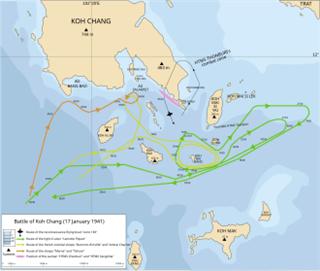
French rule rested on a colonial army that combined French regulars, the Foreign Legion and North African and Senegalese units with large numbers of Indochinese riflemen (tirailleurs) recruited locally. In its early years it fought the Can Vuong resistance and armed bands in the Tonkin uplands, notably the forces of De Tham in Yen The, who held out until 1913. Some 90,000 to 100,000 Indochinese soldiers and labourers were sent to France during the First World War. Within the colony the army and the Sûreté, the political police, crushed uprisings such as the Yen Bai mutiny of February 1930, organised by the Vietnamese Nationalist Party, and the Nghe-Tinh soviets of 1930–1931, which were suppressed with aerial bombing and mass arrests. Indochina was poorly defended against a major power. After France’s defeat in 1940, Japan forced the governor-general to admit its troops into the north in September 1940 and the south in 1941, and Thailand attacked in the Franco-Thai War of 1940–1941; the French navy won at Ko Chang in January 1941, but Japanese mediation gave Thailand parts of western Cambodia and Laos. In the First Indochina War from 1946, a French Union force of up to several hundred thousand men, including Vietnamese, Laotian and Cambodian troops, fought the Viet Minh, losing the frontier posts in 1950 and suffering final defeat at Dien Bien Phu in May 1954.
Governance & Law
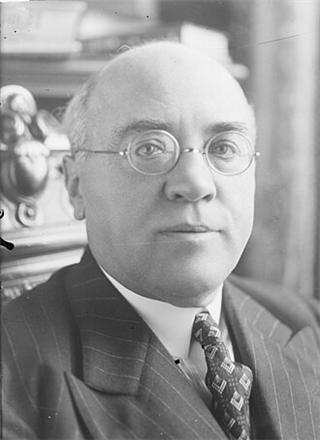
The governor-general, appointed by Paris and based at Hanoi from 1902, controlled the federal budget, customs, public works and the army, and ruled with a Superior Council in which colonial officials and business interests were represented. Each of the five territories had its own regime. Cochinchina was a colony governed directly under French law, with a colonial council and a deputy in the French parliament. Annam and Tonkin were protectorates where the Nguyen emperor kept his court at Hue and a hierarchy of mandarins, but French residents-superior and provincial residents held real power, and from 1897 the protectorates’ administration was effectively French. Cambodia and Laos remained monarchies under the kings at Phnom Penh and Luang Phrabang, supervised by French residents, while much of Laos was administered directly. French officials were relatively numerous by colonial standards, and indigenous officials staffed the lower levels. Albert Sarraut, governor-general in 1911–1914 and 1917–1919, promised ‘Franco-Annamite collaboration’, expanded schooling and reorganised the University of Hanoi, first founded in 1906, but political rights remained very limited and press and party activity was closely controlled. During the Second World War Admiral Jean Decoux governed for Vichy France from 1940 to 1945, promoting youth and sports movements and local patriotism loyal to Marshal Pétain while sharing the colony with Japanese forces.
Global & Regional Impact

French Indochina drew the modern borders of Vietnam, Laos and Cambodia. French treaties with Siam fixed the Mekong frontier and returned Battambang, Siem Reap and Sisophon to Cambodia in 1907, while the boundaries between the five territories became the international borders of three states. The colony transformed the region’s infrastructure: the Haiphong–Kunming railway to Yunnan was completed in 1910, the Long Bien bridge across the Red River at Hanoi in 1902, and the Trans-Indochinese Railway from Hanoi to Saigon in 1936. Saigon, Hanoi and the hill station of Dalat acquired French boulevards, cathedrals, opera houses and villas that still mark their townscapes. The École française d’Extrême-Orient, founded in 1900, led the study and restoration of Angkor and the scholarship of the region’s languages and religions. The romanised quoc ngu script, promoted by the colonial schools, became the national writing system of Vietnam. Most important, colonial rule produced the movements that ended it: reformers such as Phan Boi Chau and Phan Chau Trinh, the Vietnamese Nationalist Party and above all the communist movement of Nguyen Ai Quoc (Ho Chi Minh), who founded the Vietnamese Communist Party in Hong Kong in February 1930, renamed the Indochinese Communist Party later that year. The wars fought to dissolve the federation shaped Southeast Asia and the Cold War for decades.
Decline & Fall

The fall of France in June 1940 left Indochina isolated, and Japan, which wanted to cut supply routes to China and gain access to the region’s rice and rubber, stationed troops there while leaving the French administration in place. On 9 March 1945 the Japanese overthrew French rule in a coup, interning French troops and officials, and encouraged Bao Dai in Vietnam, Norodom Sihanouk in Cambodia and Sisavang Vong in Laos to declare independence. A famine in northern Vietnam in 1944–1945 killed perhaps a million people or more. After Japan’s surrender, the Viet Minh seized power in the August Revolution, and on 2 September 1945 Ho Chi Minh proclaimed the Democratic Republic of Vietnam in Hanoi. France returned in force, with British help in the south, and in 1946 recast the colony as the Indochinese Federation within the French Union. Negotiations failed, and after the French bombardment of Haiphong in November 1946 and the Viet Minh attack in Hanoi on 19 December, the First Indochina War began. France granted limited independence to the Associated States of Vietnam under Bao Dai, Laos and Cambodia in 1949, and Cambodia obtained full independence in 1953. Chinese aid to the Viet Minh from 1950 shifted the balance, and the fall of Dien Bien Phu on 7 May 1954 led to the Geneva Accords of July 1954, which ended French Indochina and divided Vietnam at the 17th parallel.
French Indochina joined Vietnam, Laos and Cambodia in one colonial federation for nearly seventy years, building railways, plantations and export rice economies while fixing the region’s borders, and its exploitation and repression gave rise to the nationalist and communist movements whose wars ended French rule at Dien Bien Phu in 1954.
References
- Brocheux, P. and Hémery, D. (2009) Indochina: An Ambiguous Colonization, 1858–1954. Berkeley: University of California Press.
- Osborne, M.E. (1969) The French Presence in Cochinchina and Cambodia: Rule and Response (1859–1905). Ithaca: Cornell University Press.
- Marr, D.G. (1995) Vietnam 1945: The Quest for Power. Berkeley: University of California Press.
- Logevall, F. (2012) Embers of War: The Fall of an Empire and the Making of America’s Vietnam. New York: Random House.
- Goscha, C. (2016) Vietnam: A New History. New York: Basic Books.
Connections
Open the full connections map →