Sub-Saharan Africa
Congo Free State
At a glance
- A state owned personally by King Leopold II of Belgium, recognised at the Berlin Conference and proclaimed in 1885.
- Forced collection of wild rubber, enforced by the Force Publique through hostage-taking and mutilation, caused mass death.
- An international campaign led by Roger Casement and E. D. Morel forced Belgium to annex it as the Belgian Congo in 1908.
Rise & Fall
- 1879Henry Morton Stanley begins building stations on the Congo River for Leopold
- 1885Leopold proclaims the Congo Free State after the Berlin Conference
- 1891The Yeke king Msiri is killed and Katanga is secured for the state
- 1894The Force Publique defeats the Swahili-Arab traders of the eastern Congo
- 1898The Matadi–Léopoldville railway is completed
- 1904Roger Casement’s report is published and the Congo Reform Association is founded
- 1908Belgium annexes the territory as the Belgian Congo
Foundation
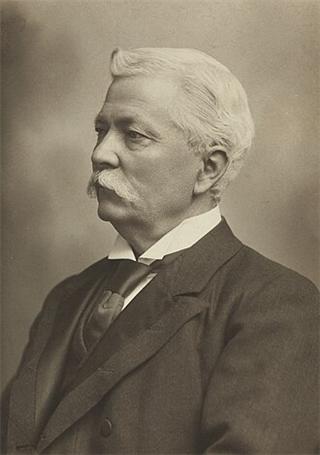
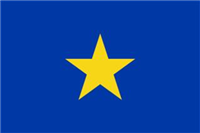
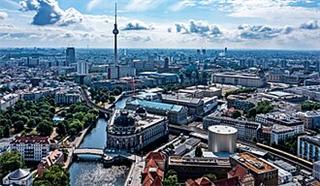
The Congo Free State was created by the ambition of one man, Leopold II, King of the Belgians, who believed that a small country needed colonies and found his own parliament unwilling to acquire them. In 1876 he hosted a geographical conference in Brussels and founded the International African Association, presented as a scientific and humanitarian body. After Henry Morton Stanley completed his descent of the Congo River in 1877, Leopold hired him, and from 1879 to 1884 Stanley built stations along the river, including Vivi and Léopoldville, and gathered hundreds of treaties by which Congolese chiefs ceded land and rights to Leopold’s organisations, which became the International Association of the Congo. Leopold won diplomatic recognition by presenting the enterprise as a free-trade and anti-slavery project: the United States recognised the association’s flag in April 1884 and Germany in November. During the Berlin Conference of 1884–1885 the association signed agreements with the powers recognising its control of most of the Congo basin, and the conference’s General Act of 26 February 1885 guaranteed free trade and navigation there. With the Belgian parliament’s consent to his becoming sovereign of a second state, Leopold proclaimed the Congo Free State on 1 July 1885. It was not a Belgian colony but his personal possession, governed briefly from Vivi and from 1886 from Boma.
Socioeconomy
For its first years the Free State was a heavy drain on Leopold’s fortune, earning little beyond ivory. Everything changed with the rubber boom that followed John Boyd Dunlop’s pneumatic tyre of 1888 and the spread of bicycles and motor cars. Decrees of 1885, 1891 and 1892 declared all ‘vacant’ land state property and reserved its produce, above all wild rubber and ivory, to the state or to concession companies such as the Anglo-Belgian India Rubber Company (ABIR) and the Société Anversoise du Commerce au Congo, in which the state held large shares. From 1896 a vast Crown Domain was exploited for Leopold’s personal benefit. Free trade, promised at Berlin, effectively vanished. African communities were required to deliver quotas of rubber as a labour tax, and agents earned commissions that rose with output. Villagers spent weeks in the forest tapping vines, leaving fields untended, while porterage, food requisitions and the building of the Matadi–Léopoldville railway, completed in 1898 at the cost of many lives, added further burdens. Rubber exports rose from a few hundred tonnes in the early 1890s to several thousand a year around 1900, earning great profits for Leopold and the companies. Violence, flight, famine and epidemic disease, especially sleeping sickness, combined to cause a severe population decline, whose scale remains debated because no reliable census exists.
Military

The Free State’s instrument of power was the Force Publique, created in 1885–1886 as an army and police force of African soldiers under European officers, many of them Belgian, Scandinavian or Italian. Recruited at first from West Africa and Zanzibar and later conscripted within the Congo, it grew to roughly 19,000 men by the early 1900s, besides armed sentries employed by the concession companies. It fought a series of campaigns to impose the state’s authority. In Katanga, contested with Cecil Rhodes’s British South Africa Company, an expedition under William Stairs reached the Yeke capital in December 1891, and the Yeke king Msiri was shot dead. The Congo Arab war of 1892–1894 destroyed the power of the Swahili-Arab traders of the eastern Congo, the network of Tippu Tip, whom the state had appointed governor of the Stanley Falls district in 1887; columns under Francis Dhanis took Nyangwe and Kasongo in 1893. Expeditions pushed towards the Nile, where Leopold leased the Lado Enclave from Britain in 1894. Resistance continued, including mutinies of Batetela soldiers in 1895 and 1897 and long wars with Zande, Yaka and other peoples. In the rubber districts soldiers took hostages and burned villages, and because officers demanded severed hands as proof that cartridges had not been wasted, mutilation became a notorious feature of the system.
Governance & Law
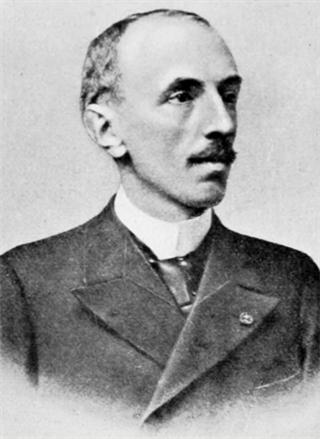
Leopold governed the Free State as an absolute sovereign, by decree, without ever visiting it. In Brussels a small central administration headed by secretaries-general, among them Edmond van Eetvelde, prepared his decisions, and in Boma a governor-general directed district commissioners, station chiefs and a thin network of European agents, numbering only a few thousand men in a territory of some 2.3 million square kilometres. The state had courts and a legal code, but in practice justice rarely reached Africans, and agents in remote posts acted with near impunity. Its finances were opaque: Leopold borrowed from the Belgian state, which lent 25 million francs in 1890 in return for the right to annex the Congo later, issued bonds and kept the revenues of the Crown Domain in a separate fund that paid for buildings and projects in Belgium. The concession companies exercised governmental powers in their territories, maintaining armed sentries and imposing quotas, so that the line between state and company was blurred. Missionaries, Catholic and Protestant, were allowed to work and became the main channel of information about abuses. When criticism mounted, Leopold appointed a Commission of Inquiry in 1904, and its report, published in 1905, confirmed many of the charges, though he responded with only limited reforms.
Global & Regional Impact
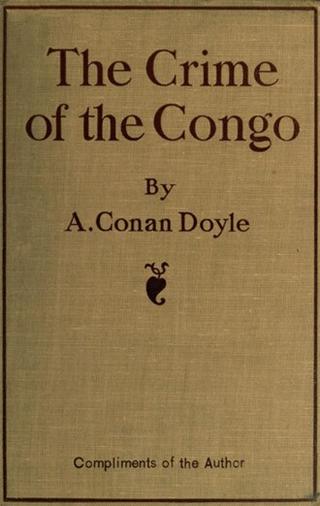
The Congo Free State left a deep and painful legacy. It fixed the borders of the vast territory that became the Belgian Congo and later the Democratic Republic of the Congo, and its methods of forced labour, concession companies and coercive taxation set patterns that persisted into the colonial period. Its economic and demographic damage to Congolese societies was immense, though the number of deaths remains uncertain. Internationally, the campaign against its abuses was a landmark in the history of humanitarian activism. The African American historian George Washington Williams denounced Leopold’s rule in an open letter in 1890; missionaries such as William Sheppard and Alice Seeley Harris, whose photographs of mutilated people were shown at meetings across Britain and America, publicised the atrocities; the British consul Roger Casement’s report of 1904 gave them official weight; and Edmund Dene Morel’s Congo Reform Association, founded in 1904, built one of the first mass international human rights movements. Writers joined the campaign, including Mark Twain with King Leopold’s Soliloquy (1905) and Arthur Conan Doyle with The Crime of the Congo (1909), while Joseph Conrad’s Heart of Darkness, drawing on his own journey up the river in 1890, became one of the most widely read works on European imperialism. Leopold’s profits paid for monuments in Brussels and for the museum at Tervuren.
Decline & Fall

The end of the Free State came through international pressure rather than African victory, although resistance never ceased. By the early 1900s evidence collected by missionaries and journalists, and Morel’s exposure of the fact that ships leaving Antwerp for the Congo carried mainly arms and officers while those returning were laden with rubber and ivory, had made the state notorious. In 1903 the British House of Commons called for action, and Roger Casement, sent to investigate the upper Congo, published his report in February 1904. Leopold’s own Commission of Inquiry confirmed much of the evidence in 1905. In Belgium, socialist and Catholic critics argued that the country should take responsibility, while wild rubber yields were already falling as vines were exhausted. After long negotiations over the Crown Domain and the king’s financial claims, the Belgian parliament approved annexation in 1908, and on 15 November 1908 the Free State became the Belgian Congo, governed under a colonial charter subject to parliament. Before handing over, Leopold had much of the state’s archive burned. Belgium took over the Free State’s debts and obligations, and the king died in December 1909. Forced labour and many abuses continued under Belgian rule, but the personal regime of the Congo Free State, one of the most brutal colonial systems of its age, was over.
The Congo Free State was King Leopold II’s private colony in Central Africa, where forced collection of wild rubber caused mass death and suffering; the international campaign against it became a landmark of human rights activism, and its borders and methods shaped the Belgian Congo and the modern Democratic Republic of the Congo.
References
- Ewans, M. (2002) European Atrocity, African Catastrophe: Leopold II, the Congo Free State and its Aftermath. London: RoutledgeCurzon.
- Hochschild, A. (1998) King Leopold’s Ghost: A Story of Greed, Terror, and Heroism in Colonial Africa. Boston: Houghton Mifflin.
- Morel, E.D. (1906) Red Rubber: The Story of the Rubber Slave Trade Flourishing on the Congo in the Year of Grace 1906. London: T. Fisher Unwin.
- Slade, R. (1962) King Leopold’s Congo: Aspects of the Development of Race Relations in the Congo Independent State. London: Oxford University Press.
- Van Reybrouck, D. (2014) Congo: The Epic History of a People. Trans. S. Garrett. London: Fourth Estate.
Connections
Open the full connections map →