Europe
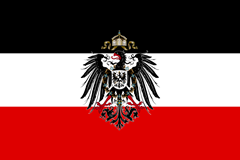
German Empire
At a glance
- Proclaimed at Versailles in 1871 after victory over France, it united German states under Prussian leadership.
- It became continental Europe's industrial giant and created the world's first national social insurance system.
- After Bismarck's dismissal its diplomacy unravelled; defeat in the First World War ended it in revolution in 1918.
Rise & Fall
- 1871Wilhelm I is proclaimed German Emperor in the Hall of Mirrors at Versailles
- 1878Bismarck's Anti-Socialist Laws target the rising labour movement
- 1883Bismarck introduces national health insurance, the first of his social insurance laws
- 1890Wilhelm II dismisses Bismarck; the Reinsurance Treaty with Russia lapses
- 1898The first Naval Law launches Tirpitz's challenge to British sea power
- 1914The Schlieffen Plan fails at the Marne, locking Germany into a two-front war
- 1916Verdun and the Somme cost roughly 300,000 German dead without a breakthrough
- 1918The Kiel mutiny sparks revolution; Wilhelm II abdicates and the armistice follows
Foundation
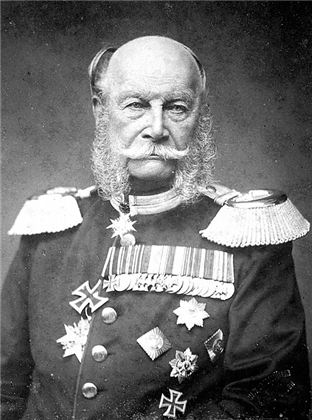
The German Empire was proclaimed in the Hall of Mirrors at Versailles on 18 January 1871, a deliberate humiliation of France during Prussia's decisive victory in the Franco-Prussian War. Wilhelm I of Prussia was declared German Emperor, and the Treaty of Frankfurt that May annexed Alsace-Lorraine and imposed a five-billion-franc indemnity that helped fund early industrial expansion. The founding architect was Otto von Bismarck, whose genius lay not in conquest but in construction: building a constitutional framework that preserved Prussian dominance within a federation of twenty-five constituent kingdoms, grand duchies, duchies, principalities, and free cities. The empire inherited a society still nearly two-thirds rural, with an industrial revolution underway but incomplete. Bismarck faced Catholic opposition during the Kulturkampf, socialist agitation from a rapidly urbanising working class, and the structural tension of governing through an elected parliament under monarchical authority. What he built was less an empire of territory than one of institutional and diplomatic architecture, and its fatal fragility lay in depending almost entirely on one man's capacity to hold it together.
Socioeconomy

The German economic transformation between 1871 and 1913 was among the most rapid in industrial history. Population grew from about 41 million at the founding to some 67 million by 1913, continuously replenishing the industrial labour supply. By 1900, Germany was the largest economy in continental Europe, and by 1913 it had overtaken Britain in steel production. Steel output nearly tripled between 1900 and the outbreak of war, led by firms such as Krupp and Thyssen. The chemical industry, led by BASF, Bayer, and Hoechst, supplied roughly eighty to ninety percent of the world's synthetic dyes by 1913, and German firms such as Siemens and AEG accounted for nearly half of world exports of electrical goods. Protective tariffs introduced in 1879 sheltered domestic industry and agriculture, while a dense network of technical universities produced the applied scientific capacity that sustained German industrial leadership. This was an economy of extraordinary institutional depth, which made its consumption in four years of total war all the more stark a demonstration of what modern industrial conflict could destroy.
Military

The German army was the most formidable land force in Europe throughout the empire's existence. Universal conscription produced a trained reserve mobilisable with a precision no rival could match. The Prussian General Staff, raised to pre-eminence under Helmuth von Moltke the Elder, institutionalised strategic planning as a professional discipline. The German Naval Laws of 1898 and 1900, championed by Alfred von Tirpitz, launched a construction programme intended to challenge British maritime supremacy, a decision that proved strategically catastrophic: it alarmed Britain without producing a navy capable of breaking the eventual blockade, as the indecisive Battle of Jutland in 1916 confirmed. The Schlieffen Plan, designed to avoid a prolonged two-front war through a rapid knockout in the west, failed at the Marne in September 1914 and condemned Germany to precisely the attritional struggle it had been designed to prevent. In 1916, Verdun and the Somme together cost roughly 300,000 German dead without breakthrough. The British naval blockade caused severe food shortages, culminating in the Turnip Winter of 1916 to 1917, eroding civilian morale faster than any battlefield defeat.
Governance & Law

The empire's constitutional structure was a deliberate hybrid, preserving monarchical authority while accommodating parliamentary representation. The Reichstag was elected by universal male suffrage and voted the budget, but it could not appoint or remove the chancellor, who remained responsible to the Kaiser alone. In the Bundesrat, Prussia's seventeen votes gave it an effective veto over constitutional amendments and military matters. Bismarck's domestic legacy included the world's first national social insurance system: health insurance in 1883, accident insurance in 1884, and old-age and disability pensions in 1889, pragmatic measures designed to undercut socialist appeal alongside the Anti-Socialist Laws of 1878. Wilhelm II's dismissal of Bismarck in 1890 exposed the system's fundamental weakness. The Reinsurance Treaty with Russia was allowed to lapse that same year, the diplomatic balance Bismarck had maintained with extraordinary precision began unravelling, and no institutional mechanism existed to restrain a Kaiser determined to pursue aggressive naval and colonial expansion. The architecture had been designed for one man, and it showed.
Global & Regional Impact

The German Empire's most consequential global impact was indirect: it was a principal party to a war that destroyed four empires and redrew the political map of Europe, the Middle East, and Africa. Its direct colonial legacy was modest, comprising German East Africa, German South West Africa, Togo, Cameroon, the leased territory of Kiautschou in China, and Pacific island territories, all stripped by the Treaty of Versailles and largely redistributed as League of Nations mandates. German scientific and industrial methodology left a more durable imprint. The research university model, the chemical industry's systematic application of science to manufacturing, and the General Staff's professionalisation of military planning were adopted by rivals and successor states alike. Most significantly, the war guilt clause of Versailles, Article 231, and the reparations it justified fuelled the resentments from which National Socialism later drew strength, making the German Empire's collapse arguably the most consequential imperial dissolution of the twentieth century.
Decline & Fall

Germany entered the First World War not from confident supremacy but from strategic anxiety. Russian military modernisation was accelerating, the Triple Entente was hardening, and German leadership calculated that the window for a winnable war was closing. This was expansion from fear rather than strength, and the distinction proved fatal. Four years of total war consumed the economic surplus that four decades of industrialisation had accumulated. After the failure of the Spring Offensive of 1918, the naval mutiny at Kiel in early November triggered the November Revolution. Wilhelm II's abdication was announced on 9 November, Philipp Scheidemann proclaimed the German Republic the same day, and the armistice followed two days later. The Treaty of Versailles stripped Alsace-Lorraine, the territories that formed the Polish Corridor, and all overseas colonies, imposed massive reparations, and reduced the army to 100,000 men, dismantling in months what had taken nearly half a century to build.
The German Empire's historical significance lies in the precision of its self-destruction: the most industrially capable state in continental Europe, undone not by economic failure but by a diplomatic architecture that collapsed once its architect was dismissed, leaving a heavily armed industrial giant with no strategy equal to its own ambitions.
Test yourself
5 questions on this page, from its key events and facts.
The questions open here once the page has loaded.
References
- Blackbourn, D. (1997) The Fontana History of Germany, 1780–1918: The Long Nineteenth Century. London: Fontana.
- Clark, C. (2006) Iron Kingdom: The Rise and Downfall of Prussia, 1600–1947. London: Allen Lane.
- Craig, G.A. (1978) Germany, 1866–1945. Oxford: Clarendon Press.
- Fischer, F. (1967) Germany's Aims in the First World War. Translated by H. Butterfield. London: Chatto and Windus.
- Mommsen, W.J. (1990) Two Centuries of European History: The Age of Bureaucracy. Oxford: Blackwell.
- Wehler, H.U. (1985) The German Empire, 1871–1918. Translated by K. Traynor. Leamington Spa: Berg.
Connections
Open the full connections map →