
At a glance
- A small republic built a trading empire across four continents through the VOC and the West India Company.
- The VOC's permanent capital and tradable shares created a model of the joint-stock company still recognisable today.
- Weakened by wars with Britain, the VOC was dissolved in 1799; Indonesian independence in 1949 ended its Asian empire.
Rise & Fall
- 1602The States-General merges rival traders into the VOC with quasi-sovereign powers
- 1619Jan Pieterszoon Coen founds Batavia on Java
- 1641The VOC captures Malacca from Portugal
- 1652Jan van Riebeeck founds the Cape Colony as a VOC resupply station
- 1664England takes New Netherland and New Amsterdam
- 1799The VOC is formally dissolved and its debts pass to the Dutch state
- 1942Japan conquers the Netherlands East Indies in about three months
- 1975Suriname's independence ends the Dutch colonial empire
Foundation
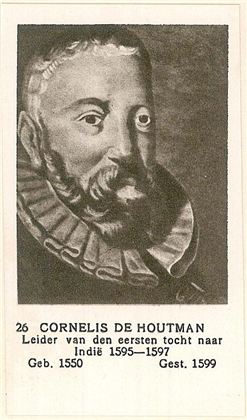
The Dutch colonial empire grew out of the mercantile ambitions of a young republic still fighting for its survival against Spain. The Act of Abjuration of 1581 renounced the sovereignty of Philip II, and within fourteen years Dutch merchants had sent the first expedition to the East Indies under Cornelis de Houtman (1595–1597). Although only about a third of the original crews survived, the voyage proved the route commercially viable and set off a chaotic scramble among rival Dutch trading companies. In 1602 the States-General, guided by Johan van Oldenbarnevelt, ended this wasteful competition by merging the rival Voorcompagnieën into the Vereenigde Oostindische Compagnie (VOC), granting it a 21-year monopoly of Dutch trade east of the Cape of Good Hope and, critically, quasi-sovereign powers to wage war, conclude treaties, build forts and administer justice. The Geoctroyeerde Westindische Compagnie (GWC) followed in 1621 to extend Dutch reach into the Atlantic, the Americas and West Africa. Although the English East India Company had been chartered two years before the VOC, the Dutch company's permanent capital, tradable shares and sovereign powers made it something new, enabling a republic of perhaps 1.5 to 2 million people to project power across four continents within half a century of its revolt.
Socioeconomy
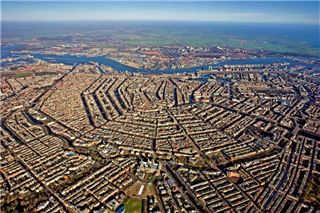
The Dutch colonial economy was built on commercial extraction rather than large-scale settlement, reflecting the republic's fundamentally mercantile character. The VOC's intra-Asian trading network, which earned profits by carrying goods between Asian ports — Japanese silver and copper, Indian textiles, Indonesian spices — independently of European demand, was its most innovative feature, allowing the company to finance much of its Asian business without constant transfers of bullion from Amsterdam. The spice monopolies enforced across the Maluku Islands, covering nutmeg, cloves and mace, were maintained through deliberate violence, including the Dutch conquest of the Banda Islands under Jan Pieterszoon Coen in 1621, with the near-extermination and enslavement of their population. In Java, the Cultivation System introduced by Governor-General Johannes van den Bosch in 1830 required villages to devote a portion of their land, nominally one-fifth, or their labour to export crops such as coffee, sugar and indigo for the colonial state, generating remittances that by the 1850s and 1860s supplied roughly a third of Dutch state revenue. This extraction helped pay off Dutch public debt and finance railways and infrastructure at home, but it entrenched poverty in the Javanese peasant economy, contributed to famines such as those in Cirebon (1843–1844) and Demak and Grobogan (1849–1850), and provoked sustained criticism, most famously in Multatuli's novel Max Havelaar (1860).
Military
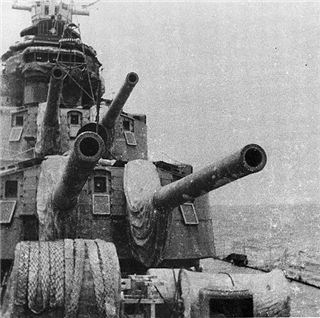
Dutch military power in the colonial world was primarily naval, reflecting the republic's dependence on command of the sea to link and defend a dispersed network of outposts. The capture of Malacca from Portugal in 1641 exemplified the VOC's strategic method: seizing chokepoints of maritime trade rather than large territories, and prioritising control of sea lanes over the government of populations. By the mid-seventeenth century the Dutch merchant fleet was larger than those of England and France combined. The three Anglo-Dutch Wars of 1652–1674 progressively challenged this maritime supremacy, and the Rampjaar (Disaster Year) of 1672, when Louis XIV invaded with some 120,000 troops while England attacked at sea, exposed the republic's vulnerability as a small state fighting on several fronts at once. The Fourth Anglo-Dutch War (1780–1784) proved ruinous: the navy was outmatched, hundreds of Dutch merchant ships were captured, and the VOC's trade with Asia was crippled. In the twentieth century, the defence of the Netherlands East Indies collapsed within about three months of the Japanese attack begun in December 1941; the Allied defeat at the Battle of the Java Sea on 27 February 1942 opened Java to invasion, and the Dutch forces capitulated on 8 March, ending in a matter of weeks a presence dating back almost three and a half centuries.
Governance & Law

For its first two centuries the Dutch colonial empire was governed not through state institutions but through the corporate bureaucracies of the VOC and GWC, each with its own laws, courts, administrative hierarchy and armed forces. The VOC's headquarters at Batavia, founded by Coen in 1619 on the north-western coast of Java, served as the capital of an Asian network administered by a Governor-General and Council of the Indies answerable to the Heeren XVII, the company's board of directors in the Netherlands. After the VOC was nationalised in 1796 and dissolved at the end of 1799, the Dutch state assumed direct colonial administration for the first time, first under the Batavian Republic and its successors, then, following British occupation of Java (1811–1816), under the new Kingdom of the Netherlands created in 1815. The Anglo-Dutch Treaty of 1824 settled the division of the region: the Dutch ceded Malacca and their Indian posts and accepted British possession of Singapore, while Britain gave up Bencoolen and its claims in Sumatra, leaving the archipelago south of the Strait of Malacca to the Dutch. Nineteenth-century colonial government combined a Dutch administrative superstructure with preserved indigenous aristocracies, notably the Javanese regents (bupati), a system of indirect rule that maintained order efficiently but shielded the colonial state from any genuine accountability to the governed. From 1901 the so-called Ethical Policy promised investment in education, irrigation and welfare, with limited results.
Global & Regional Impact
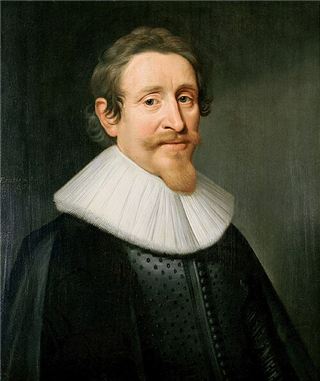
The Dutch colonial empire's most consequential global contribution was the development of the permanently capitalised joint-stock company with freely tradable shares as an instrument of commerce and imperial power — a model the English East India Company adopted in 1657 and that shaped the dominant form of early modern colonialism. Dutch cartography, navigation and commercial law advanced substantially through the demands of managing a global network, and Hugo Grotius's Mare Liberum (1609), written in defence of the VOC, became a founding text of international law. The Cape Colony, established in 1652 by Jan van Riebeeck as a VOC resupply station, produced the Afrikaner settler community whose descendants shaped South African history into the twentieth century. In Indonesia, a Dutch presence of some three and a half centuries — though effective control over much of the archipelago came only in the nineteenth and early twentieth centuries — shaped the country's territorial boundaries, legal institutions and inter-island economic relationships, leaving legacies that the independent Indonesian state inherited.
Decline & Fall
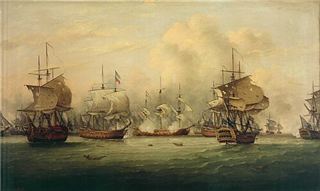
The first Dutch empire declined commercially rather than militarily. Dutch overseas expansion faltered after the loss of Taiwan to Koxinga's forces in 1662 and of New Netherland and New Amsterdam to England in 1664, and the Fourth Anglo-Dutch War of 1780–1784 left both the VOC and the GWC mortally wounded. French revolutionary armies overran the Netherlands in 1795, allowing Britain to seize the Cape Colony, Ceylon, Malacca and the Coromandel factories. The VOC was formally dissolved at the end of 1799, its debts assumed by the Dutch state. The settlement of 1814–1815 restored the East Indies and most other colonies, but Britain permanently retained the Cape and Ceylon. Japanese occupation destroyed the East Indies empire in 1942, and two military offensives, the so-called Police Actions of 1947 and 1948–1949, failed to reverse Indonesian independence, proclaimed by the Republic in 1945; the Netherlands transferred sovereignty on 27 December 1949, and Western New Guinea followed in 1962–1963. Suriname's independence on 25 November 1975 ended the Dutch colonial empire, leaving only the Caribbean islands as self-governing parts of the Kingdom of the Netherlands.
The Dutch colonial empire's singular historical importance lies in its proof that a small, commercially innovative republic could briefly dominate global trade across four continents, and that the same corporate logic that enabled that dominance contained the structural fragility that ultimately ended it.
Test yourself
5 questions on this page, from its key events and facts.
The questions open here once the page has loaded.
References
- Blussé, L. and Gaastra, F.S. (eds.) (1981) Companies and Trade: Essays on Overseas Trading Companies during the Ancien Régime. Leiden: Leiden University Press.
- Boxer, C.R. (1965) The Dutch Seaborne Empire, 1600–1800. London: Hutchinson.
- Emmer, P.C. (2006) The Dutch Slave Trade, 1500–1850. Translated by C. Emery. New York: Berghahn Books.
- Gaastra, F.S. (2003) The Dutch East India Company: Expansion and Decline. Zutphen: Walburg Pers.
- Israel, J.I. (1995) The Dutch Republic: Its Rise, Greatness, and Fall, 1477–1806. Oxford: Clarendon Press.
- Prak, M. (2005) The Dutch Republic in the Seventeenth Century: The Golden Age. Translated by D. Webb. Cambridge: Cambridge University Press.
Connections
Open the full connections map →