South & Southeast Asia
Indonesia
At a glance
- An archipelago of some 17,000 islands, proclaimed independent in 1945 and recognised by the Netherlands after a four-year revolution.
- Sukarno's Guided Democracy gave way after the killings of 1965–1966 to Suharto's military-backed New Order.
- Since 1998 Indonesia has been a decentralised democracy, a G20 economy and the most populous Muslim-majority country.
Rise & Fall
- 1945Sukarno and Mohammad Hatta proclaim independence on 17 August
- 1949The Netherlands transfers sovereignty after the Round Table Conference at The Hague
- 1955Indonesia hosts the Asian–African Conference at Bandung
- 1965A failed coup is followed by the mass killing of alleged communists
- 1975Indonesian forces invade East Timor
- 1998Suharto resigns during the Asian financial crisis
- 2004First direct presidential election; the Indian Ocean tsunami devastates Aceh
- 2005The Helsinki agreement ends the conflict in Aceh
Foundation
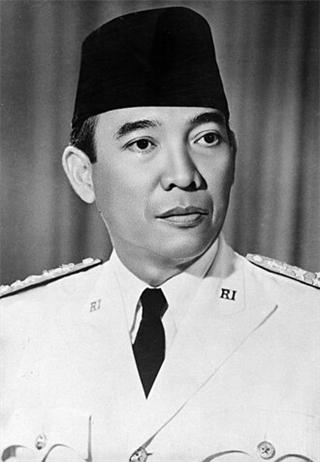
Indonesia grew out of the Dutch East Indies, a colony assembled by the Netherlands over three centuries, and out of a nationalist movement that took shape in the early twentieth century. Organisations such as Budi Utomo (1908), Sarekat Islam and the Indonesian National Party of Sukarno gave the colony's many peoples a common political language, and at the Youth Pledge of 1928 delegates adopted one nation, one people and one language, Indonesian, a form of Malay. The Japanese occupation of 1942–1945 destroyed Dutch authority, and on 17 August 1945, two days after Japan's surrender, Sukarno and Mohammad Hatta proclaimed independence in Jakarta. The next day a constitution was adopted that made Sukarno president and Hatta vice-president, with the state philosophy of Pancasila as its foundation. The Netherlands refused to recognise the republic, and four years of revolution followed, marked by the Battle of Surabaya against British forces in November 1945, two Dutch military offensives in 1947 and 1948, and the communist Madiun Affair of 1948. Under American and United Nations pressure, the Round Table Conference at The Hague led the Netherlands to transfer sovereignty on 27 December 1949 to the federal United States of Indonesia, which became the unitary Republic of Indonesia in August 1950.
Socioeconomy

Indonesia spans some 17,000 islands, from Sumatra to New Guinea, and its population has grown from about 70 million in 1950 to around 280 million, more than half of them on Java. Several hundred ethnic groups and languages coexist, with Javanese and Sundanese the largest, and Indonesian, taught in every school, binds them together. About 87 per cent of Indonesians are Muslims, making it the largest Muslim-majority country in the world, but the state officially recognises six religions, and Bali remains largely Hindu while parts of Sumatra, Sulawesi, eastern Indonesia and Papua are Christian. Mass Islamic organisations such as Nahdlatul Ulama and Muhammadiyah shape civil society. The early republic was poor and inflation reached several hundred per cent in the mid-1960s. Under Suharto, oil revenues, the Green Revolution in rice, which brought self-sufficiency in 1984, and later export manufacturing raised incomes sharply and reduced poverty, while the transmigration programme moved millions of settlers from Java to the outer islands. Indonesia is the world's largest producer of palm oil and a major exporter of coal, gas and nickel, which it now processes at home after banning raw ore exports. It has the largest economy in Southeast Asia, though inequality, deforestation and informal work remain serious problems.
Military

The Indonesian armed forces, today the Tentara Nasional Indonesia (TNI), were born in the revolution of 1945–1949, when regular units and irregular militias fought the Dutch with guerrilla tactics under commanders such as General Sudirman. This origin gave the army a lasting sense that it had created the nation. In the 1950s it suppressed regional rebellions, including the Darul Islam movement, which sought an Islamic state, and the PRRI and Permesta revolts in Sumatra and Sulawesi in 1958. Sukarno used the military to press claims abroad: Operation Trikora of 1961–1962 forced the Dutch out of western New Guinea, which passed to Indonesia in 1963 after a brief United Nations administration, and the Confrontation of 1963–1966 waged an undeclared border war against the new state of Malaysia in Borneo. The army's response to the failed coup of 30 September 1965 led to the mass killing of communists. In December 1975 Indonesian forces invaded East Timor, beginning an occupation in which, according to a later truth commission, more than 100,000 people died. Counter-insurgency campaigns were fought in Aceh until 2005 and continue at a lower level in Papua. The Djuanda Declaration of 1957 asserted the archipelagic principle, later recognised in the 1982 United Nations Convention on the Law of the Sea.
Governance & Law

Indonesia has passed through three distinct political orders. The period of parliamentary democracy under the provisional constitution of 1950 produced short-lived coalition cabinets and, in 1955, the first free general election, in which the Nationalist Party, two Islamic parties and the Communist Party (PKI) each won a large share. In 1959 Sukarno restored the 1945 constitution by decree and ruled through Guided Democracy, balancing the army against the PKI. After the events of 1965, General Suharto took power through the order of 11 March 1966, became acting president in 1967 and president in 1968, and built the New Order. Its pillars were the army's dual function (dwifungsi) in defence and government, the regime party Golkar, a centralised bureaucracy, technocratic economic planning and tight control of the press. Suharto was re-elected unopposed by the People's Consultative Assembly six times. The Reformasi era after 1998 transformed the state: four amendments to the constitution between 1999 and 2002 limited presidents to two terms, created a Constitutional Court and introduced direct presidential elections, first held in 2004; the military lost its reserved seats; and decentralisation laws passed in 1999 moved large powers and budgets to districts. Presidents since then have included Susilo Bambang Yudhoyono, Joko Widodo and, from October 2024, Prabowo Subianto.
Global & Regional Impact

Indonesia was one of the first colonies to win independence after the Second World War, and its revolution became a model and a cause for anti-colonial movements in Asia and Africa. In April 1955 it hosted the Asian–African Conference at Bandung, where twenty-nine newly independent and emerging states met, a gathering that helped prepare the Non-Aligned Movement of 1961. In 1967 Indonesia was a founder of the Association of Southeast Asian Nations (ASEAN), whose secretariat is in Jakarta, and its size makes it the anchor of regional diplomacy. The archipelagic principle it championed reshaped the international law of the sea. Domestically, the promotion of Indonesian as a national language has been one of the most successful language policies of the twentieth century, turning a trading lingua franca into the first language of tens of millions. Since 1998 Indonesia has been widely cited as evidence that democracy can take root in a large, Muslim-majority and highly diverse society, while its record in 1965–1966 and in East Timor and Papua remains contested. It is a member of the G20, hosted its summit on Bali in 2022, and is a major voice for developing economies in climate and trade negotiations, given its vast rainforests and peatlands.
Into the Present

Indonesia has not declined but has been repeatedly transformed. Guided Democracy collapsed amid economic chaos in 1965, when an attempted coup by the 30 September Movement killed six generals and was blamed on the PKI; the army and allied militias then killed perhaps 500,000 people or more in 1965–1966 and imprisoned hundreds of thousands. The New Order that followed brought three decades of growth but ended in the Asian financial crisis of 1997–1998, when the rupiah lost most of its value, riots struck Jakarta and Suharto resigned on 21 May 1998. His successor, B.J. Habibie, allowed a referendum in East Timor in August 1999, in which voters chose independence amid violence by militias backed by the army; the territory became independent in 2002. Communal conflicts in Maluku and Kalimantan and the Bali bombings of 2002 tested the new democracy, and the Indian Ocean tsunami of December 2004 killed well over 100,000 people in Aceh, a disaster that helped bring the Helsinki peace agreement with the Free Aceh Movement in August 2005. Today Indonesia is a presidential republic of thirty-eight provinces with regular, competitive elections, and since 2022 has been building a new capital, Nusantara, in East Kalimantan on Borneo, while Jakarta sinks and suffers chronic congestion.
Indonesia matters as the largest state in Southeast Asia and the most populous Muslim-majority country, a nation forged from a Dutch colony by revolution, shaped by Sukarno's anti-colonial diplomacy and Suharto's authoritarian development, and since 1998 one of the world's largest democracies, holding together some 280 million people across 17,000 islands.
References
- Ricklefs, M.C. (2008) A History of Modern Indonesia since c. 1200. 4th edn. Basingstoke: Palgrave Macmillan.
- Vickers, A. (2005) A History of Modern Indonesia. Cambridge: Cambridge University Press.
- Kahin, G.McT. (1952) Nationalism and Revolution in Indonesia. Ithaca: Cornell University Press.
- Feith, H. (1962) The Decline of Constitutional Democracy in Indonesia. Ithaca: Cornell University Press.
- Elson, R.E. (2001) Suharto: A Political Biography. Cambridge: Cambridge University Press.
- Robinson, G.B. (2018) The Killing Season: A History of the Indonesian Massacres, 1965–66. Princeton: Princeton University Press.
Connections
Open the full connections map →