Europe
Nazi Germany
At a glance
- A totalitarian dictatorship under Adolf Hitler that replaced the Weimar Republic within months of January 1933.
- It rearmed, annexed Austria and the Sudetenland, and launched the Second World War by invading Poland in 1939.
- It murdered some six million Jews in the Holocaust and was destroyed by total military defeat in May 1945.
Rise & Fall
- 1933Hitler is appointed chancellor; the Enabling Act lets his cabinet make laws without parliament
- 1934On Hindenburg’s death Hitler merges the offices of president and chancellor as Führer
- 1935The Nuremberg Laws strip German Jews of citizenship
- 1938Germany annexes Austria and, after the Munich Agreement, the Sudetenland
- 1939Germany invades Poland on 1 September, starting the Second World War in Europe
- 1941Operation Barbarossa: Germany invades the Soviet Union
- 1943The Sixth Army surrenders at Stalingrad
- 1945Hitler kills himself on 30 April; Germany surrenders unconditionally on 8 May
Foundation

Nazi Germany grew out of the collapse of the Weimar Republic. The National Socialist German Workers’ Party (NSDAP), led by Adolf Hitler since 1921, had failed in the Beer Hall Putsch of 1923 but became the largest party in the Reichstag in July 1932, winning 37 per cent of the vote amid the mass unemployment of the Great Depression. On 30 January 1933 President Paul von Hindenburg appointed Hitler chancellor at the head of a coalition cabinet in which conservatives such as Franz von Papen expected to control him. Within months the Nazis destroyed the constitutional order. After the Reichstag fire of 27 February the Reichstag Fire Decree suspended civil liberties, and on 23 March the Enabling Act gave the cabinet power to make laws without parliament; only the Social Democrats voted against it, the Communist deputies having already been arrested or driven into hiding. Trade unions were dissolved on 2 May, the state governments were placed under Nazi Reich governors, and by July 1933 the NSDAP was the only legal party. In the Night of the Long Knives (30 June–2 July 1934) Hitler had the SA leader Ernst Röhm and other rivals murdered, and when Hindenburg died on 2 August 1934 he merged the offices of president and chancellor as Führer.
Socioeconomy

The regime promised a racially defined Volksgemeinschaft, or national community, from which Jews and others deemed alien or unfit were excluded. Jews began to be driven from the civil service in April 1933, stripped of citizenship by the Nuremberg Laws of September 1935 and terrorised in the November pogrom of 1938, after which their businesses were confiscated; Roma and Sinti, homosexual men and people labelled ‘asocial’ were also persecuted, and about 70,000 disabled patients were murdered in the Aktion T4 programme by August 1941. Independent organisations were replaced by Nazi bodies such as the German Labour Front under Robert Ley, the Hitler Youth and the Strength through Joy leisure organisation. Unemployment, about six million in early 1933, fell to near zero by 1938, driven above all by rearmament financed through deficit spending and the disguised Mefo bills of Hjalmar Schacht, alongside public works such as the motorways. From 1936 Hermann Göring’s Four Year Plan pursued self-sufficiency in fuel, rubber and steel, while consumption was held down. During the war the economy rested on plunder and forced labour: by 1944 some seven million foreign civilian workers and prisoners of war were working in the Reich, many in brutal conditions.
Military

Hitler made rearmament the regime’s first priority. Conscription was reintroduced in March 1935 in defiance of the Treaty of Versailles, the Reichswehr became the Wehrmacht, the Luftwaffe was unveiled and troops reoccupied the demilitarised Rhineland in March 1936. The Condor Legion fought for Franco in the Spanish Civil War. After annexing Austria and the Sudetenland in 1938 and occupying Prague in March 1939, Germany invaded Poland on 1 September 1939, and Britain and France declared war. Fast campaigns combining armoured divisions and air power overran Poland, Denmark, Norway, the Low Countries and France by June 1940, but the Luftwaffe lost the Battle of Britain. In April 1941 Germany conquered Yugoslavia and Greece, and on 22 June 1941 it launched Operation Barbarossa against the Soviet Union with some three million German troops. The offensive stalled before Moscow in December 1941, the month Hitler declared war on the United States. Defeat at the Battle of Stalingrad, where the Sixth Army surrendered in early 1943, and the failed offensive at the Battle of Kursk that July lost the initiative in the east. The Kriegsmarine’s U-boat campaign was defeated in the Atlantic, and after the Allied landings in Normandy in June 1944 the Wehrmacht was pressed back on every front.
Governance & Law

Nazi Germany was a dictatorship built on the Führerprinzip, the principle that all authority flowed from Hitler, whose will stood above law. In practice government was a tangle of overlapping agencies, which historians call polycracy: old ministries coexisted with party offices, the Gauleiter who ran regional party districts, and special plenipotentiaries such as Göring for the economy and, from 1942, Albert Speer for armaments. Rival chiefs competed to anticipate Hitler’s wishes, a dynamic that radicalised policy. The federal states lost their parliaments in 1934, the Reichstag became a stage for acclamation, and judges applied Nazi principles, with political cases sent to special courts and the People’s Court. Terror was organised by the SS under Heinrich Himmler, which absorbed the police, ran the Gestapo and the concentration camps from Dachau, opened in March 1933, onwards, and in 1939 combined its security services in the Reich Security Main Office under Reinhard Heydrich. Joseph Goebbels’s Ministry of Propaganda controlled press, radio, film and the arts through the Reich Chamber of Culture. In occupied Europe Germany ruled through annexation, Reich commissariats in Norway, the Netherlands and the Soviet territories, military administrations, and collaborating regimes such as Vichy France and the Independent State of Croatia.
Global & Regional Impact
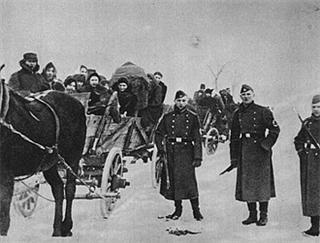
Nazi Germany caused the most destructive war in history and the Holocaust. In occupied Europe, mobile killing units of the Einsatzgruppen shot Jews in the Soviet territories from 1941, and the Wannsee Conference of January 1942 coordinated the deportation of Jews from across the continent to extermination camps in occupied Poland: Chełmno, Bełżec, Sobibór, Treblinka, Majdanek and Auschwitz-Birkenau. About six million Jews were murdered, together with hundreds of thousands of Roma, some three million Soviet prisoners of war who died of starvation and abuse, and millions of Polish and Soviet civilians. The Second World War in Europe killed tens of millions. The response to these crimes shaped the post-war order: the Nuremberg trials established that leaders could be judged for aggressive war, war crimes and crimes against humanity, and the Genocide Convention of 1948 and the Universal Declaration of Human Rights followed. The war left Germany divided, moved Poland’s borders westwards and led to the expulsion of some twelve million Germans from eastern Europe. It brought Soviet power into central Europe and set the stage for the Cold War. In Germany the confrontation with the Nazi past became a lasting theme of politics, law, education and memory, and Nazi symbols remain banned there.
Decline & Fall
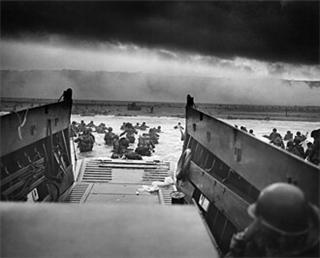
The regime’s end came through total military defeat. From 1943 Allied bombing devastated German cities, killing hundreds of thousands, while Goebbels proclaimed ‘total war’ in February 1943 and Speer pushed armaments output to its peak in 1944. The Soviet Operation Bagration in June 1944 destroyed Army Group Centre in the same month as the Normandy landings. On 20 July 1944 officers around Claus von Stauffenberg tried to kill Hitler with a bomb at his East Prussian headquarters; the plot failed and thousands were arrested and many executed. The last great German offensive in the Ardennes in December 1944 collapsed, and in 1945 Allied armies crossed the Rhine and the Oder. With the Red Army fighting in Berlin, Hitler killed himself in his bunker on 30 April 1945, naming Grand Admiral Karl Dönitz as head of state. German forces surrendered unconditionally in documents signed at Reims on 7 May and in Berlin on 8 May. The Dönitz government at Flensburg was arrested on 23 May, and on 5 June the four Allied powers assumed supreme authority. Germany was divided into occupation zones, its eastern territories were placed under Polish and Soviet administration, and its surviving leaders were tried at Nuremberg in 1945–1946.
Nazi Germany turned a democratic republic into a racial dictatorship within months, rearmed, conquered most of Europe and murdered six million Jews and millions of others in the Holocaust; its total defeat in 1945 reshaped international law, divided Germany and Europe, and made its crimes a permanent point of moral reference.
Test yourself
5 questions on this page, from its key events and facts.
The questions open here once the page has loaded.
References
- Evans, R.J. (2003) The Coming of the Third Reich. London: Allen Lane.
- Evans, R.J. (2005) The Third Reich in Power, 1933–1939. London: Allen Lane.
- Evans, R.J. (2008) The Third Reich at War. London: Allen Lane.
- Kershaw, I. (2000) The Nazi Dictatorship: Problems and Perspectives of Interpretation. 4th edn. London: Arnold.
- Tooze, A. (2006) The Wages of Destruction: The Making and Breaking of the Nazi Economy. London: Allen Lane.
- Hilberg, R. (1961) The Destruction of the European Jews. Chicago: Quadrangle Books.
Connections
Open the full connections map →