Europe
British Empire
At a glance
- The largest empire in history, ruling roughly a quarter of the world's people at its peak around 1920.
- Naval supremacy, industrial power and the City of London spread its laws, parliaments and language worldwide.
- Two world wars drained its wealth; after Indian independence in 1947 it dissolved within a few decades.
Rise & Fall
- 1607English settlers found Jamestown, Virginia, the first permanent colony in the Americas
- 1707Acts of Union join England and Scotland as the Kingdom of Great Britain
- 1763Treaty of Paris ends the Seven Years' War, stripping France of Canada
- 1805The Royal Navy wins at Trafalgar, securing a century of naval supremacy
- 1857The Indian Rebellion leads to the abolition of East India Company rule
- 1947India gains independence, removing the empire's most vital possession
- 1956The Suez Crisis exposes Britain's inability to act against US wishes
- 1997Britain hands Hong Kong to China, formally closing the imperial era
Foundation
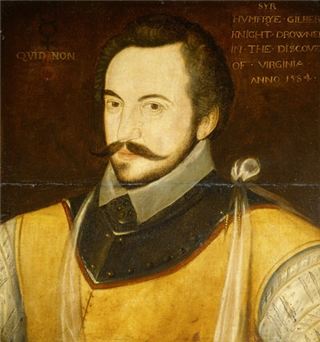
The British Empire grew from the most uncertain of beginnings — failed colonies, lost ships and aspirational royal charters — into the largest empire in history, covering at its greatest extent around 35.5 million square kilometres and ruling roughly a quarter of the world's population. Its founding moment is conventionally placed at Sir Humphrey Gilbert's formal claim to Newfoundland in 1583, though Gilbert was lost at sea on the return voyage and no settlers were left behind. The first permanent English settlement in the Americas came at Jamestown, Virginia, in 1607, a colony so precarious that the great majority of its settlers died during the “Starving Time” of 1609–1610. The empire's early decades were marked by intense commercial rivalry with the Dutch Republic — whose East India Company (VOC) long outperformed its English counterpart — and by the gradual development of the fiscal-military state that would underpin British global power: the Navigation Acts (from 1651), the Bank of England (1694), the funded national debt and a professional Royal Navy. The Acts of Union of 1707, which united England and Scotland into the Kingdom of Great Britain under a single Parliament, were constitutionally transformative: Scottish commercial energy and manpower combined with English colonial access to create a more powerful imperial engine than either kingdom had possessed alone. The Treaty of Utrecht (1713) delivered the first great imperial windfall — Gibraltar, Minorca, Nova Scotia, Newfoundland, the Hudson Bay territories and the asiento (the contract to supply enslaved Africans to Spanish America) — establishing Britain as a leading colonial power. The Seven Years' War (1756–1763), concluded by the Treaty of Paris, stripped France of Canada and its lands in North America east of the Mississippi, confirmed British dominance in India after Plassey (1757), and laid the foundations of the global empire that would reach its zenith in the century after Waterloo.
Socioeconomy

The British imperial economy was the most productive and geographically extensive economic system the world had yet seen, linking the agricultural resources of India, the plantation economies of the Caribbean and later West Africa and Malaya, the mineral wealth of Australia and South Africa, and the manufacturing output of industrial Britain within a sterling-based trading and monetary system. The Industrial Revolution — which began in Britain around the 1760s and accelerated through the early nineteenth century — gave the empire an economic lead that no competitor could close within a generation: by about 1850 Britain was producing roughly half of the world's iron and cotton cloth, while its merchant fleet carried the largest share of global seaborne trade. The system was self-reinforcing: industry imported raw materials from the colonies and paid for them with manufactured exports, generating the wealth that funded the Royal Navy that protected the trade routes. From the repeal of the Corn Laws in 1846 Britain also championed free trade, exporting its goods well beyond the formal empire. The City of London was the world's pre-eminent financial centre through the nineteenth century, sterling under the gold standard served as the principal international currency, and British capital financed railways from Argentina to India to Australia. The economic relationship with India was especially consequential: Indian revenues paid for the Indian Army — the empire's largest standing force — while India served both as a major market for Lancashire textiles and as the keystone of Britain's position in the Indian Ocean. The costs and contradictions of empire grew increasingly apparent in the twentieth century: the two World Wars consumed much of the capital accumulated over a century of industrial dominance, the United States overtook Britain as the world's leading manufacturer and creditor, and many colonies came to be seen as liabilities rather than assets.
Military
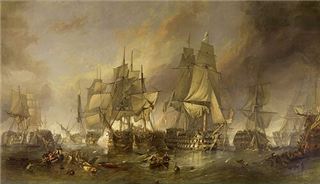
The Royal Navy was the foundational instrument of British imperial power, and its superiority over any likely combination of rivals from 1815 until around 1900 was among the most important structural facts of nineteenth-century world history. The “two-power standard”, formally adopted in the Naval Defence Act of 1889, held that the fleet should be at least as strong as the next two largest navies combined, giving Britain the capacity to protect its trade routes, project force along the world's coastlines and underpin the Pax Britannica through credible deterrence. The Battle of Trafalgar (1805) established this supremacy decisively, and the century of naval dominance that followed enabled Britain to suppress the Atlantic slave trade through the West Africa Squadron, force open China in the Opium Wars, annex vast territories across Africa and Asia, and maintain imperial communications across the globe without fear of blockade. The British Army, smaller and more professional than the conscript forces of the continental powers, operated globally through its small regular core and the Indian Army — a force that grew to some 2.5 million men in the Second World War, funded by Indian revenues and largely officered by Britons, and that served from Egypt to Hong Kong. The limits of the system were progressively revealed: the Indian Rebellion of 1857 exposed the fragility of East India Company rule and led to its abolition; the Second Boer War (1899–1902) required some 450,000 imperial troops to defeat Boer forces that never numbered more than a fraction of that figure, and the deaths of thousands of Boer and African civilians in British concentration camps damaged Britain's international reputation; and the two World Wars showed that industrial total war was beyond the sustainable capacity of an island of some 45 million people ruling an empire of more than 400 million through prestige, professional competence and the judicious use of force.
Governance & Law
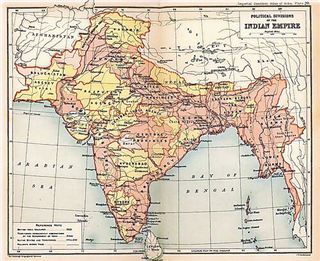
The British Empire's governance was marked by a pragmatic diversity that contrasted with the more centralised administrative systems of French or Spanish imperialism: territories were held under very different constitutional arrangements, from the self-governing dominions of Canada (1867), Australia (1901), New Zealand and South Africa (1910) — which had elected parliaments and substantial autonomy — to directly administered Crown Colonies, the Indian Raj governed by a viceroy and the Indian Civil Service, and the protectorates and League of Nations mandates administered under varying degrees of oversight. This constitutional flexibility was both the empire's greatest administrative strength and the source of its eventual unmanageability: the Statute of Westminster (1931) gave the dominions full legislative independence, effectively turning the white settler empire into a voluntary Commonwealth well before the main wave of decolonisation, while the Crown Colonies and India were governed under systems that combined administrative efficiency with an increasingly indefensible exclusion of their peoples from political power. The Indian Civil Service — the “steel frame” of the Raj — was a remarkably effective body that administered some 300 million people through a cadre of roughly 1,000 to 1,200 senior officers; its efficiency rested on a racial hierarchy that kept Indians largely out of senior posts until well into the twentieth century, although Satyendranath Tagore had entered the service as early as 1864. The empire's legal legacy was extensive and durable: English common law, procedural traditions and constitutional frameworks were transplanted into dozens of successor states, and the Westminster parliamentary model was adopted, with varying success, across the former empire from India to Jamaica to Nigeria.
Global & Regional Impact
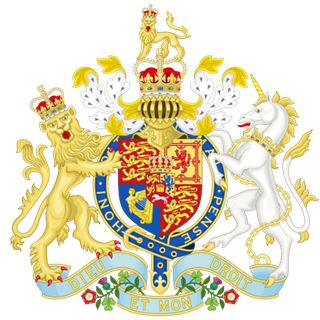
The British Empire's impact on the modern world was so pervasive as to be almost impossible to measure: it shaped the political boundaries, legal systems, languages, religions, economic structures and cultural practices of roughly a quarter of humanity, leaving legacies that remain contested and consequential more than a century after the empire's peak. Its most enduring political contribution was the spread of the Westminster parliamentary model, which became the constitutional template for dozens of post-colonial states; India's adoption and maintenance of parliamentary democracy is perhaps the most consequential single institutional inheritance of British rule. The English language, spread by imperial administration, commerce and education, became the world's dominant lingua franca for science, commerce, diplomacy and popular culture — a position reinforced by the later rise of the United States and one that outlasted the empire itself. The economic legacy was deeply ambivalent: the empire built railways, telegraph lines, ports and legal frameworks that facilitated economic development, while organising colonial economies as suppliers of raw materials rather than industrial producers, a structural dependency that shaped the trajectories of post-colonial states for decades. The partition of Africa among the European powers, in which Britain was the largest participant, produced colonial boundaries that became the borders of independent states, generating territorial disputes and ethnic conflicts with lasting consequences, as did the partition of India in 1947. Britain's abolition of the slave trade (1807) and of slavery across most of its empire (by the Slavery Abolition Act 1833), achieved only after more than a century and a half of heavy participation in the trade, was followed by naval and diplomatic pressure on other states that shaped Atlantic history throughout the nineteenth century.
Decline & Fall

The British Empire's decline was one of history's most rapid reversals of global dominance: from its territorial peak around 1920 to the symbolic end in 1997 took less than eighty years, during which the largest empire in history contracted to fourteen small overseas territories. The structural causes were laid by the First World War, which multiplied Britain's national debt, passed the role of the world's leading creditor to the United States and weakened the financial foundations on which imperial power depended. The Second World War completed this erosion: Lend-Lease ended abruptly in August 1945, and the Anglo-American loan negotiated to replace it was not finally repaid until 2006, while Japan's rapid conquest of Hong Kong, Malaya, Singapore and Burma in 1941–1942 — the fall of Singapore in February 1942 above all — shattered the myth of British invincibility in Asia. Indian independence in August 1947, achieved through the mass civil disobedience campaigns led by Gandhi and the Indian National Congress and the growing impossibility of governing some 400 million people who no longer consented to be governed, removed the empire's most economically and strategically vital possession and made every remaining imperial commitment financially and morally questionable. The Suez Crisis of 1956 delivered the public humiliation that confirmed what financial reality had already established: when President Eisenhower's administration refused support for sterling and blocked British access to IMF funds unless Britain withdrew from Egypt, Prime Minister Anthony Eden's climbdown demonstrated that Britain could no longer pursue an independent great-power policy against American wishes. Harold Macmillan's “Wind of Change” speech in Cape Town in 1960 acknowledged the inevitability of African decolonisation, and the wave of independence that followed, beginning with Ghana in 1957 and Nigeria in 1960, ended Britain's African empire within little more than a decade. The handover of Hong Kong to China on 1 July 1997 — conducted with elaborate ceremony and evident melancholy — served as the formal closing chapter of an empire that had transformed the world and whose transformation of the world had, in turn, made the empire impossible to sustain.
The British Empire's most profound paradox is that the liberal political values it claimed to embody — the rule of law, representative government and freedom of expression — were the very principles that made colonial rule ultimately untenable, providing the ideological weapons with which subject peoples dismantled an empire that had denied those principles to them.
Test yourself
5 questions on this page, from its key events and facts.
The questions open here once the page has loaded.
References
- Darwin, J. (2009) The Empire Project: The Rise and Fall of the British World-System, 1830–1970. Cambridge: Cambridge University Press.
- Darwin, J. (2012) Unfinished Empire: The Global Expansion of Britain. London: Allen Lane.
- Ferguson, N. (2003) Empire: How Britain Made the Modern World. London: Allen Lane.
- Hyam, R. (2002) Britain's Imperial Century, 1815–1914: A Study of Empire and Expansion. 3rd edn. Basingstoke: Palgrave Macmillan.
- James, L. (1994) The Rise and Fall of the British Empire. London: Little, Brown.
- Marshall, P.J. (ed.) (1996) The Cambridge Illustrated History of the British Empire. Cambridge: Cambridge University Press.
- Porter, A. (ed.) (1999) The Oxford History of the British Empire. Vol. 3: The Nineteenth Century. Oxford: Oxford University Press.
Connections
Open the full connections map →