Europe
Kingdom of England
At a glance
- Unified by Æthelstan in 927, England became one of the most centralised kingdoms of medieval Europe.
- It developed the common law, Magna Carta and Parliament, institutions later carried across the world.
- Joined with Scotland under one crown in 1603, it merged into the Kingdom of Great Britain in 1707.
Rise & Fall
- 927Æthelstan takes York and receives the submission of the northern rulers
- 1066William of Normandy defeats Harold Godwinson at the Battle of Hastings
- 1215King John accepts Magna Carta at Runnymede
- 1415Henry V defeats the French at the Battle of Agincourt
- 1534The Act of Supremacy makes Henry VIII head of the Church of England
- 1588English ships help defeat the Spanish Armada
- 1649Charles I is executed and the Commonwealth of England proclaimed
- 1707The Acts of Union create the Kingdom of Great Britain
Foundation

The Kingdom of England grew out of the West Saxon kingdom of Wessex. Alfred the Great (r. 871–899) held off the Great Heathen Army and fortified Wessex with a network of burhs, and his son Edward the Elder and daughter Æthelflæd, Lady of the Mercians, reconquered the Danelaw south of the Humber in the 910s. Edward’s son Æthelstan completed the work: in 927 he took York from its Viking rulers and on 12 July received the submission of the northern rulers, including Constantine II of Scotland, at Eamont Bridge, an event usually taken as the founding moment of a single English kingdom. He styled himself king of the English, and in 937 he defeated a coalition of Scots, Strathclyde Britons and Dublin Vikings at the Battle of Brunanburh. Unity remained fragile. Viking kings, the last of them Eric Bloodaxe, ruled York at intervals until 954, and under Æthelred the Unready renewed Danish attacks led to the conquest of England by Sweyn Forkbeard in 1013 and by his son Cnut in 1016. Cnut and his sons ruled until 1042, when the old West Saxon line returned with Edward the Confessor. His death in January 1066 opened a succession crisis that ended with the Norman Conquest.
Socioeconomy

England was a rich agrarian country. Domesday Book, compiled in 1086, recorded a population usually estimated at around two million, most of them villagers working open fields of wheat, barley and oats under manorial lords. The population grew to perhaps five million or more by 1300 before famine and the Black Death of 1348–1349, which killed perhaps a third to a half of the people, cut it drastically; labour shortages loosened serfdom and helped provoke the Peasants’ Revolt of 1381. Wool was the great export of the medieval kingdom, shipped to the cloth towns of Flanders and Italy, from 1363 largely through the staple at Calais, and from the fifteenth century England increasingly exported finished woollen cloth instead. London grew into one of the largest cities in Europe, with more than half a million people by 1700. The Church, under the archbishops of Canterbury and York, owned a large share of the land until Henry VIII dissolved the monasteries between 1536 and 1541. The universities of Oxford and Cambridge, which emerged in the late twelfth and early thirteenth centuries, trained clergy and officials. From the late sixteenth century overseas trade expanded through chartered companies such as the East India Company, founded in 1600, and through colonies in North America and the Caribbean, beginning with Jamestown in Virginia in 1607.
Military

Anglo-Saxon kings relied on the fyrd, the shire levies, supported by fortified burhs and, under Cnut, a paid household of housecarls. After 1066 the Norman kings ruled through castle-building and feudal knight service, and their Plantagenet successors fought on several fronts. Edward I conquered Wales in 1277–1283 and secured it with castles such as Caernarfon, Conwy and Harlech, but his attempt to subdue Scotland failed, and his son Edward II was defeated at the Battle of Bannockburn in 1314. In the Hundred Years’ War against France, English armies combining longbowmen with dismounted men-at-arms won famous victories at the Battle of Crécy in 1346, the Battle of Poitiers in 1356 and the Battle of Agincourt in 1415, and Henry V conquered Normandy. All was lost after the French recovery; defeat at the Battle of Castillon in 1453 left only Calais, which fell in 1558. The dynastic Wars of the Roses were effectively decided by Henry Tudor’s victory at the Battle of Bosworth in 1485. Henry VIII built up a permanent navy, and in 1588 English ships helped defeat the Spanish Armada. The Civil War of 1642–1651 produced the professional New Model Army, victorious at the Battle of Naseby in 1645. By the early eighteenth century England was a leading naval and military power, and under the Duke of Marlborough its armies helped win the Battle of Blenheim in 1704.
Governance & Law

Late Anglo-Saxon England was already a remarkably centralised kingdom. It was divided into shires and hundreds, run by ealdormen and royal reeves who became sheriffs; the king issued written writs in English, consulted the witan, or council of leading men, and after Edgar’s coinage reform of about 973 controlled a uniform silver coinage struck at dozens of mints. The Norman kings preserved these structures and added feudal tenure and the Exchequer, which audited sheriffs’ accounts by the early twelfth century. Henry II (r. 1154–1189) developed the common law, with itinerant royal justices, standard writs and sworn juries, and in 1215 rebellious barons forced King John to accept Magna Carta at Runnymede, establishing that the king was bound by law. Parliament grew out of the great council: Simon de Montfort’s assembly of 1265 included knights and burgesses, and by the fourteenth century the Commons sat separately and their consent was needed for taxation. Henry VIII’s break with Rome, enacted through Parliament with the Act of Supremacy of 1534 and directed by Thomas Cromwell, made the king head of the English Church and extended the reach of the state. Conflict between the Stuart kings and Parliament led to civil war, the execution of Charles I and a republic, and the Glorious Revolution of 1688 and the Bill of Rights of 1689 confirmed parliamentary supremacy.
Global & Regional Impact

England’s institutions and culture had an influence far beyond its borders. The common law, trial by jury, parliamentary government and the principle that rulers are subject to law, symbolised by Magna Carta, were carried to Wales, Ireland and the English colonies and later shaped the legal and political systems of the United States, Canada, Australia, India and many other countries. The English language, transformed after 1066 by French vocabulary, became a major literary language with Geoffrey Chaucer’s Canterbury Tales in the late fourteenth century, and William Caxton printed the first books in England in the 1470s. The Elizabethan and Jacobean age produced the drama of William Shakespeare, Christopher Marlowe and Ben Jonson, and the King James Bible of 1611 shaped English prose for centuries. In the seventeenth century England became a centre of scientific inquiry: the Royal Society was founded in 1660, Isaac Newton published his Principia in 1687, and Thomas Hobbes and John Locke laid foundations of modern political thought. The Church of England, created by the Reformation and given its liturgy in Thomas Cranmer’s Book of Common Prayer, became the mother church of the worldwide Anglican Communion. English trading companies and colonies in North America, the Caribbean and India laid the foundations of the later British Empire.
Inventions and discoveries credited here
Decline & Fall
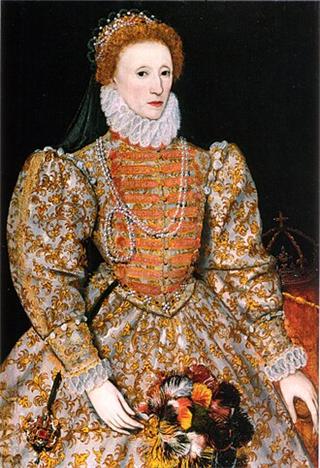
The Kingdom of England did not collapse but merged into a larger state. It had expanded within the British Isles over centuries: Edward I conquered Wales, which was formally incorporated by the Laws in Wales Acts of 1535 and 1542, and English kings ruled the Lordship of Ireland from the 1170s and, from 1542, a Kingdom of Ireland. When Elizabeth I died childless in 1603, her cousin James VI of Scotland became James I of England, uniting the two crowns while leaving two separate kingdoms with their own parliaments, churches and laws. The upheavals of the seventeenth century, from the Civil War and the Commonwealth of England proclaimed after the execution of Charles I in 1649 to the restoration of Charles II in 1660 and the Glorious Revolution of 1688, strained this union. After the English Act of Settlement of 1701 settled the crown on the Protestant House of Hanover, fears that Scotland might choose a different successor to the childless Queen Anne, together with Scotland’s heavy losses in the failed Darien scheme, led both parliaments to negotiate a full union. The Acts of Union, ratified by the Scottish Parliament in January 1707 and by the English Parliament in March 1707, created the Kingdom of Great Britain on 1 May 1707, ending England’s existence as a separate state, although its law, church and identity survived within the new kingdom.
The Kingdom of England, unified by Æthelstan in 927 and transformed by the Norman Conquest, built one of medieval Europe’s most centralised governments, developed the common law and Parliament, produced literature and science of world importance, and laid the foundations of the British state and empire before its union with Scotland in 1707.
Test yourself
5 questions on this page, from its key events and facts.
The questions open here once the page has loaded.
References
- Bartlett, R. (2000) England under the Norman and Angevin Kings, 1075–1225. Oxford: Clarendon Press.
- Guy, J. (1988) Tudor England. Oxford: Oxford University Press.
- Hill, C. (1961) The Century of Revolution, 1603–1714. Edinburgh: Thomas Nelson.
- Prestwich, M. (2005) Plantagenet England, 1225–1360. Oxford: Clarendon Press.
- Stenton, F.M. (1943) Anglo-Saxon England. Oxford: Clarendon Press.
Connections
Open the full connections map →