Conflicts & Resolutions · Revolt
Peasants' Revolt
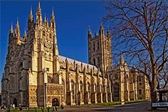
The Peasants' Revolt of 1381 was the largest popular rising in medieval England. Triggered by the third poll tax in four years, and fed by resentment of serfdom and of the laws holding down wages after the Black Death, rebels from Essex and Kent marched on London in June 1381, burned the Savoy Palace and killed the Archbishop of Canterbury. The young Richard II met them and promised reforms, but after their leader Wat Tyler was killed at Smithfield the rising was put down and the promises were revoked.
Mentioned in 1 profile
Great speeches
See also




Cite this entry
- APA
- The Epoch Institute. (2026). Peasants' Revolt. In The Epoch Institute Encyclopedia. https://the-epoch-institute.org/encyclopedia/peasants-revolt
- MLA
- “Peasants' Revolt.” The Epoch Institute Encyclopedia, The Epoch Institute, 2026, https://the-epoch-institute.org/encyclopedia/peasants-revolt. Accessed .
- Chicago
- The Epoch Institute. “Peasants' Revolt.” The Epoch Institute Encyclopedia. 2026. https://the-epoch-institute.org/encyclopedia/peasants-revolt.
- Harvard
- The Epoch Institute (2026) ‘Peasants' Revolt’, The Epoch Institute Encyclopedia. Available at: https://the-epoch-institute.org/encyclopedia/peasants-revolt (Accessed: ).
Last reviewed October 2026Random entry ↻