Encyclopedia: P
1,704 entries under P · page 5 of 18: Paulinus of York – Pedro Navarro
- Paulinus of YorkPersonPaulinus was a Roman missionary sent to England in 601 to join Augustine's mission, and the first bishop of York.
 Paulo Dias de NovaisPersonPaulo Dias de Novais was a Portuguese nobleman and grandson of Bartolomeu Dias who founded the colony of Portuguese Angola.
- Paulus (jurist)PersonPaulus, or Julius Paulus, was a Roman jurist of the late second and early third centuries CE.
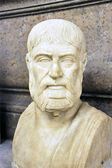 Pausanias (general)PersonPausanias was a Spartan general and regent for the young king Pleistarchus.
 Pausanias (geographer)PersonPausanias was a Greek traveller and geographer of the 2nd century CE, probably from Asia Minor.
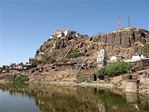 PavagadhPlacePavagadh is a hill in Panchmahal district, Gujarat, India, crowned by the Kalika Mata temple, an important Hindu pilgrimage site.
- PavapuriPlacePavapuri is a village in the Nalanda district of Bihar, India, revered by Jains as the place where Mahavira, the 24th tirthankara, attained final liberation in the 6th…
 Pavel Bermondt-AvalovPersonPavel Bermondt-Avalov was a Russian officer and adventurer who in 1919 commanded the West Russian Volunteer Army, a force of anti-Bolshevik Russians and German…
 Pavel TsitsianovPersonPavel Tsitsianov was a Russian general of Georgian descent who commanded Russian forces in the Caucasus from 1802.
 Pavlo SkoropadskyPersonPavlo Skoropadsky was a Ukrainian aristocrat and former Russian imperial general who ruled Ukraine as Hetman from April to December 1918.
 Pavlos KountouriotisPersonPavlos Kountouriotis was a Greek admiral and statesman.
- PawayaPlacePawaya is a village and archaeological site near Gwalior in Madhya Pradesh, India, identified with ancient Padmavati, capital of a Naga dynasty in the 3rd and 4th…
 PawonWork / monumentPawon is a small 9th-century Buddhist temple in Central Java, Indonesia, standing between Mendut and Borobudur on a straight line with both.
- Pax BritannicaReligion / ideaPax Britannica refers to the period of relative peace among the great powers from 1815 to the early twentieth century, during which Britain was the leading global power.
- Pax JuliaPlacePax Julia was a Roman town in southern Lusitania, on the site of modern Beja in Portugal's Alentejo region.
- Pax MongolicaReligion / ideaPax Mongolica refers to the relative stability across Eurasia under Mongol rule in the thirteenth and fourteenth centuries.
- Paxbolon-Maldonado PapersWork / monumentThe Paxbolon-Maldonado Papers are a collection of colonial documents from Campeche, Mexico, that include a rare text in the Chontal Maya language written in the early…
- PaxbolonachaPersonPaxbolonacha was the ruler of Acalan, the Chontal Maya state on the Candelaria river, when Hernán Cortés passed through on his march to Honduras in 1525.
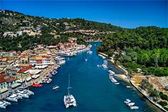 PaxosPlacePaxos is a small island of the Ionian Sea, south of Corfu, in Greece.
 Paxton BoysPeople / groupThe Paxton Boys were frontier settlers from around Paxton in central Pennsylvania who, during Pontiac's War, attacked the peaceful Conestoga Indians, survivors of the…
- Payen the ButlerPersonPayen the Butler was a Crusader noble, butler of the kings of Jerusalem, who became lord of Oultrejordain, the lands east of the Jordan.
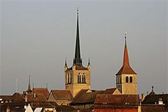 PayernePlacePayerne is a town in the canton of Vaud in western Switzerland, known for its large Romanesque abbey church.
- Paynda Khan TanoliPersonPaynda Khan Tanoli was chief of the Tanoli tribe and ruler of Amb, in the Hazara region of today's Khyber Pakhtunkhwa, Pakistan, in the early 19th century.
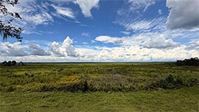 Paynes PrairiePlacePaynes Prairie is a large savanna and wetland basin south of Gainesville in north-central Florida, known in the 18th century as the Alachua prairie.
 Pays d'AugePlaceThe Pays d'Auge is a region of Normandy in north-western France, lying between the valleys of the Touques and the Dives inland from the Channel coast, with Lisieux as…
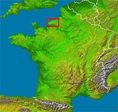 Pays de CauxPlaceThe Pays de Caux is a chalk plateau region of Normandy, France, north of the Seine estuary between Le Havre and Dieppe, ending at the sea in white cliffs such as those…
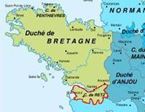 Pays de RetzPlaceThe Pays de Retz is a historic district south of the Loire estuary in western France, between Nantes and the Atlantic coast, now in the department of Loire-Atlantique.
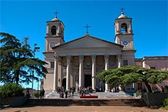 PaysandúPlacePaysandú is a city in western Uruguay on the east bank of the Uruguay river, opposite Colón in Argentina.
 Pazeh peoplePeople / groupThe Pazeh are an indigenous plains people of the Taichung basin in west-central Taiwan.
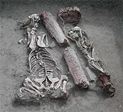 Pazyryk burialsPlaceThe Pazyryk burials are a group of kurgans of the 4th and 3rd centuries BCE in the Pazyryk valley of the Altai mountains in southern Siberia, Russia, excavated by…
- Peace of 363Treaty · Peace · 363 CEThe Peace of 363 was the treaty concluded in 363 CE between Rome and the Sasanian Empire after the Roman emperor Julian died during his invasion of Persia.
- Peace of Aachen (812)Treaty · Peace · 812The Peace of Aachen of 812 was the settlement between Charlemagne and the Byzantine emperor Michael I, whose envoys at Aachen acknowledged Charlemagne as emperor.
 Peace of AmasyaTreaty · Peace · 1555The Peace of Amasya was the treaty concluded on 29 May 1555 between Suleiman the Magnificent and Shah Tahmasp I, ending the Ottoman–Safavid war of 1532–1555.
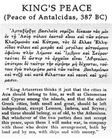 Peace of AntalcidasTreaty · Peace · 387–386 BCEThe Peace of Antalcidas, or King's Peace, was the settlement imposed by the Persian king Artaxerxes II in 387–386 BCE, negotiated by the Spartan Antalcidas, that ended…
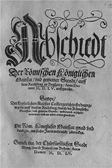 Peace of AugsburgTreaty · Peace · 1555The Peace of Augsburg was a settlement agreed in 1555 between Emperor Charles V's government and the Lutheran princes of the Holy Roman Empire.
- Peace of Basel (1795)Treaty · Peace · 1795The Peace of Basel was the set of treaties of 1795 by which Prussia, Spain and Hesse-Kassel made peace with revolutionary France.
 Peace of BautzenTreaty · Peace · 1018The Peace of Bautzen was signed on 30 January 1018 between Emperor Henry II and Duke Bolesław I the Brave of Poland, ending fifteen years of intermittent war.
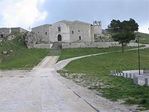 Peace of CaltabellottaTreaty · Peace · 1302The Peace of Caltabellotta, signed on 31 August 1302 at Caltabellotta in Sicily, ended the War of the Sicilian Vespers between the Angevins of Naples and the Aragonese.
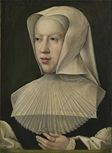 Peace of CambraiTreaty · Peace · 1529The Peace of Cambrai, called the Ladies' Peace, was signed on 3 August 1529 between Francis I of France and Emperor Charles V, negotiated by Louise of Savoy and…
 Peace of Cateau-CambrésisTreaty · Peace · 1559The Peace of Cateau-Cambrésis consisted of treaties signed in April 1559 between France and England and between France and Spain, ending more than sixty years of…
 Peace of ConstanceTreaty · Peace · 1183The Peace of Constance of 1183 ended the long war between the Emperor Frederick Barbarossa and the Lombard League.
- Peace of FexhePeace · 1316The Peace of Fexhe was a charter agreed on 18 June 1316 between the prince-bishop of Liège, Adolph de la Marck, and the estates of the principality, ending a period of…
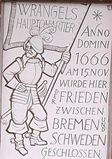 Peace of HabenhausenTreaty · Peace · 1666The Peace of Habenhausen was signed in November 1666 at Habenhausen, near Bremen, ending the second war between Sweden and the city of Bremen.
 Peace of MünsterTreaty · Peace · 1648The Peace of Münster was the treaty signed in Münster on 30 January 1648 between Spain and the Dutch Republic, one of the settlements of the Peace of Westphalia.
- Peace of NaupactusTreaty · Peace · 217 BCEThe Peace of Naupactus, concluded in 217 BCE, ended the Social War between the Hellenic alliance led by Philip V of Macedon and the Aetolian League.
- Peace of NiciasTreaty · Peace · 421 BCEThe Peace of Nicias was a treaty between Athens and Sparta concluded in the spring of 421 BCE, ending the first phase of the Peloponnesian War, known as the Archidamian…
- Peace of Nisibis (299)Treaty · Peace · 299 CEThe Peace of Nisibis was the treaty of 299 CE between Rome and the Sasanian Empire after the Roman victory over King Narseh.
- Peace of OkahandjaTreaty · Peace · 1870The Peace of Okahandja was the settlement of 1870, negotiated with the help of German missionaries, that ended a decade of war between the Herero under Maharero and the…
 Peace of OlomoucTreaty · Peace · 1479The Peace of Olomouc of 1479 ended the war between Matthias Corvinus of Hungary and Vladislaus II of Bohemia over the Bohemian crown.
- Peace of PassauTreaty · Peace · 1552The Peace of Passau was an agreement of August 1552 between King Ferdinand I, acting for Emperor Charles V, and the Protestant princes led by Maurice of Saxony, who had…
- Peace of PhoeniceTreaty · Peace · 205 BCEThe Peace of Phoenice was the treaty that ended the First Macedonian War between Rome and Philip V of Macedon in 205 BCE.
 Peace of Prague (1635)Treaty · Peace · 1635The Peace of Prague was concluded on 30 May 1635 between Emperor Ferdinand II and Elector John George I of Saxony during the Thirty Years' War, and most Protestant…
 Peace of Prague (1866)Treaty · Peace · 1866The Peace of Prague, signed on 23 August 1866, ended the Austro-Prussian War.
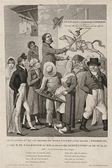 Peace of Pressburg (1805)Treaty · Peace · 1805The Peace of Pressburg was signed on 26 December 1805 at Pressburg (Bratislava) between France and Austria after Napoleon's victory at Austerlitz.
 Peace of RigaTreaty · Peace · 1921The Peace of Riga was signed on 18 March 1921 between Poland on one side and Soviet Russia and Soviet Ukraine on the other, ending the Polish–Soviet War.
 Peace of SzatmárTreaty · Peace · 1711The Peace of Szatmár was concluded in April 1711 between the Habsburg monarchy and the Hungarian insurgents of Francis II Rákóczi, ending the war of independence he had…
- Peace of SzegedTreaty · Peace · 1444The Peace of Szeged was a ten-year truce agreed in 1444 between the Ottoman sultan Murad II and the Kingdom of Hungary.
- Peace of Turin (1381)Treaty · Peace · 1381The Peace of Turin was concluded in August 1381 through the mediation of Amadeus VI of Savoy and ended the War of Chioggia between Venice and Genoa and their allies.
 Peace of VervinsTreaty · Peace · 1598The Peace of Vervins was signed on 2 May 1598 between Henry IV of France and Philip II of Spain, ending the war Spain had waged in support of the Catholic League.
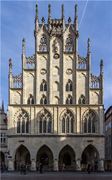 Peace of WestphaliaTreaty · Peace · 1648The Peace of Westphalia was the series of treaties signed in 1648 that ended the Thirty Years' War.
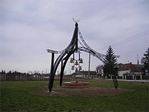 Peace of ZsitvatorokTreaty · Peace · 1606The Peace of Zsitvatorok was signed on 11 November 1606 at the mouth of the Zsitva River in Hungary, ending the Long Turkish War between the Habsburg Monarchy and the…
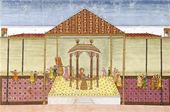 Peacock ThroneWork / monumentThe Peacock Throne was a jewelled throne made for the Mughal emperor Shah Jahan in the seventeenth century.
 PeadaPersonPeada was a son of Penda of Mercia, made ruler of the Middle Angles around 653.
- PeanutTermThe peanut is a legume native to South America that spread worldwide after the Columbian exchange.
 Pearl RiverPlaceThe Pearl River is the great river system of southern China, formed by the West, North and East rivers, which meet in a broad delta at Guangzhou before reaching the…
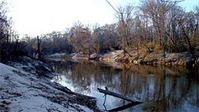 Pearl River (Mississippi–Louisiana)PlaceThe Pearl River flows about 790 kilometres through Mississippi and along the Louisiana border into Lake Borgne and the Gulf of Mexico.
- Peasants' RevoltRevolt · 1381The Peasants' Revolt of 1381 was the largest popular rising in medieval England.
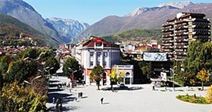 PećPlacePeć, known in Albanian as Peja, is a city in western Kosovo below the Rugova gorge.
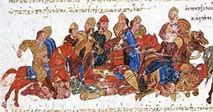 PechenegsPeople / groupThe Pechenegs were a Turkic nomadic people who dominated the steppes north of the Black Sea from the late 9th century, after driving the Magyars westward.
 PechinaPlacePechina, called Bajjana in Arabic, is a town in the province of Almería in Andalusia, Spain, in the lower Andarax valley.
- Pechora RiverPlaceThe Pechora is a river of northern European Russia, about 1,800 kilometres long, rising in the northern Urals and flowing north into the Barents Sea.
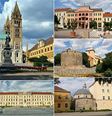 PécsPlacePécs is a city of southern Hungary, the centre of Baranya county, at the foot of the Mecsek hills.
- Pedakomati Vema ReddiPersonPedakomati Vema Reddi was a king of the Reddi dynasty of coastal Andhra, ruling from Kondavidu from about 1403 to 1420.
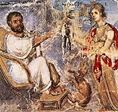 Pedanius DioscoridesPersonPedanius Dioscorides was a Greek physician from Anazarbus in Cilicia who served with the Roman army.
- Pedda Soma BhupalPersonPedda Soma Bhupal was a local chief who founded the Gadwal samasthan around 1663 in the land between the Krishna and Tungabhadra rivers, in today's Telangana.
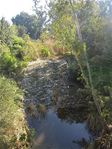 PedieosPlaceThe Pedieos is the longest river of Cyprus, rising in the Troodos mountains and flowing north-east through Nicosia across the Mesaoria plain towards Famagusta Bay.
 Pedrarias DávilaPersonPedrarias Dávila was a Spanish soldier and colonial governor who arrived in 1514 as governor of Castilla de Oro, on the Isthmus of Panama.
 Pedro Albizu CamposPersonPedro Albizu Campos was a Puerto Rican lawyer who became president of the Nationalist Party in 1930 and led the movement for independence from the United States.
 Pedro Álvares CabralPersonPedro Álvares Cabral was a Portuguese navigator who reached the coast of Brazil in 1500 while leading a fleet to India.
 Pedro Álvarez de Toledo, Marquis of VillafrancaPersonPedro Álvarez de Toledo, Marquis of Villafranca (1484–1553), was the Spanish viceroy of Naples from 1532 to 1553.
 Pedro AnsúrezPersonPedro Ansúrez (c. 1037–1118) was a Leonese count and one of the leading magnates of Alfonso VI of León and Castile.
 Pedro Antonio OlañetaPersonPedro Antonio Olañeta was a Spanish royalist general who commanded in Upper Peru, present-day Bolivia, during the wars of independence.
- Pedro Caetano PereiraPersonPedro Caetano Pereira was a ruler of Makanga, an Afro-Portuguese warlord state north of the Zambezi near Tete in Mozambique.
 Pedro Calderón de la BarcaPersonPedro Calderón de la Barca was a Spanish dramatist and poet, the leading playwright of the later Golden Age.
 Pedro CastilloPersonPedro Castillo is a Peruvian rural schoolteacher and trade unionist who was president of Peru from July 2021 to December 2022.
 Pedro Cieza de LeónPersonPedro Cieza de León was a Spanish soldier and chronicler who spent some seventeen years in South America from 1535.
 Pedro de AlvaradoPersonPedro de Alvarado was a Spanish conquistador and lieutenant of Hernán Cortés in the conquest of the Aztec Empire, after which he subdued Tututepec.
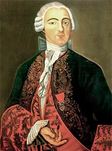 Pedro de CevallosPersonPedro de Cevallos was a Spanish soldier and colonial administrator.
 Pedro de la GascaPersonPedro de la Gasca was a Spanish priest and royal official sent to Peru in 1546 to end the rebellion of Gonzalo Pizarro.
 Pedro de MendozaPersonPedro de Mendoza was a Spanish nobleman and conquistador to whom Charles V granted the Río de la Plata governorate in 1534.
- Pedro de PeraltaPersonPedro de Peralta was a Spanish colonial official who served as governor of New Mexico from 1610 to 1614.
- Pedro de San SuperanoPersonPedro de San Superano was a leader of the Navarrese Company, a band of mercenaries that seized much of the Principality of Achaea from the late 1370s.
 Pedro de ValdiviaPersonPedro de Valdivia was a Spanish conquistador who served under Francisco Pizarro in Peru and then led an expedition south, founding Santiago in February 1541.
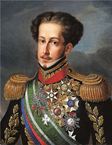 Pedro I of BrazilPersonPedro I was the founder and first emperor of Brazil, a prince of the Portuguese royal house who proclaimed Brazilian independence on 7 September 1822.
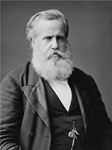 Pedro II of BrazilPersonPedro II was the second and last emperor of Brazil, succeeding his father Pedro I as a child in 1831 and ruling in his own right from 1840.
- Pedro IV of KongoPersonPedro IV was king of Kongo from 1695 to 1718, ruling from the mountain stronghold of Kibangu during the civil wars that followed the Battle of Mbwila.
 Pedro Joaquín Chamorro CardenalPersonPedro Joaquín Chamorro Cardenal was a Nicaraguan journalist, editor of the newspaper La Prensa and a leading opponent of the Somoza dictatorship, who was repeatedly…
 Pedro Menéndez de AvilésPersonPedro Menéndez de Avilés was a Spanish admiral who founded St.
- Pedro MonteclaroPersonPedro Monteclaro was a Filipino writer and local official from Miagao, Iloilo, on the island of Panay.
 Pedro NavarroPersonPedro Navarro was a Navarrese soldier and military engineer famous for his use of mines in siege warfare.