Encyclopedia: P
1,704 entries under P · page 4 of 18: Parrhasius – Paulicians
- ParrhasiusPersonParrhasius of Ephesus was one of the most celebrated Greek painters, active in Athens in the late fifth century BCE.
 Parris IslandPlaceParris Island is an island near Beaufort in South Carolina, United States.
- ParsPlacePars, the region known to the Greeks as Persis and today the province of Fars in south-western Iran, was the homeland of the Persians.
- Parshuram TrimbakPersonParshuram Trimbak was a Maratha statesman who served Chhatrapati Rajaram during the wars against the Mughals.
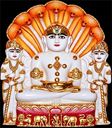 ParshvanathaPersonParshvanatha is the 23rd tirthankara of Jainism and the earliest Jain teacher widely regarded as a historical figure, traditionally placed about 250 years before…
- ParsisPeople / groupThe Parsis are a Zoroastrian community in western India, descended from Zoroastrians who left Iran after the Arab conquest.
- Parsley MassacreEventThe Parsley Massacre was the killing of thousands of Haitians and Dominicans of Haitian descent in the Dominican borderlands in October 1937, on the orders of the…
- PartheniaiPeople / groupThe Partheniai ('sons of maidens') were, according to Greek tradition, Spartans of inferior status born during the First Messenian War.
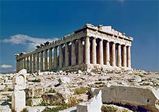 ParthenonWork / monumentThe Parthenon is the temple of Athena Parthenos on the Acropolis of Athens, built between 447 and 432 BCE under Pericles by the architects Ictinus and Callicrates, with…
- Parthenope (city)PlaceParthenope was a Greek settlement founded by colonists from Cumae on the Bay of Naples, probably in the 7th century BCE, and named after a Siren whose tomb was shown…
- Parthenos (Chersonesus)Religion / ideaParthenos, the Maiden, was the patron goddess of the Greek city of Chersonesus Taurica in the Crimea.
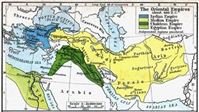 ParthiaPlaceParthia was a region in north-eastern Iran, south-east of the Caspian Sea, which was a satrapy of the Achaemenid and Seleucid empires.
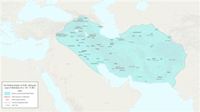 Parthian EmpireStateThe Parthian Empire, ruled by the Arsacid dynasty, was an Iranian state that emerged around 247 BCE and came to rule Iran and Mesopotamia.
- Parthian shotTermThe Parthian shot was a mounted archery tactic in which a horse archer, real or feigning retreat, turned in the saddle to shoot at pursuing enemies.
- Parti QuébécoisPeople / groupThe Parti Québécois is a political party in Quebec that seeks sovereignty for the province, founded in 1968 by René Lévesque.
- Partible inheritanceTermPartible inheritance is a custom by which a father's property is divided among all his sons rather than passing to a single heir.
- Partition of IndiaEventThe Partition of India was the division of British India into two independent dominions, India and Pakistan, on 14–15 August 1947.
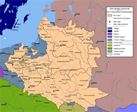 Partitions of PolandEventThe Partitions of Poland were three divisions of the Polish-Lithuanian Commonwealth by Russia, Prussia and Austria in 1772, 1793 and 1795.
- PartiumPlaceThe Partium was the group of eastern counties of the Kingdom of Hungary, around Nagyvárad (Oradea) and Szatmár, that were ruled by the princes of Transylvania from the…
- Party of Labour of AlbaniaPeople / groupThe Party of Labour of Albania was the ruling communist party of Albania.
- Party of National ConciliationPeople / groupThe Party of National Conciliation (PCN) was the official party of El Salvador's military governments, founded in 1961.
 Party of the Democratic RevolutionPeople / groupThe Party of the Democratic Revolution (PRD) is a left-wing Mexican political party founded in 1989 by Cuauhtémoc Cárdenas and other dissidents from the ruling PRI…
- ParvaguptaPersonParvagupta was a scribe and minister who seized the throne of Kashmir in 949, ending the Utpala dynasty by killing the young king Sangramadeva.
- Pascoal Moreira CabralPersonPascoal Moreira Cabral was a bandeirante from São Paulo who led an expedition into the far west of Brazil in the early 18th century.
- Paser RegencyPlacePaser Regency is a regency in the south of East Kalimantan province, Indonesia, on the island of Borneo, with its seat at Tana Paser.
 PashtoTermPashto is an Eastern Iranian language spoken by the Pashtuns of Afghanistan and north-western Pakistan, written in a modified Arabic script.
- PashtunsPeople / groupThe Pashtuns are an Iranian-speaking people of southern and eastern Afghanistan and north-western Pakistan, speaking Pashto and organised in many tribes and clans.
 Pashupata ShaivismReligion / ideaPashupata Shaivism is the oldest named Shaiva sect of Hinduism, traditionally founded by the teacher Lakulisha in the early centuries CE.
 Pashupatinath TemplePlaceThe Pashupatinath Temple is a Hindu temple of Shiva as Pashupati, 'lord of animals', on the Bagmati river in Kathmandu, Nepal.
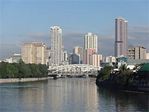 Pasig RiverPlaceThe Pasig River flows from Laguna de Bay through Manila to Manila Bay in the Philippines.
 Pasión RiverPlaceThe Pasión River is a river of the Petén lowlands of northern Guatemala and a tributary of the Usumacinta.
- PasniPlacePasni is a fishing port on the Makran coast of Balochistan, Pakistan, on the Arabian Sea.
 PASOKPeople / groupPASOK, the Panhellenic Socialist Movement, is a Greek centre-left party founded in 1974 by Andreas Papandreou after the fall of the military junta.
 Pasquale PaoliPersonPasquale Paoli was a Corsican patriot elected general of the nation in 1755.
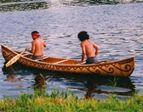 PassamaquoddyPeople / groupThe Passamaquoddy are an Algonquian-speaking Indigenous people of the Passamaquoddy Bay and St Croix river region on the border of Maine and New Brunswick.
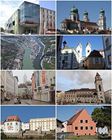 PassauPlacePassau is a city in Lower Bavaria, Germany, where the Inn and the Ilz meet the Danube near the Austrian border.
 Passion of JesusEventThe Passion of Jesus is the Christian term for the suffering of Jesus in the last hours of his life, from his arrest in the garden of Gethsemane through his trial…
 Passion of Saints Perpetua and FelicityWork / monumentThe Passion of Saints Perpetua and Felicity is a Latin account of the martyrdom of a group of Christians in the amphitheatre at Carthage in 203.
 PassoverTermPassover is a major Jewish festival commemorating the Exodus of the Israelites from Egypt, celebrated in spring from the 15th day of the month of Nisan.
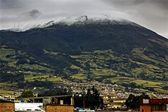 PastoPlacePasto is a city in the Andes of south-western Colombia, capital of the Nariño Department, founded by the Spanish in the 1530s.
 Pastoral CareWork / monumentPastoral Care (Regula Pastoralis) is a treatise written by Pope Gregory the Great around 590 on the duties and conduct of bishops and clergy.
- PastoralismTermPastoralism is a way of life based on herding livestock such as cattle, sheep, goats, horses and camels, often involving seasonal movement between pastures.
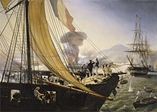 Pastry WarWar · 1838–1839The Pastry War was the first French intervention in Mexico, in 1838–1839.
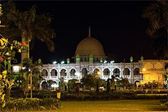 PasuruanPlacePasuruan is a port city on the north coast of East Java, Indonesia, on the Madura Strait.
 PasłękaPlaceThe Pasłęka, in German the Passarge, is a river of about 170 kilometres in the Warmian-Masurian region of northern Poland that flows north-west into the Vistula Lagoon…
 PatagoniaPlacePatagonia is the southern end of South America, shared by Argentina and Chile, stretching from the Colorado river and the southern Andes to Tierra del Fuego.
 PataliputraPlacePataliputra, the site of modern Patna in Bihar, was an ancient city on the Ganges in north-eastern India.
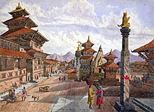 Patan Durbar SquarePlacePatan Durbar Square is the old royal square of Lalitpur (Patan) in the Kathmandu Valley, Nepal, in front of the palace of the Malla kings of Lalitpur.
 Patan, GujaratPlacePatan is a city in northern Gujarat, India, known in medieval times as Anahilavada or Anahilapataka.
- PataraPlacePatara was a port city of ancient Lycia, near the mouth of the Xanthos river in south-western Turkey.
- Pate ChronicleWork / monumentThe Pate Chronicle is a Swahili history of the town and sultanate of Pate in the Lamu archipelago of Kenya, written down in the 19th century from older traditions.
 PathankotPlacePathankot is a city in the Punjab state of India, at the foot of the Himalayas where the roads to Jammu and Himachal Pradesh meet.
 PatheinPlacePathein, formerly Bassein, is a port city in the Irrawaddy Delta of southern Myanmar and capital of the Ayeyarwady Region.
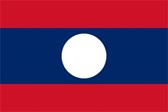 Pathet LaoPeople / groupThe Pathet Lao was the communist movement of Laos, founded in 1950 under Prince Souphanouvong with the support of the Viet Minh.
- Pati UnusPersonPati Unus was the second sultan of Demak on the north coast of Java, ruling from about 1518 to 1521.
 Patiala and East Punjab States UnionStateThe Patiala and East Punjab States Union was a state of India formed in 1948 by merging eight Sikh and other princely states of the Punjab, including Patiala, Nabha…
- PatilInstitutionA patil was the hereditary head of a village in the Deccan and western India.
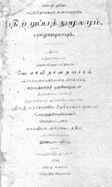 PatirruppattuWork / monumentThe Patirruppattu is an anthology of classical Tamil poetry, one of the Eight Anthologies of Sangam literature.
 PatnaPlacePatna is the capital of the Indian state of Bihar, located on the Ganges.
- PatraosPersonPatraos was a king of Paeonia from about 335 to 315 BCE, during the reign of Alexander the Great, whose overlordship he accepted.
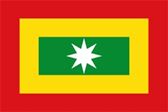 Patria BobaReligion / ideaPatria Boba, the 'Foolish Fatherland', is the name given to the first period of independence in New Granada, present-day Colombia, from 1810 to 1816.
 Patriarch NikonPersonNikon was Patriarch of Moscow from 1652 to 1666.
 Patrice de MacMahonPersonPatrice de MacMahon was a French marshal of Irish descent and president of France from 1873 to 1879.
 Patrice LumumbaPersonPatrice Lumumba was a Congolese nationalist, leader of the Mouvement National Congolais, who became the first prime minister of the independent Congo in June 1960.
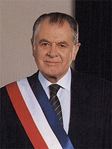 Patricio AylwinPersonPatricio Aylwin was a Chilean Christian Democrat politician and the first president after the military regime of Augusto Pinochet.
 Patrick Buchan-Hepburn, 1st Baron HailesPersonPatrick Buchan-Hepburn, 1st Baron Hailes, was a British Conservative politician who served as Chief Whip and then as the only governor-general of the West Indies…
 Patrick HenryPersonPatrick Henry was a Virginian lawyer and orator who became a leading voice of resistance to British rule.
- Patrick JohnPersonPatrick John was a Dominican trade unionist and politician of the Dominica Labour Party who became the island's first prime minister on independence in 1978.
 Patrick TonynPersonPatrick Tonyn was a British army officer who was governor of the Province of East Florida from 1774 to 1785.
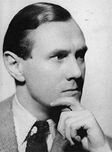 Patrick WhitePersonPatrick White was an Australian novelist and playwright, author of The Tree of Man, Voss and Riders in the Chariot.
- Patriotic Front (Zimbabwe)People / groupThe Patriotic Front was the alliance formed in 1976 by Robert Mugabe's ZANU and Joshua Nkomo's ZAPU, the two main nationalist movements fighting white minority rule in…
- Patronato realInstitutionThe Patronato real, or royal patronage, was the set of rights granted by the papacy to the Spanish crown over the Church in its overseas territories.
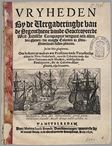 PatroonTermA patroon was a landholder in New Netherland granted a large estate, a patroonship, by the Dutch West India Company under its Charter of Freedoms and Exemptions of…
- Patta ChundawatPersonPatta, also known as Fatta, was a Sisodia Rajput chief of Kelwa in Mewar who with Jaimal Rathore led the defence of Chittor against Akbar's siege of 1567–1568.
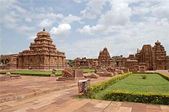 PattadakalPlacePattadakal is a village on the Malaprabha river in Bagalkot district of Karnataka, India, with a group of 7th- and 8th-century temples built by the Chalukyas of Badami.
- PatwardhanPeople / groupThe Patwardhan were a Chitpavan Brahmin family from the Konkan whose members rose as cavalry commanders under the Peshwas in the 18th century.
- Patwon Ki HaveliWork / monumentPatwon Ki Haveli is a group of five adjoining merchant mansions in Jaisalmer, Rajasthan, begun in 1805 by the wealthy trader Guman Chand Patwa for his sons.
 PátzcuaroPlacePátzcuaro is a town in Michoacán, Mexico, near the southern shore of Lake Pátzcuaro.
- PauPlacePau is a city on the Gave de Pau facing the Pyrenees, in south-western France, and the historic capital of Béarn.
 Pau ClarisPersonPau Claris was a Catalan cleric, canon of La Seu d'Urgell, who was president of the Generalitat of Catalonia during the Reapers' War.
- Paul AlvarusPersonPaul Alvarus was a Christian scholar and poet of ninth-century Córdoba, a friend of Eulogius, whose biography he wrote.
- Paul BenekePersonPaul Beneke was a Danzig sea captain and privateer during the Anglo-Hanseatic War of 1469–1474.
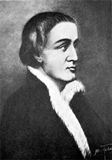 Paul de Chomedey de MaisonneuvePersonPaul de Chomedey de Maisonneuve was a French officer who founded Ville-Marie, later Montreal, in May 1642 for the Société Notre-Dame de Montréal, a religious…
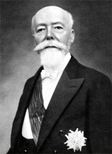 Paul DoumerPersonPaul Doumer was a French politician who served as governor-general of French Indochina from 1897 to 1902 and as president of France from 1931 until his assassination in…
 Paul FagiusPersonPaul Fagius was a German Protestant reformer and Hebrew scholar.
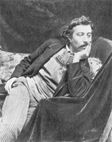 Paul GauguinPersonPaul Gauguin was a French Post-Impressionist painter, sculptor and printmaker.
 Paul HasluckPersonPaul Hasluck was an Australian politician, historian and diplomat.
 Paul HollePersonPaul Holle was a French colonial officer from Saint-Louis in Senegal who commanded the fort at Médine on the upper Senegal River.
 Paul I of RussiaPersonPaul I of Russia, son of Catherine the Great, reigned as emperor from 1796 to 1801.
- Paul I Šubić of BribirPersonPaul I Šubić of Bribir was a Croatian nobleman who became ban of Croatia in the 1270s and the most powerful magnate of the kingdom.
 Paul Johann Anselm von FeuerbachPersonPaul Johann Anselm von Feuerbach was a German jurist and a founder of modern criminal law.
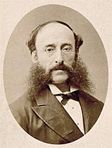 Paul Julius ReuterPersonPaul Julius Reuter was a German-born British businessman who founded the Reuters news agency in London in 1851, using the telegraph to sell news to newspapers and…
 Paul KagamePersonPaul Kagame is a Rwandan soldier and politician who commanded the Rwandan Patriotic Front forces that ended the genocide against the Tutsi in 1994.
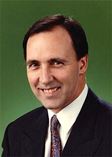 Paul KeatingPersonPaul Keating was Treasurer of Australia from 1983 to 1991 and Labor prime minister from 1991 to 1996.
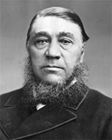 Paul KrugerPersonPaul Kruger (1825–1904) was president of the South African Republic (Transvaal) from 1883 to 1902.
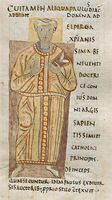 Paul the DeaconPersonPaul the Deacon was a Benedictine monk and historian from a noble Lombard family of Friuli, educated at the royal court of Pavia.
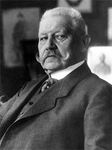 Paul von HindenburgPersonPaul von Hindenburg was a German field marshal and president of the Weimar Republic from 1925 to 1934.
 Paul von Lettow-VorbeckPersonPaul von Lettow-Vorbeck was a German general who commanded the defence of German East Africa in the First World War.
 Paul-Henri SpaakPersonPaul-Henri Spaak was a Belgian Socialist statesman, several times prime minister and foreign minister.
- PauliciansPeople / groupThe Paulicians were a Christian sect of Armenia and eastern Anatolia, recorded from the 7th century, who rejected the church hierarchy and the veneration of icons and…