Central & East Asia
Goryeo
At a glance
- A Korean kingdom founded by Wang Geon in 918 that reunited the peninsula in 936 and ruled it from Kaegyong (Kaesong).
- Buddhism was the state religion: the court carved the Tripitaka Koreana, and Goryeo potters perfected inlaid celadon.
- Military rule from 1170 and Mongol overlordship from 1259 weakened the crown, and Yi Seong-gye replaced it with Joseon in 1392.
Rise & Fall
- 918Wang Geon is raised to the throne and founds Goryeo
- 936Taejo defeats Later Baekje, completing the reunification of the peninsula
- 958Gwangjong introduces civil service examinations
- 1019Gang Gam-chan destroys a Khitan army at the Battle of Gwiju
- 1170Military officers seize power and depose King Uijong
- 1232The court withdraws to Ganghwa Island during the Mongol invasions
- 1251Carving of the Tripitaka Koreana woodblocks is completed
- 1392Yi Seong-gye deposes King Gongyang and founds Joseon
Foundation

Goryeo grew out of the collapse of Unified Silla in the late ninth century, when regional strongmen divided the peninsula into the Later Three Kingdoms. Wang Geon, the son of a maritime trading family of Songak on the west coast, rose as a general and naval commander in the service of Gung Ye, ruler of Taebong. In 918 a group of generals overthrew the increasingly erratic Gung Ye and raised Wang Geon to the throne. He named his kingdom Goryeo, a shortened form of Goguryeo, to claim the heritage of the old northern kingdom, and in 919 moved the capital to his home town, renamed Kaegyong (modern Kaesong). As King Taejo (r. 918–943) he pursued a patient policy of alliances, marrying into some twenty-nine powerful families and winning over local lords with titles, land and the royal surname. Silla's last king, Gyeongsun, surrendered peacefully in 935, and in 936 Taejo defeated Later Baekje at the Battle of Illicheon, reuniting the peninsula. He also welcomed refugees from Balhae, destroyed by the Khitan in 926, among them its crown prince, and presented Goryeo as the heir of all the earlier Korean kingdoms. The Ten Injunctions attributed to him, a political testament for his successors, urged Buddhist patronage and warned against adopting Khitan customs.
Socioeconomy

Goryeo society was dominated by a capital-based aristocracy of a few great lineages, such as the Gyeongwon Yi and Haeju Choe, which intermarried with the royal house and monopolised high office. Below them stood the hyangni, hereditary local functionaries who ran the counties, then free commoners who farmed and paid taxes, and at the bottom slaves and the inhabitants of special districts (hyang, so and bugok) of inferior status. Officials and soldiers were supported by the stipend land system (jeonsigwa), first introduced in 976, which granted the right to collect rent from land rather than its ownership. Women had more standing than in later centuries: daughters inherited property equally with sons, and husbands often lived in their wives' households. Buddhism was the state religion. Great monasteries owned land and slaves, the monk Uicheon founded the Cheontae school, Jinul reformed Seon (Zen) Buddhism, and the state festivals of Yeondeunghoe and Palgwanhoe combined Buddhist ritual with native cults. Foreign trade passed through the port of Byeongnando near Kaegyong, visited by Song Chinese, Japanese, Khitan and Jurchen traders and, in the eleventh century, by Arab merchants, through whom the name Goryeo probably travelled west to become Korea. Potters perfected jade-green celadon, admired by the Song envoy Xu Jing in 1123, and developed inlaid (sanggam) decoration.
Military
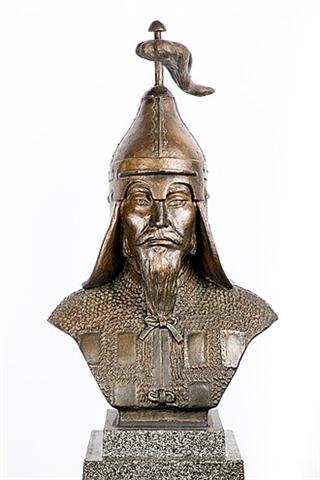
Goryeo maintained a standing central army of two guards and six divisions in the capital, supported by provincial forces and by garrisons in the two northern border regions, the Bukgye and Donggye, which remained under military administration. Its greatest early test came from the Khitan Liao dynasty. In 993 a Khitan army invaded, but the official Seo Hui negotiated its withdrawal and secured the land east of the Yalu that became six garrison districts. A second invasion in 1010 burned Kaegyong and forced King Hyeonjong to flee south. When the Khitan returned in 1018, the commander Gang Gam-chan destroyed their army at the Battle of Gwiju in 1019; according to the Goryeosa only a few thousand of the invaders escaped. Goryeo then built a long wall across its northern frontier from the Yalu to the east coast, completed in 1044. In 1107 Yun Gwan led a special force, the Byeolmuban, against the Jurchen and built nine forts in the northeast, but they were handed back in 1109. The Mongol invasions from 1231 brought nearly three decades of devastation, resisted from Ganghwa Island and by local garrisons and peasant fighters. Later Goryeo supplied ships and troops for the failed Yuan invasions of Japan in 1274 and 1281, and late in the dynasty Choe Mu-seon's gunpowder office armed ships with cannon that destroyed a Japanese pirate fleet at Jinpo in 1380.
Governance & Law

Goryeo's kings governed from Kaegyong through institutions modelled on Tang and Song China but adapted to an aristocratic society. The central government comprised the Secretariat-Chancellery, the Department of State Affairs with its six ministries, and the Security Council, while senior officials met jointly in councils such as the Dobyeongmasa, which became the real centre of power late in the dynasty. Gwangjong (r. 949–975) strengthened the crown against the great families: his Slave Review Act of 956 freed many people who had been wrongly enslaved, and in 958, on the advice of the Chinese official Ssang Gi, he introduced civil service examinations. Seongjong (r. 981–997) adopted the Confucian programme urged by Choe Seung-ro, created twelve provincial governorships (mok) in 983 and founded the National Academy (Gukjagam) in 992. Examinations never displaced birth, for the protection privilege (eum) let sons of high officials enter office without them. Royal authority was shaken by the revolt of the in-law Yi Ja-gyeom in 1126 and by Myocheong's rebellion at Pyongyang in 1135, suppressed by Kim Bu-sik. After a coup in 1170 military strongmen ruled; from 1196 Choe Chung-heon and his descendants governed through their own Directorate General for Policy Formulation while kings reigned in name only, until 1258. Under Yuan overlordship Goryeo kings married Mongol princesses, and a Yuan Branch Secretariat supervised the court.
Global & Regional Impact
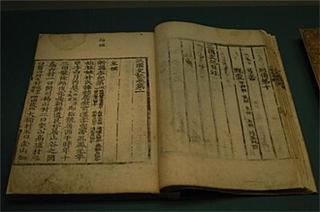
Goryeo left a lasting mark on Korean identity. By uniting the Later Three Kingdoms and absorbing refugees from Balhae, it fixed the idea of a single kingdom covering most of the peninsula, and its name, carried abroad by merchants, became the Western name Korea. Kim Bu-sik's Samguk sagi of 1145, the oldest surviving Korean history, and the monk Iryeon's Samguk yusa of the 1280s have shaped how Koreans see their ancient past ever since. The Tripitaka Koreana, the Buddhist canon carved on more than 81,000 woodblocks between 1236 and 1251 to win divine protection against the Mongols, replaced an earlier set burned by them in 1232; it is preserved at Haeinsa temple and recognised by UNESCO. Goryeo printers also used movable metal type: the Jikji, a collection of Seon Buddhist teachings printed at Heungdeoksa temple in Cheongju in 1377, is the oldest surviving book printed with movable metal type, and literary sources record metal-type printing in Goryeo earlier in the thirteenth century. Inlaid celadon is regarded as one of the summits of East Asian ceramics and was much imitated in later Korean wares. Neo-Confucianism, which entered Goryeo under Yuan rule through scholars such as An Hyang, produced the reform-minded officials who later founded Joseon, and Joseon kept much of Goryeo's administrative framework and its capital region.
Decline & Fall
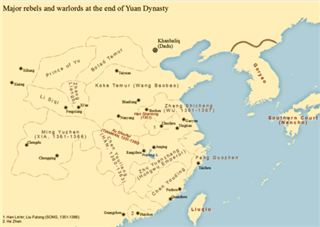
Goryeo's decline began with the Mongol invasions. After the first attack in 1231 the Choe regime moved the court to Ganghwa Island in 1232, safe behind its narrow straits from steppe cavalry, while the mainland was ravaged by repeated campaigns until 1259, when the court made peace. The court returned to Kaegyong in 1270, provoking the revolt of the Sambyeolcho units, crushed on Jeju in 1273. For eight decades Goryeo kings were sons-in-law of the Yuan emperors, often lived in the Yuan capital Dadu and could be deposed by them, while pro-Yuan families such as that of Empress Gi grew powerful. King Gongmin (r. 1351–1374) exploited the Yuan's weakness, purging the Gi family in 1356 and recovering the northeastern territory of Ssangseong, and attempted land and slave reforms through the monk Sin Don. But Red Turban rebels invaded in 1359 and 1361, briefly taking Kaegyong, Japanese pirates ravaged the coasts, and Gongmin was murdered in 1374. When King U ordered an attack on the Ming in Liaodong in 1388, General Yi Seong-gye turned his army back at Wihwa Island, seized power and, with reformist officials, carried out a sweeping land reform in 1391 that ruined the old aristocracy. The loyalist Jeong Mong-ju was assassinated in 1392, and that year Yi deposed King Gongyang and founded Joseon.
Goryeo reunited the Korean peninsula after the fall of Silla and ruled it for almost five centuries through an aristocratic bureaucracy and a Buddhist court, surviving Khitan and Mongol invasions and producing the Tripitaka Koreana, inlaid celadon and the oldest surviving book printed with movable metal type.
References
- Breuker, R.E. (2010) Establishing a Pluralist Society in Medieval Korea, 918–1170: History, Ideology and Identity in the Koryŏ Dynasty. Leiden: Brill.
- Lee, K.-b. (1984) A New History of Korea. Trans. E.W. Wagner with E.J. Shultz. Cambridge, MA: Harvard University Press.
- Robinson, D.M. (2009) Empire's Twilight: Northeast Asia under the Mongols. Cambridge, MA: Harvard University Asia Center.
- Seth, M.J. (2010) A History of Korea: From Antiquity to the Present. Lanham, MD: Rowman & Littlefield.
- Shultz, E.J. (2000) Generals and Scholars: Military Rule in Medieval Korea. Honolulu: University of Hawai'i Press.
Connections
Open the full connections map →