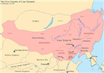
Central & East Asia
Song Dynasty
At a glance
- The Song Dynasty ruled China from 960 to 1279, governed by exam-selected scholar-officials rather than generals.
- It ran the world's most commercial economy, with paper money and huge cities, and developed gunpowder weapons, the compass and movable type.
- Lacking warhorses and cavalry, it lost the north to the Jurchen in 1127 and fell to Kublai Khan's Mongols after four decades of resistance.
Rise & Fall
- 960Zhao Kuangyin seizes power in the Chenqiao Mutiny and founds the Song Dynasty
- 1005The Chanyuan Treaty commits the Song to annual silk and silver payments to the Liao
- 1069Wang Anshi launches the New Policies to reform state finances
- 1127The Jurchen Jin capture Kaifeng and carry off emperors Huizong and Qinzong
- 1161Southern Song fleets defeat the Jin at Tangdao and Caishi
- 1268The Mongols begin the five-year siege of Xiangyang
- 1276Lin'an surrenders and the boy emperor Gong is taken north
- 1279The loyalist fleet is destroyed at Yamen, ending the Song Dynasty
Foundation
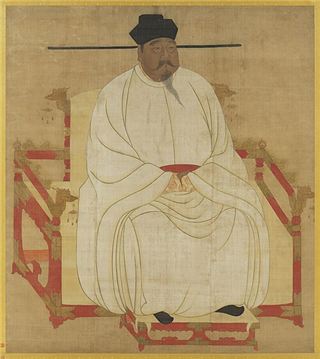
The Song Dynasty was established in 960 CE by Zhao Kuangyin, a military commander of the Later Zhou who seized power in the Chenqiao Mutiny, in which his troops draped him in the imperial yellow robe and proclaimed him emperor. Known to history by his temple name Taizu, he founded a dynasty that would govern China for over three centuries across two distinct phases. The Northern Song (960–1127) reunified most of the Chinese heartland after the fragmentation of the Five Dynasties and Ten Kingdoms period, though it never recovered the Sixteen Prefectures around modern Beijing held by the Khitan Liao dynasty, and under the Chanyuan Treaty of 1005 it agreed to costly annual payments of silk and silver to the Liao. Taizu and his successor Taizong pursued a deliberate policy of civilian supremacy over the military, a direct response to the regional warlordism that had destroyed the Tang and produced the preceding chaos, subordinating military commanders to civil officials and expanding the examination system to staff a broad meritocratic bureaucracy. The dynasty's military weakness proved fatal when the Jurchen Jin captured the capital Kaifeng in 1127, carrying off the retired emperor Huizong and his son, the reigning emperor Qinzong, and forcing the Song court to reconstitute itself in the south as the Southern Song (1127–1279), with its capital eventually fixed at Lin'an (modern Hangzhou). Despite this territorial catastrophe, the Southern Song presided over one of the most economically and culturally sophisticated societies of the medieval world, sustaining a population of perhaps 60 to 70 million and a commercial economy whose sophistication would not be matched in Europe for centuries.
Socioeconomy
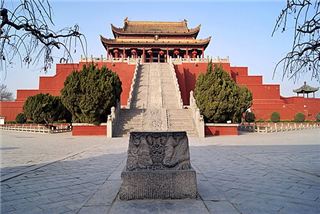
The Song economy was the most commercially developed the world had yet seen, marked by the widespread use of paper money, extensive domestic and maritime trade, proto-industrial production and an urban commercial culture that transformed Chinese society. Kaifeng and Lin'an were among the largest and most economically complex cities in the world: Lin'an at its peak probably held more than a million inhabitants and supported a sophisticated service economy of restaurants, entertainment quarters, financial institutions and specialised craft workshops. The development of paper money, from the jiaozi of Sichuan, issued by the state from 1024, to the huizi of the Southern Song, allowed transactions on a scale impossible with copper coinage alone, helping to integrate regional markets into a national commercial system. Maritime trade through Guangzhou, Quanzhou and Mingzhou generated large customs revenues, collected by maritime trade superintendencies, and connected Song China to Southeast Asia, South Asia, the Persian Gulf and East Africa. Exports of silk, ceramics and tea flowed outward in exchange for spices, aromatics, tropical woods and precious goods. Agriculture was transformed by the introduction under Emperor Zhenzong of early-ripening, drought-tolerant Champa rice from central Vietnam, which allowed double cropping in southern China and supported the period's rapid population growth. Coal and iron production in the north, notably in Hebei and Shanxi, reached scales that would not be surpassed in Europe until the eighteenth century. The burden of payments to the Liao and Xi Xia, and later the Jin, and the cost of maintaining huge standing armies consumed a large share of state revenue, generating persistent tension between reformers, most famously Wang Anshi, whose New Policies of 1069 attempted structural fiscal reform, and the conservative establishment that ultimately reversed many of his measures.
Military

The Song military was structurally constrained by the dynasty's founding decision to subordinate military power to civilian government, a choice that prioritised domestic political stability over frontier security. The professional standing army, the Imperial Armies (jinjun), together with the prefectural forces (xiang jun), was enormous, exceeding one million men by the mid-eleventh century, but notoriously ill-disciplined, poorly equipped and frequently directed by civil officials with little military experience. Cavalry was the chronic weakness: the dynasty never controlled the northern grasslands needed to breed warhorses in sufficient numbers, leaving it dependent on infantry against mounted opponents who enjoyed decisive advantages in open terrain. Song military innovation partly compensated for these disadvantages: gunpowder weapons, including fire arrows, bombs and early fire lances, were developed and deployed by Song armies well before they appeared elsewhere, and the formula for gunpowder was first recorded in the military compendium Wujing Zongyao of 1044. Naval forces were the Southern Song's greatest military strength: its standing navy, founded in 1132, and its Yangtze river fleets were among the most capable of the age, winning notable victories against the Jin at Tangdao and Caishi in 1161. The defence of Xiangyang against the Mongols from 1268 to 1273 showed Chinese military engineering at its most resourceful. The two great military crises, the fall of Kaifeng (1127) and the Mongol conquest (1235–1279), both resulted from the Song's inability to defeat mounted steppe armies that could manoeuvre around fixed defensive lines, and the final naval battle at Yamen in 1279 showed that even strong naval resistance could not compensate once the landward defences had fallen.
Governance & Law

The Song state was the most bureaucratically sophisticated of the medieval world, built on a civil service examination system that selected officials through rigorous written tests in the classics, literature and statecraft. The examinations, expanded dramatically under Taizong and his successors, created a genuine meritocratic pathway to office and produced a literate governing class drawn from a far wider social base than the hereditary aristocracy of earlier dynasties. Central government was divided between three bodies, the Secretariat-Chancellery for civil administration, the Bureau of Military Affairs and the Finance Commission, whose overlapping jurisdictions deliberately prevented any single official from accumulating excessive power. The Censorate independently monitored official conduct, investigated corruption and remonstrated with the emperor on matters of government. The bureaucracy numbered some 20,000 or more ranked officials at the dynasty's height, supported by a much larger body of clerks and subordinate staff. Wang Anshi's New Policies (1069–1076) attempted the most ambitious restructuring of Song government, including the green sprouts loans (qingmiao fa), which gave peasants state credit to protect them from private moneylenders, the hired service system, which replaced labour conscription with cash payments, and military reorganisation. The reversal of the reforms after Emperor Shenzong's death in 1085 illustrated the bitter factional struggle between reformers and conservatives that consumed enormous political energy through the late Northern Song. The Southern Song government operated under near-permanent military emergency, maintaining sufficient fiscal discipline to fund prolonged resistance while sustaining the commercial economy whose tax revenues made that resistance possible.
Global & Regional Impact

The Song Dynasty's global historical impact was disproportionate to its political power, operating primarily through the technological and commercial innovations it generated and disseminated. Three inventions most consequential for later world history, gunpowder weapons, the magnetic compass and movable type printing, all reached mature or newly applied forms during the Song period. Bi Sheng's invention of movable type with ceramic characters around 1040 CE predated Gutenberg's press by four centuries, although woodblock printing remained dominant in China, and the Song printing boom produced books on a scale unmatched elsewhere in the world. The magnetic compass, described by Shen Kuo in 1088 and recorded in use for maritime navigation by the early twelfth century, later reached Islamic and European navigators, eventually contributing to the European voyages of the Age of Discovery. The Song maritime trade network laid the commercial foundations of the maritime Silk Road: Song ceramics found at archaeological sites from Japan to East Africa and the Persian Gulf document the reach of Song commerce, and Chinese demand stimulated production in Southeast and South Asian economies that supplied Chinese merchant ships. The Southern Song's resistance to the Mongols, sustained for more than four decades, was the longest that any major state mounted against Mongol expansion, and the gunpowder weapons refined during this struggle spread with the Mongols across Eurasia. The Neo-Confucian synthesis of Zhu Xi, which became the orthodox basis of the civil service examinations from 1313, shaped East Asian government and social organisation for the following six centuries.
Decline & Fall
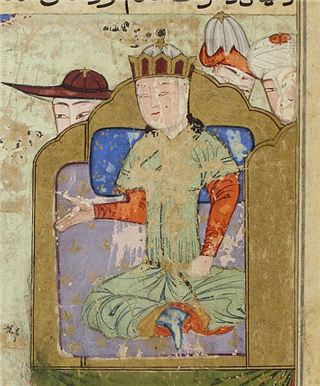
The Song Dynasty's fall was ultimately the product of Mongol military power of a scale and operational sophistication that no contemporary Asian state could withstand, compounded by the Song's structural military disadvantages. War with the Mongols began in 1235 under the Great Khan Ögedei and continued under Möngke, who died while campaigning in Sichuan in 1259, and finally Kublai Khan, requiring more than four decades to conquer a dynasty that defended itself with fortified cities, river fleets and the deep resources of southern China's rice economy. The siege of Xiangyang (1268–1273) was the pivotal confrontation: the twin cities of Xiangyang and Fancheng on the Han River guarded the route to the Yangtze valley and the Southern Song heartland, and their five-year resistance, broken only after Kublai brought in engineers from the Ilkhanate whose counterweight trebuchets outranged the defenders' catapults, demonstrated both Song tenacity and the limits of static fortification against a besieger able to commit vast resources. The fall of Xiangyang opened the Yangtze, and resistance then collapsed with remarkable speed: the Mongol general Bayan routed the main Song army and fleet at the Battle of Dingjiazhou in 1275, and in 1276 Lin'an surrendered and the boy emperor Gong was taken north, while loyalists fled south with his younger brothers. The final naval battle at Yamen in March 1279, in which a loyalist fleet of more than a thousand ships was destroyed and the minister Lu Xiufu leapt into the sea carrying the last Song emperor, the seven-year-old Zhao Bing, while many officials followed them, brought the dynasty to its end. The Song's fall was thus total and catastrophic, in striking contrast to the administrative and commercial sophistication it had sustained for over three centuries.
The Song Dynasty's enduring historical significance lies in its generation of technological and commercial innovations, gunpowder weapons, the navigational compass, paper money and movable type, that would eventually transform the world, demonstrating that the most consequential empires are sometimes those that project influence through commerce and invention rather than conquest.
Test yourself
5 questions on this page, from its key events and facts.
The questions open here once the page has loaded.
References
- Gernet, J. (1962) Daily Life in China on the Eve of the Mongol Invasion, 1250–1276. Translated by H.M. Wright. London: Allen and Unwin.
- Hartwell, R.M. (1982) 'Demographic, Political, and Social Transformations of China, 750–1550', Harvard Journal of Asiatic Studies, 42(2), pp. 365–442.
- Hymes, R. and Schirokauer, C. (eds.) (1993) Ordering the World: Approaches to State and Society in Sung Dynasty China. Berkeley: University of California Press.
- Liu, J.T.C. (1988) China Turning Inward: Intellectual-Political Changes in the Early Twelfth Century. Cambridge, MA: Harvard University Press.
- Mote, F.W. (1999) Imperial China, 900–1800. Cambridge, MA: Harvard University Press.
- Smith, P.J. and von Glahn, R. (eds.) (2003) The Song-Yuan-Ming Transition in Chinese History. Cambridge, MA: Harvard University Asia Center.
Connections
Open the full connections map →