Europe
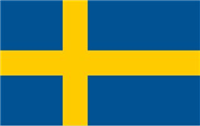
Kingdom of Sweden
At a glance
- The kingdom grew from the union of the Svear around Uppsala and the Geats of the south-west around the year 1000.
- Under Gustav II Adolf and his successors it became the dominant Baltic power, winning German lands at Westphalia in 1648.
- Defeat at Poltava in 1709 ended its empire; after 1814 it kept out of war and built a model welfare state.
Rise & Fall
- 1164Uppsala becomes the seat of an archbishopric
- 1397Sweden joins Denmark and Norway in the Kalmar Union
- 1523Gustav Vasa is elected king and Sweden leaves the Kalmar Union
- 1632Gustav II Adolf is killed at the Battle of Lützen
- 1648The Peace of Westphalia gives Sweden lands in northern Germany
- 1709Charles XII is defeated by Peter the Great at Poltava
- 1809Finland is ceded to Russia by the Treaty of Fredrikshamn
- 2024Sweden joins NATO
Foundation
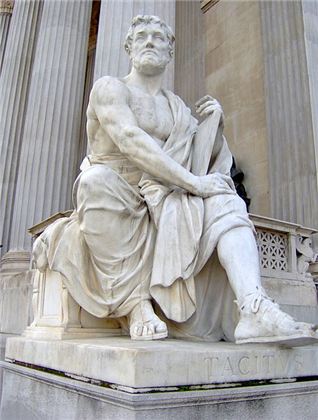
The Svear of the Mälaren valley and Uppland, centred on the royal and cult site of Uppsala, appear in sources from Tacitus onward, while the Geats lived in Västergötland and Östergötland to the south-west. During the Viking Age, Swedish traders and warriors, often called Varangians or Rus, travelled the rivers of Russia to Byzantium and the Caliphate, and Birka on Lake Mälaren was a major trading town. Eric the Victorious, who according to saga tradition won the Battle of Fyrisvellir near Uppsala around 985, is the first king whose rule over the Svear is reasonably certain. His son Olof Skötkonung (r. c. 995–c. 1022), the first Christian king, was probably the first to rule both Svear and Geats, and he struck the first Swedish coins at Sigtuna.
Christianisation was slow: Adam of Bremen described a pagan temple at Uppsala in the 1070s, and the archbishopric of Uppsala was founded only in 1164. For two centuries the rival houses of Sverker and Eric alternated on the throne. Birger Jarl, who governed for his son King Valdemar from 1250 until 1266, strengthened the crown, issued peace laws, founded Stockholm, first mentioned in 1252, and led an expedition, traditionally dated to 1249, that brought Tavastia in Finland under Swedish rule.
Socioeconomy
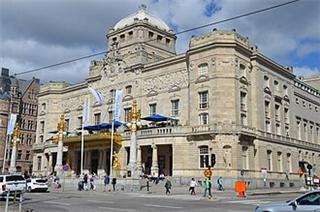
Medieval Sweden was a thinly populated land of peasant farmers who, unlike their counterparts in much of Europe, were never reduced to serfdom and later formed their own estate in the Riksdag. Mining shaped the economy from the thirteenth century: the copper mountain of Falun and the iron districts of Bergslagen drew German capital and miners, and Stockholm grew as a port with a strong Hanseatic presence. Copper financed the wars of the seventeenth century, when Sweden was Europe’s leading producer, and bar iron became the main export of the eighteenth. Gustav Vasa’s Riksdag of Västerås in 1527 began the transfer of church wealth to the crown and the making of a Lutheran state, and church examinations of reading made the population unusually literate by the eighteenth century.
The Riksbank, founded in 1668, is the oldest central bank still operating, and its predecessor Stockholms Banco issued Europe’s first banknotes in 1661. In the nineteenth and early twentieth centuries over a million Swedes emigrated, mostly to the United States, before industrialisation based on timber, iron ore, engineering and hydroelectric power made Sweden rich. From the 1930s the Social Democrats built the folkhem, or “people’s home”, a comprehensive welfare state resting on agreements between employers and unions such as the Saltsjöbaden Agreement of 1938.
Military

Medieval Swedish warfare was directed east: expeditions traditionally called the Swedish crusades extended rule over Finland, Torgils Knutsson founded Vyborg castle in 1293, and the Treaty of Nöteborg of 1323 fixed a first border with Novgorod. Under the Kalmar Union, peasant armies led by Engelbrekt Engelbrektsson and the Sture regents resisted Danish kings, and Sten Sture the Elder defeated Christian I at the Battle of Brunkeberg in 1471. Gustav Vasa’s war of liberation (1521–1523) created the independent kingdom, and Eric XIV took Reval and northern Estonia in 1561.
Gustav II Adolf built an army of conscripted peasant soldiers with mobile field artillery and flexible tactics. He won Ingria from Russia by the Treaty of Stolbovo in 1617, took Riga in 1621 and in 1630 entered the Thirty Years’ War, winning the Battle of Breitenfeld in 1631 before he was killed at Lützen in 1632. Charles X Gustav crossed the frozen belts to force the Treaty of Roskilde on Denmark in 1658, and Charles XI’s allotment system (indelningsverket) settled soldiers on farms that maintained them. Charles XII won at Narva in 1700 but was crushed by Peter the Great at the Battle of Poltava in 1709 and killed at Fredriksten in Norway in 1718. Sweden’s last war was a brief campaign against Norway in 1814.
Governance & Law

Medieval kings were elected at the Stones of Mora near Uppsala and ruled with a council of magnates. Magnus Ladulås’s Ordinance of Alsnö (c. 1280) created a tax-exempt nobility in return for mounted service, and Magnus Eriksson, king of both Sweden and Norway from 1319, issued a national Land Law around 1350 to replace the provincial codes. The Riksdag grew from fifteenth-century assemblies, conventionally traced to Arboga in 1435, into a parliament of four estates: nobles, clergy, burghers and peasants. Gustav Vasa, elected in 1523, made the crown hereditary by the Succession Pact of Västerås in 1544. The chancellor Axel Oxenstierna gave the state its collegiate central government in the Instrument of Government of 1634, with counties under governors.
Charles XI made the crown absolute in 1680 and carried out the Reduction, recovering crown lands from the nobility. After Charles XII’s death the Age of Liberty (1719–1772) gave power to the Riksdag and its parties, the Hats and the Caps, until Gustav III’s coup of 1772. The Instrument of Government of 1809 restored constitutional monarchy; Jean-Baptiste Bernadotte, elected crown prince in 1810, became Charles XIV John in 1818. Parliamentary government was accepted in 1917, and the Instrument of Government of 1974 left the monarch a purely ceremonial role.
Global & Regional Impact
Swedish history shaped northern and eastern Europe. Viking-age Swedes helped open the trade routes of the Rus, and medieval Sweden incorporated Finland, which for six centuries shared Swedish law, Lutheran religion and administration; Swedish remains an official language of Finland. In the seventeenth century Swedish intervention rescued the Protestant cause in the Thirty Years’ War, and the Peace of Westphalia of 1648 gave Sweden Western Pomerania, Bremen-Verden and Wismar and a voice in the Holy Roman Empire. Its Baltic empire reached Livonia, Ingria and Estonia, where Gustav II Adolf founded the University of Dorpat (Tartu) in 1632. Sweden also held New Sweden on the Delaware River from 1638 to 1655 and Saint Barthélemy in the Caribbean from 1784 to 1878.
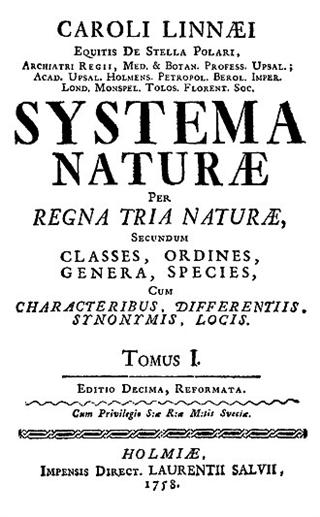
Swedish scientists included Carl Linnaeus, whose Systema Naturae (1735) founded modern biological classification, and Anders Celsius, and the will of Alfred Nobel created the Nobel Prizes, first awarded in 1901. In the twentieth century Sweden’s welfare model and diplomats such as Raoul Wallenberg and Dag Hammarskjöld, Secretary-General of the United Nations from 1953 to 1961, gave it an international standing out of proportion to its size.
Into the Present

Poltava and the Treaty of Nystad of 1721 ended Sweden’s great-power era, transferring Livonia, Estonia, Ingria and part of Karelia to Russia. Wars against Russia in 1741–1743 and 1788–1790 failed to reverse the verdict, and in the Finnish War of 1808–1809 Russia conquered Finland, ceded by the Treaty of Fredrikshamn in 1809; the defeat led to the deposition of Gustav IV Adolf. Under Bernadotte, who joined the coalition against Napoleon, Sweden gained Norway from Denmark by the Treaty of Kiel in 1814 and forced it into a personal union, which lasted until Norway’s peaceful secession in 1905. Swedish Pomerania was given up in 1815.
Thereafter Sweden kept out of war. It stayed neutral in both world wars, although it sold iron ore to Germany and allowed German troop transit in 1940–1943, while also sheltering Danish Jews and refugees from Norway and the Baltic. After 1945 it pursued armed neutrality and an active role in the United Nations. Sweden joined the European Union in 1995 but kept its own currency after rejecting the euro in 2003. After Russia’s full-scale invasion of Ukraine it abandoned two centuries of non-alignment and joined NATO in March 2024. It remains a constitutional monarchy under King Carl XVI Gustaf.
Sweden matters as a kingdom that grew from the Svear and Geats into the dominant Baltic power of the seventeenth century, shaping the Thirty Years’ War and the eastern Baltic, and then remade itself through neutrality, industrialisation and social democracy into one of the world’s most prosperous and stable states.
Test yourself
5 questions on this page, from its key events and facts.
The questions open here once the page has loaded.
References
- Sawyer, B. and Sawyer, P. (1993) Medieval Scandinavia: From Conversion to Reformation, circa 800–1500. Minneapolis: University of Minnesota Press.
- Roberts, M. (1973) Gustavus Adolphus and the Rise of Sweden. London: English Universities Press.
- Roberts, M. (1979) The Swedish Imperial Experience, 1560–1718. Cambridge: Cambridge University Press.
- Scott, F.D. (1977) Sweden: The Nation’s History. Minneapolis: University of Minnesota Press.
- Nordstrom, B.J. (2002) The History of Sweden. Westport, CT: Greenwood Press.
Connections
Open the full connections map →