Europe
Kingdom of Great Britain
At a glance
- Created on 1 May 1707 by the union of England and Scotland, with one Parliament at Westminster but separate Scottish law and church.
- Naval power, public credit and trade made it the leading colonial power after the Seven Years’ War ended in 1763.
- It lost the American colonies in 1783 but began the Industrial Revolution, and it merged with Ireland on 1 January 1801.
Rise & Fall
- 1707The Acts of Union join England and Scotland as Great Britain
- 1714George I becomes the first Hanoverian king
- 1746The Jacobite army is defeated at the Battle of Culloden
- 1759Quebec falls after the Battle of the Plains of Abraham
- 1763The Treaty of Paris gives Britain Canada and Florida
- 1776The thirteen American colonies declare independence
- 1783The Treaty of Paris recognises the independence of the United States
- 1800The Acts of Union with Ireland create the United Kingdom from 1 January 1801
Foundation
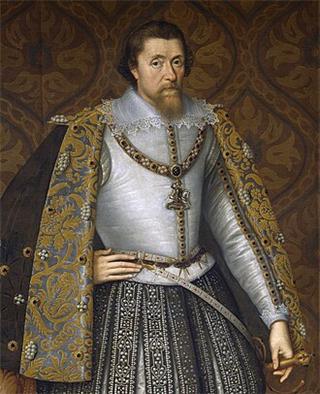
The Kingdom of Great Britain was formed by the union of the Kingdom of England and the Kingdom of Scotland. The two had shared a monarch since 1603, when James VI of Scotland succeeded Elizabeth I as James I of England, but they kept separate parliaments, churches, laws and trade, and a union imposed under Oliver Cromwell had lapsed at the Restoration. Union became urgent after the English Act of Settlement of 1701 fixed the succession on the Protestant House of Hanover, while the Scottish Parliament’s Act of Security of 1704 reserved the right to choose a different successor. England replied with the Alien Act of 1705, threatening to treat Scots as foreigners and ban Scottish imports unless Scotland negotiated. Commissioners from both kingdoms agreed a treaty in 1706, and the Scottish Parliament ratified it in January 1707 amid popular protest, persuaded by access to English and colonial markets, by the ‘Equivalent’, a payment that partly compensated investors in the failed Darien scheme, and by guarantees for the Presbyterian Church of Scotland and Scots law. The Acts of Union took effect on 1 May 1707, when Queen Anne became the first monarch of Great Britain. Scotland sent 45 members to the House of Commons and 16 elected peers to the House of Lords of the new Parliament at Westminster.
Socioeconomy

Great Britain was a commercial and increasingly urban society led by a powerful landed aristocracy. Land remained the main source of wealth and political influence, while the enclosure of open fields, new crop rotations and selective breeding raised agricultural output. London, with over half a million people in 1700 and nearly a million by 1801, was Europe’s largest city and the centre of trade, finance and print. Overseas commerce grew rapidly under the Navigation Acts, which reserved colonial trade for British ships: sugar from Jamaica and Barbados, tobacco from Virginia and Maryland and textiles from India were re-exported across Europe, and Glasgow prospered on tobacco after the union. Ships from London, Bristol and Liverpool dominated the Atlantic slave trade, carrying more than two million Africans to the Americas during the century. From the 1760s the Industrial Revolution began, with James Hargreaves’s spinning jenny, Richard Arkwright’s water frame and factories, James Watt’s improved steam engine, patented in 1769, and canals such as the Bridgewater Canal of 1761. The Church of England and the Church of Scotland were established churches, while Protestant Dissenters and Catholics faced legal restrictions. Coffee houses, newspapers and periodicals such as The Spectator fed a lively public sphere of debate.
Military

British power rested above all on the Royal Navy, the largest in the world for most of the century, financed by excise taxes and a public debt managed through the Bank of England. The army was small by continental standards, and Britain fought its European wars largely through subsidies to allies and hired German troops. In the War of the Spanish Succession John Churchill, Duke of Marlborough, won at Ramillies in 1706, Oudenarde in 1708 and Malplaquet in 1709, and the Treaty of Utrecht (1713) gave Britain Gibraltar, Minorca, Newfoundland and Nova Scotia and the asiento to supply enslaved Africans to Spanish America. Jacobite risings in support of the exiled Stuarts were defeated in 1715 and in 1745–1746, when Charles Edward Stuart reached Derby before his army was destroyed at the Battle of Culloden. The Seven Years’ War (1756–1763) brought Robert Clive’s victory at the Battle of Plassey in 1757, the conquest of Quebec after James Wolfe’s victory on the Plains of Abraham in 1759 and naval victories at Lagos and Quiberon Bay. The American War of Independence ended in defeat after the surrender at Yorktown in 1781, but from 1793 Britain led coalitions against revolutionary France, and Horatio Nelson destroyed a French fleet at the Battle of the Nile in 1798.
Governance & Law

Great Britain was a constitutional monarchy in which Parliament, made supreme by the Revolution of 1688, controlled taxation and the standing army. On Queen Anne’s death in 1714 the crown passed under the Act of Settlement to George I, Elector of Hanover, and the Hanoverian kings, though still powerful in choosing ministers and directing foreign policy, needed majorities in the Commons. Cabinet government developed under Robert Walpole, First Lord of the Treasury from 1721 to 1742 and usually regarded as the first prime minister, who managed Parliament through patronage. The Septennial Act of 1716 lengthened parliaments to seven years. Elections were dominated by landowners: the electorate was small, and many boroughs, the so-called rotten and pocket boroughs, were controlled by patrons. Whigs dominated government until the 1760s, when George III sought a more active role; long ministries followed under Lord North from 1770 and William Pitt the Younger from 1783. Scotland kept its own courts, law and church, and its administration was largely left to political managers such as the Duke of Argyll and later Henry Dundas. Local government lay with justices of the peace drawn from the gentry, while an efficient excise service gave the state a fiscal reach that few rivals could match.
Global & Regional Impact

Eighteenth-century Great Britain created the conditions for its later world dominance. The ‘fiscal-military state’, combining parliamentary taxation, a funded national debt and a large navy, allowed a country with far fewer people than France to defeat it repeatedly, and the victories of the Seven Years’ War left Britain the leading colonial power in North America and, through the East India Company, a territorial ruler in Bengal after 1765. Its constitution, praised by Montesquieu in The Spirit of the Laws (1748), influenced European reformers and the framers of the United States Constitution. The Scottish Enlightenment flourished after the union: David Hume, Adam Smith, whose Wealth of Nations appeared in 1776, and Adam Ferguson shaped modern philosophy, economics and social science, while Samuel Johnson’s Dictionary (1755) and the novels of Daniel Defoe, Samuel Richardson and Henry Fielding helped establish modern English prose and the novel. The Industrial Revolution that began in these decades would transform the world economy. The thirteen colonies became the United States, and the settlement of New South Wales from 1788 began British Australia. British ships were also the largest carriers in the Atlantic slave trade, against which an abolition movement, led by Thomas Clarkson and William Wilberforce, organised from 1787.
Decline & Fall
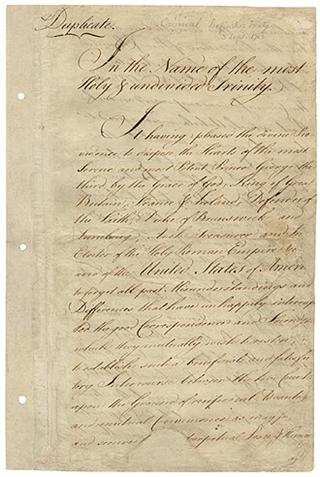
The Kingdom of Great Britain did not decline so much as merge into a larger state. The loss of the thirteen American colonies, recognised in the Treaty of Paris in 1783, was a severe blow, but trade with the United States recovered quickly and the empire shifted its weight towards India, the Caribbean and the Pacific. The decisive change came from Ireland, a separate kingdom under the British crown whose Parliament had won legislative independence in 1782. Inspired by the French Revolution, the Society of United Irishmen led a rebellion in 1798, supported by a small French landing in County Mayo; it was suppressed with heavy loss of life. William Pitt the Younger concluded that only a full union would secure Ireland and close a back door to French invasion, and he hoped to accompany it with Catholic emancipation. The Acts of Union of 1800, passed by the British and Irish parliaments after extensive use of patronage in Dublin, abolished the Irish Parliament. On 1 January 1801 Great Britain and Ireland became the United Kingdom of Great Britain and Ireland, with Irish members sitting at Westminster. George III refused to accept Catholic emancipation, and Pitt resigned in 1801. Great Britain remains the name of the island and of the union of England, Scotland and Wales at the core of today’s United Kingdom.
The Kingdom of Great Britain, created by the union of England and Scotland in 1707, combined parliamentary government, public credit and naval power to defeat France repeatedly, built a commercial empire across the Atlantic and in India, and was the birthplace of the Industrial Revolution and home of the Scottish Enlightenment before its merger with Ireland in 1801.
Test yourself
5 questions on this page, from its key events and facts.
The questions open here once the page has loaded.
References
- Colley, L. (1992) Britons: Forging the Nation, 1707–1837. New Haven: Yale University Press.
- Brewer, J. (1989) The Sinews of Power: War, Money and the English State, 1688–1783. London: Unwin Hyman.
- Langford, P. (1989) A Polite and Commercial People: England, 1727–1783. Oxford: Clarendon Press.
- Whatley, C.A. (2006) The Scots and the Union. Edinburgh: Edinburgh University Press.
- Holmes, G. and Szechi, D. (1993) The Age of Oligarchy: Pre-industrial Britain, 1722–1783. London: Longman.
- Rodger, N.A.M. (2004) The Command of the Ocean: A Naval History of Britain, 1649–1815. London: Allen Lane.
Connections
Open the full connections map →