
At a glance
- A Bamana kingdom on the middle Niger, founded around 1712 by Biton Kulibali, who turned a young men’s association into an army.
- Its power rested on the tonjon, soldiers of captive origin, and on the trade of Muslim Maraka towns such as Sinsani.
- It resisted the Fulbe jihads until Umar Tall took Ségou in 1861; its kings live on in the griots’ epics.
Rise & Fall
- c. 1712Biton Kulibali turns the ton of Ségou into an army and makes himself king
- c. 1754Biton defeats Kaarta’s Massassi rulers and captures their king, Foulakoro
- 1766Ngolo Diarra, a former tonjon, seizes power and founds the Diarra dynasty
- 1796Mungo Park reaches the Niger at Ségou during the reign of Monzon Diarra
- 1818Seku Amadu’s victory at Noukouma begins the Massina jihad that takes Djenné
- 1860Umar Tall’s army defeats the Bamana at Woïtala
- 1861Umar Tall takes Ségou and makes it the capital of the Toucouleur Empire
Foundation
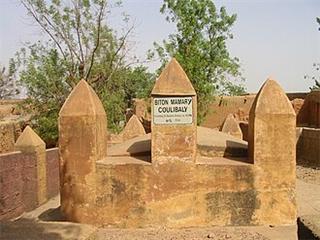
The Bamana Empire, or Kingdom of Ségou, grew up among Bamana farmers on the middle Niger in the political vacuum left by the fall of the Songhay Empire to Morocco in 1591. Its early history is known mainly from Bamana oral traditions and the epics of the griots, written down from about 1900 by French colonial officials such as Charles Monteil and later by scholars; contemporary written evidence is thin, and the first detailed eyewitness description is Mungo Park’s, from 1796. According to the traditions, a mid-seventeenth-century leader, Kaladian Kulibali, first built a hegemony around Ségou that did not outlast him. Around 1712 his descendant Mamari Kulibali, head of a ton, an association of young men of the same age, turned it into a permanent war band and made himself king, taking the title Biton. He enlarged his following with war captives and with men unable to pay their dues, who became the tonjon, soldiers bound to him personally. From his capital at Ségou-Koro, Biton (r. c. 1712–1755) overcame rival chiefs, built a fleet of war canoes with the Somono boatmen of the river and withstood an invasion from Kong, the Watara state to the south. Around 1754 he defeated the rival Massassi rulers of Kaarta to the north-west and captured their king, Foulakoro, leaving Ségou the dominant power between Bamako and Djenné.
Socioeconomy

Ségou joined the farming villages of the Bamana countryside to a state that lived by war. Farmers grew millet and sorghum, rice on the floodplains and cotton, which women spun late into the night, as Park observed; Fulbe herders kept cattle, and Bozo and Somono fishermen and boatmen worked the river. The state’s campaigns brought in captives, who were drafted as soldiers, settled in farming villages that fed the court and the army, or sold. Muslim merchants known as Maraka, living in trading towns such as Sinsani (Sansanding) and Nyamina, bought captives and grain and dealt in Saharan salt, cloth, gold, horses and firearms, and many captives from the middle Niger were sold on to the French and British posts on the Senegal and the Gambia and shipped across the Atlantic. Cowrie shells served as money. Park described Ségou as four walled towns on both banks of the Niger with perhaps 30,000 inhabitants, mosques in every quarter and royal ferries whose fares of ten cowries a passenger brought the king a large revenue, and he wrote of “a prospect of civilisation and magnificence” he had not expected. Most Bamana followed their own religion, organised in initiation societies such as the komo and centred on power objects (boliw), while the Maraka and many traders were Muslims living under non-Muslim kings.
Military
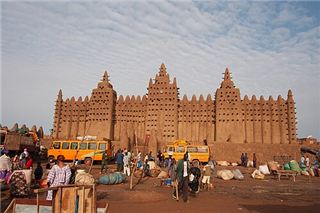
The core of Ségou’s power was the tonjon, a standing force of captive origin that owed its loyalty to the king and its living to war. Annual campaigns in the dry season struck neighbouring peoples and rebellious tributaries for captives and plunder, and Somono crews manned the war canoes that carried troops along the Niger. Towns were enclosed by high earthen walls, and wars often turned on the siege of such strongholds. Under Ngolo Diarra (r. 1766–c. 1790) the army reasserted Ségou’s authority over Djenné and the Fulbe chiefs of Massina, and Ngolo died around 1790 returning from a campaign against the Mossi. His son Monzon (r. c. 1790–1808) fought repeated wars with Kaarta: in 1796 Park found the roads between the two kingdoms closed because Monzon’s army had marched against Kaarta’s king, Desse Koro, whose fortress of Gedingooma it did not take, and around 1800 Monzon’s power reached Timbuktu. The army’s limits showed in the nineteenth century. In 1818 the Fulbe cleric Seku Amadu defeated the chiefs of Massina and their Ségou allies at Noukouma and founded the Massina Empire, with which Ségou fought for decades, and in 1860–1861 Umar Tall’s well-armed Toucouleur army defeated the Bamana at Woïtala and near Tio.
Governance & Law
The faama, or king, ruled with the backing of the tonjon and their commanders, who formed a military aristocracy able to make and unmake rulers. After Biton’s death in 1755 they killed his son Dinkoro within two years; his successor Ali, a Muslim who according to tradition tried to forbid the ancestral cults and the drinking of millet beer, was also overthrown, and until 1766 the tonjon raised and removed a series of their own chiefs. Order returned with Ngolo Diarra, who, the traditions say, had come to Ségou as part of his village’s tribute and had risen among the tonjon. He seized power in 1766 and founded the Diarra dynasty, which ruled until 1861; by Park’s time the king resided at Ségou-Sikoro, one of the four towns of the capital. The heartland around Ségou was ruled directly, while conquered peoples kept their own chiefs and paid annual tribute, and Ngolo placed his sons in command of districts. No fixed rule settled the succession: Monzon had to defeat his brother Nianankoro before he could reign, and from the late 1830s kings followed one another in quick succession, with tonjon chiefs often deciding between rival princes. The kings also kept the royal boliw, the power objects at the centre of state ritual.
Global & Regional Impact
For much of the eighteenth and early nineteenth centuries Ségou was the strongest state on the middle Niger, and its wars reshaped the region’s population: captives taken by its armies filled Bamana villages and the ranks of the tonjon, or were sold into the Saharan and Atlantic trades, while Maraka towns along the river prospered as markets. As a powerful non-Muslim kingdom it became a target of Umar Tall, who presented his war as a holy war against pagans, and Islam spread widely among the Bamana only after the kingdom’s fall. The kingdom also gave the Bamana a political identity that outlived it. Bamanankan, the language of its kings and soldiers, is today spoken as a first or second language by about four Malians in five. The griots’ epics of Biton, Ngolo and Da Monzon form a celebrated cycle of West African oral literature; scholars recorded them in collections such as Lilyan Kesteloot’s Da Monzon de Ségou (1972) and David Conrad’s edition of the version told by the griot Tayiru Banbera (1990). Maryse Condé’s novel Ségou (1984) brought the kingdom to readers worldwide, and Mungo Park’s Travels in the Interior Districts of Africa (1799) gave Europe its first eyewitness picture of the middle Niger and its walled cities.
Decline & Fall

Ségou’s decline began with the Fulbe jihad in the inner Niger delta. After Seku Amadu’s victory at Noukouma in 1818 the Massina Empire, ruled from its new capital at Hamdullahi, took Djenné and the delta out of Ségou’s orbit, and the two states fought for decades. At home, rival princes and tonjon chiefs contested the throne. The decisive threat came from the west. The Toucouleur cleric Umar Tall, who destroyed the Kingdom of Kaarta in 1854, turned on Ségou as a pagan state. In 1860 King Ali Diarra accepted Islam in return for help from Massina, the old enemy, but Umar’s army took Nyamina in May 1860, defeated the Bamana at Woïtala that September and crushed the combined Bamana and Massina forces near Tio in February 1861. Umar entered Ségou in March 1861 and made it the capital of the Toucouleur Empire, while Ali fled to Hamdullahi with the royal boliw; Massina itself fell to Umar in 1862. Bamana resistance continued in the countryside against Umar’s son Ahmadu and his governors until the French under Louis Archinard took Ségou in April 1890. Ségou then passed under French colonial rule.
The Bamana Empire of Ségou, built by Biton Kulibali and the captive soldiers of the tonjon, dominated the middle Niger for much of the eighteenth century, fed the Saharan and Atlantic slave trades, held out against the Fulbe jihads until Umar Tall’s conquest in 1861, and lives on in Bamana identity and the griots’ epics.
References
- Conrad, D.C. (ed.) (1990) A State of Intrigue: The Epic of Bamana Segu according to Tayiru Banbera. Oxford: Oxford University Press for the British Academy.
- Djata, S.A. (1997) The Bamana Empire by the Niger: Kingdom, Jihad, and Colonization, 1712–1920. Princeton: Markus Wiener.
- Monteil, C. (1924) Les Bambara du Ségou et du Kaarta: étude historique, ethnographique et littéraire d'une peuplade du Soudan français. Paris: Larose.
- Park, M. (1799) Travels in the Interior Districts of Africa. London: W. Bulmer for the author.
- Roberts, R.L. (1987) Warriors, Merchants, and Slaves: The State and the Economy in the Middle Niger Valley, 1700–1914. Stanford: Stanford University Press.
- Robinson, D. (1985) The Holy War of Umar Tal: The Western Sudan in the Mid-Nineteenth Century. Oxford: Clarendon Press.
Connections
Open the full connections map →