Europe
United Kingdom of Great Britain and Ireland
At a glance
- Formed on 1 January 1801 by the union of Great Britain and Ireland, with a single Parliament at Westminster.
- The first industrial nation, it led world trade and finance and ruled the largest empire in history.
- Irish grievances, deepened by the Great Famine, led to the Easter Rising, a war of independence and the Irish Free State in 1922.
Rise & Fall
- 1801The union of Great Britain and Ireland takes effect on 1 January
- 1805Nelson defeats the French and Spanish fleets at Trafalgar
- 1815Wellington and Blücher defeat Napoleon at Waterloo
- 1832The Great Reform Act widens the franchise
- 1845The Great Famine begins in Ireland
- 1851The Great Exhibition opens at the Crystal Palace in London
- 1916The Easter Rising in Dublin
- 1922The Irish Free State is established; Northern Ireland stays in the UK
Foundation
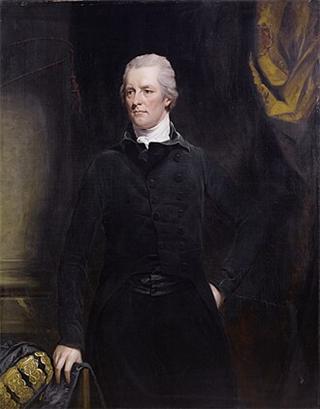
The United Kingdom of Great Britain and Ireland was created by the Acts of Union of 1800, passed by the Parliament of Great Britain and the Parliament of Ireland, which took effect on 1 January 1801. Ireland had been a separate kingdom under the English, then British, crown, with a Parliament in Dublin confined to Protestants, which had won legislative independence in 1782. The rebellion of the Society of United Irishmen in 1798, in which many thousands died and a French force landed in County Mayo, convinced William Pitt the Younger that union was needed to secure Ireland during the war with revolutionary France. The Irish Parliament rejected union in 1799 but accepted it in 1800, after the government used peerages, offices and compensation for the owners of parliamentary boroughs to win votes. Ireland received 100 seats in the House of Commons at Westminster and 28 representative peers and four bishops in the House of Lords, and the Church of Ireland was united with the Church of England. Pitt intended to follow union with Catholic emancipation, but George III refused, regarding it as a breach of his coronation oath, and Pitt resigned in 1801. The new state’s flag, the Union Flag, added the cross of St Patrick to those of St George and St Andrew.
Socioeconomy
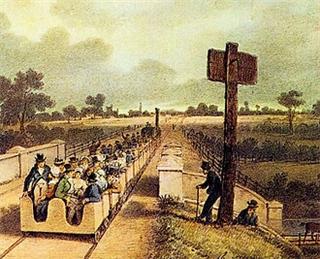
The United Kingdom was the first industrial nation. Cotton textiles in Lancashire, coal, iron and engineering, and from 1830 the railways, beginning with the Liverpool and Manchester Railway, made Britain the ‘workshop of the world’, as displayed at the Great Exhibition of 1851. The population of Great Britain grew from about 10.5 million in 1801 to over 40 million in 1911, and by 1851 most people lived in towns. Industrialisation brought crowded cities, child labour and poverty, answered gradually by Factory Acts, public health laws, trade unions and, from 1870, state elementary schooling. After the repeal of the Corn Laws in 1846 the country embraced free trade, and London became the centre of world finance, shipping and insurance, with sterling on the gold standard. Ireland’s experience was different: apart from the linen and shipbuilding industries around Belfast, it remained largely agrarian, dependent on tenant farming and, for the poor, on the potato. The Great Famine of 1845–1852, caused by potato blight and worsened by government policy and evictions, killed about a million people and drove another million to emigrate; Ireland’s population fell from about 8.2 million in 1841 to 4.4 million in 1911. Religion divided society, with an Anglican establishment, strong Protestant Nonconformity in Britain and a Catholic majority in Ireland.
Military
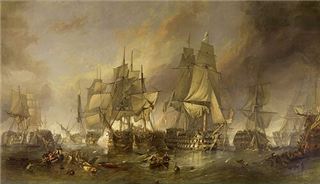
The Royal Navy was the foundation of British power. Horatio Nelson’s victory at the Battle of Trafalgar in 1805 ended the threat of French invasion, and the Duke of Wellington’s campaigns in the Peninsular War and his victory, with Prussian forces, at the Battle of Waterloo in 1815 helped bring down Napoleon. For a century afterwards the navy policed the seas, hunted slave ships through the West Africa Squadron and backed the opening of markets, as in the First Opium War with China (1839–1842). The army, small and long-service, was mainly employed in imperial wars in India, Afghanistan, southern Africa and elsewhere, and, alongside France and the Ottoman Empire, in the Crimean War (1853–1856), whose mismanagement prompted reform; the Cardwell reforms of 1868–1874 abolished the purchase of officers’ commissions. The Second Boer War (1899–1902) exposed further weaknesses and led to the creation of a general staff. From 1906 a naval race with Germany followed the launch of HMS Dreadnought, the first all-big-gun battleship. In the First World War the United Kingdom mobilised millions of men, at first by volunteering and from 1916 by conscription in Great Britain, though never in Ireland; the battles of the Somme and Passchendaele cost hundreds of thousands of casualties, and more than 700,000 servicemen from the United Kingdom died.
Governance & Law
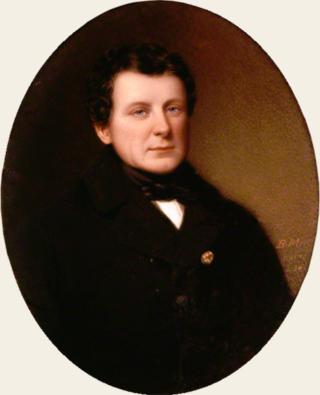
The United Kingdom was a constitutional monarchy governed by a Cabinet responsible to Parliament, whose power grew at the expense of the crown. After Daniel O’Connell’s mass campaign, the Roman Catholic Relief Act of 1829 allowed Catholics to sit in Parliament. The Reform Act of 1832 abolished many rotten boroughs and gave the vote to much of the middle class; further Reform Acts in 1867 and 1884 enfranchised most male householders, the Ballot Act of 1872 introduced secret voting, and the Representation of the People Act of 1918 gave the vote to almost all men over 21 and to most women over 30. Two-party politics developed between Conservatives led by figures such as Benjamin Disraeli and Liberals under William Ewart Gladstone. The Parliament Act of 1911 ended the House of Lords’ absolute veto. Queen Victoria (r. 1837–1901) reigned as a constitutional monarch, and the Northcote–Trevelyan Report of 1854 led to a civil service recruited by competitive examination. Ireland was governed by a Lord Lieutenant and a Chief Secretary from Dublin Castle, with an armed police force, the Royal Irish Constabulary; the Church of Ireland was disestablished in 1869, and land acts from 1870 to 1903 gradually transferred land to tenant farmers. Gladstone’s Home Rule Bills of 1886 and 1893 failed, and a third, passed in 1914, was suspended for the war.
Global & Regional Impact

At its height the United Kingdom was the world’s leading industrial, financial and naval power and the centre of the largest empire in history, which by the early 1920s covered about a quarter of the world’s land surface. It spread railways, steam shipping, the telegraph and industrial technology across the globe, and its free-trade policy and the gold standard shaped the nineteenth-century world economy. After abolishing the slave trade in 1807 and, through the Slavery Abolition Act of 1833, slavery in most of its colonies, it pressed other states to end the trade. Its parliamentary institutions and common law were adopted, with variations, in Canada, Australia, New Zealand and other dominions, and English spread as a global language. Science and thought flourished: Charles Darwin’s On the Origin of Species (1859), the work of Michael Faraday and James Clerk Maxwell on electromagnetism, and the economics of David Ricardo and John Stuart Mill. Writers including Jane Austen, Charles Dickens, the Brontë sisters, George Eliot, W.B. Yeats and James Joyce made the period a high point of literature in English. The union with Ireland also left a darker legacy: the Famine and mass emigration created large Irish communities in the United States, Britain and Australia, and the unresolved Irish question shaped politics in both islands throughout the twentieth century.
Inventions and discoveries credited here
Electrical telegraph1816Synthetic dye1856Evolution by natural selection1859
Decline & Fall

The union ended in Ireland. Home Rule, demanded by the Irish Parliamentary Party under Charles Stewart Parnell and later John Redmond, was opposed by Unionists, concentrated in Ulster, who signed the Ulster Covenant in 1912 and formed the Ulster Volunteers. The Government of Ireland Act 1914 was passed but suspended for the duration of the First World War. The Easter Rising in Dublin in 1916 was quickly suppressed, but the execution of its leaders shifted opinion towards Sinn Féin, which won 73 of Ireland’s 105 seats in the general election of December 1918. Its members met as Dáil Éireann in January 1919 and declared independence, and the Irish Republican Army fought the Irish War of Independence against British forces from 1919 to 1921. The Government of Ireland Act 1920 created separate parliaments for Northern Ireland, which opened in 1921, and Southern Ireland. After a truce in July 1921, the Anglo-Irish Treaty signed on 6 December 1921 gave twenty-six counties dominion status as the Irish Free State, established on 6 December 1922, while Northern Ireland at once chose to remain in the United Kingdom. The remaining state was formally renamed the United Kingdom of Great Britain and Northern Ireland by the Royal and Parliamentary Titles Act of 1927. Ireland left the Commonwealth and became a republic in 1949.
The United Kingdom of Great Britain and Ireland, created by the union of 1801, was the first industrial nation and the centre of the largest empire in history, shaping world trade, politics and culture in the nineteenth century, while its failure to reconcile Ireland, above all after the Great Famine, led to Irish independence in 1922.
Test yourself
5 questions on this page, from its key events and facts.
The questions open here once the page has loaded.
References
- Hilton, B. (2006) A Mad, Bad, and Dangerous People? England 1783–1846. Oxford: Clarendon Press.
- Hoppen, K.T. (1998) The Mid-Victorian Generation, 1846–1886. Oxford: Clarendon Press.
- Searle, G.R. (2004) A New England? Peace and War, 1886–1918. Oxford: Clarendon Press.
- Foster, R.F. (1988) Modern Ireland, 1600–1972. London: Allen Lane.
- Jackson, A. (2003) Home Rule: An Irish History, 1800–2000. London: Weidenfeld & Nicolson.
- Ó Gráda, C. (1999) Black ’47 and Beyond: The Great Irish Famine in History, Economy, and Memory. Princeton: Princeton University Press.
Connections
Open the full connections map →