South & Southeast Asia
Dutch East Indies
At a glance
- The colonial state formed when the Dutch government took over the VOC’s Asian possessions on 1 January 1800.
- The Cultivation System of 1830 forced Javanese villages to grow export crops, making the colony highly profitable for the Netherlands.
- Conquest of the outer islands by about 1910 created the borders that independent Indonesia inherited in 1949.
Rise & Fall
- 1800The Dutch state takes over the possessions of the dissolved VOC
- 1811–1816Britain occupies Java under Thomas Stamford Raffles
- 1825–1830Prince Diponegoro leads the Java War against Dutch rule
- 1830Johannes van den Bosch introduces the Cultivation System
- 1873The Dutch invade Aceh, beginning a decades-long war
- 1901Queen Wilhelmina announces the Ethical Policy
- 1942Japan conquers the colony; the Dutch surrender on 8 March
- 1949The Netherlands transfers sovereignty to Indonesia on 27 December
Foundation
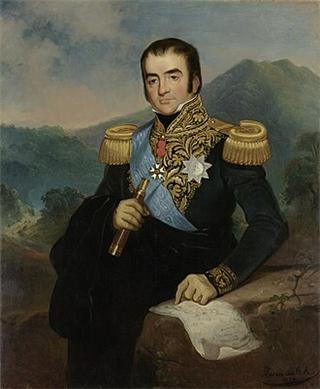
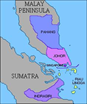
The Dutch East Indies were created when the Dutch state took over the Asian possessions of the bankrupt Dutch East India Company (VOC), whose charter expired at the end of 1799. On 1 January 1800 its territories, centred on Batavia and parts of Java, the Moluccas and scattered trading posts, passed to the Batavian Republic. Europe’s wars soon reached the colony. Herman Willem Daendels, appointed governor-general by Louis Bonaparte’s Kingdom of Holland, arrived in 1808, centralised the administration of Java, curbed the Javanese courts and built the Great Post Road along the north coast with forced labour. After the Netherlands was annexed by France in 1810, a British expedition took Java in 1811, and Thomas Stamford Raffles governed it as lieutenant-governor until 1816, introducing a land rent tax. Under the Anglo-Dutch Convention of 1814 the colony was returned, and the Dutch resumed control in 1816. The Anglo-Dutch Treaty of 1824 then divided the region into spheres, leaving the archipelago south of Singapore to the Netherlands. Dutch authority remained limited outside Java, and on Java itself it was challenged by Prince Diponegoro of Yogyakarta, whose rebellion of 1825–1830, the Java War, cost perhaps 200,000 Javanese lives before he was arrested during negotiations and exiled to Manado and later Makassar.
Socioeconomy
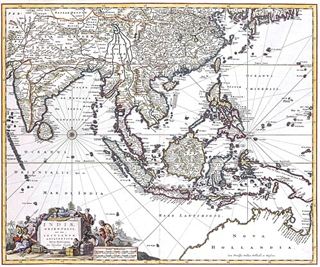
The colony’s economy was shaped by the Cultivation System (cultuurstelsel) introduced by Governor-General Johannes van den Bosch in 1830. Javanese villages were required to devote part of their land or labour to export crops such as coffee, sugar and indigo, delivered to the government at fixed prices and shipped by the Netherlands Trading Society. The surplus remitted to the Netherlands paid off Dutch debts and financed railways at home, but it also contributed to famines in parts of Java in the 1840s. Eduard Douwes Dekker’s novel Max Havelaar (1860), published under the name Multatuli, attacked the system, and the Agrarian Law of 1870 opened the colony to private plantations. Tobacco estates in Deli on Sumatra, sugar mills on Java, tin on Bangka and Belitung, rubber and, from the 1890s, oil drilled by the Royal Dutch company made the Indies one of the world’s most valuable colonies. Society was divided by law into Europeans, ‘Foreign Orientals’, mainly Chinese and Arabs, and ‘Natives’, each under different rules. The 1930 census counted about 60 million people, most of them Muslim, with Java among the most densely populated places on earth. Malay served as the lingua franca of administration and commerce, while Chinese communities dominated retail trade and money-lending.
Military
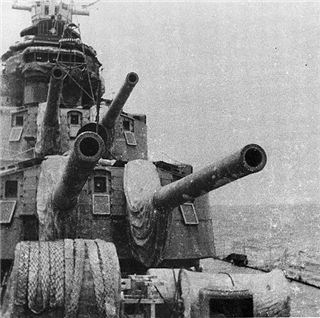
The Royal Netherlands Indies Army (KNIL), formed in 1830, was a colonial force of mainly Javanese, Ambonese and Manadonese soldiers under European officers, supported by the navy. After the Java War it fought the Padri War in West Sumatra until 1837 and then turned to the outer islands, where most of the archipelago still lay beyond Dutch control. Expeditions against Bali in 1846, 1848 and 1849, the Banjarmasin War from 1859 and campaigns in Sulawesi and Borneo extended Dutch power step by step. The longest conflict was the Aceh War, begun in 1873, which turned into a guerrilla struggle; it was largely ended by mobile units of the Marechaussee under J. B. van Heutsz, with advice from the scholar Christiaan Snouck Hurgronje, by about 1904, though resistance continued for years. Lombok was conquered in 1894, and in 1906 and 1908 the courts of Badung and Klungkung on Bali chose ritual mass suicide, the puputan, rather than surrender. By about 1910 the whole archipelago, including much of New Guinea, was under Dutch rule. The colony’s defences were never built for a major war: when Japan attacked in 1942, an Allied squadron was destroyed in the Battle of the Java Sea on 27 February, and the KNIL surrendered at Kalijati on 8 March 1942.
Governance & Law
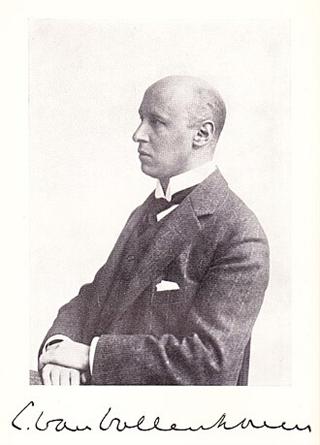
A governor-general, residing at Batavia and at Buitenzorg (Bogor), ruled the colony on behalf of the Dutch crown under constitutional regulations such as the Government Regulation of 1854. On Java, rule was dual: Dutch residents and controllers of the European civil service supervised a hierarchy of Javanese regents (bupati) drawn from the aristocratic priyayi class, who kept their titles and status while carrying out colonial policy. The sultanates of Yogyakarta and Surakarta survived as autonomous principalities, and in the outer islands hundreds of rulers signed the ‘Short Declaration’ (Korte Verklaring), accepting Dutch sovereignty in return for local self-government. Law was plural: European codes applied to Europeans, while for Indonesians customary law (adat), studied by Cornelis van Vollenhoven and his school at Leiden, was recognised alongside Islamic law in family matters. In 1901 Queen Wilhelmina announced the Ethical Policy, promising welfare through irrigation, education and emigration from crowded Java. A People’s Council (Volksraad), first meeting in 1918, gave Indonesians a limited advisory voice. Governor-generals such as van Heutsz (1904–1909) combined military pacification with administrative reform, but political parties that demanded independence were repressed, and leaders including Sukarno, Mohammad Hatta and Sutan Sjahrir were exiled to remote islands or the Boven-Digoel camp in New Guinea in the 1930s.
Global & Regional Impact

The Dutch East Indies created the territorial frame of modern Indonesia. Many of the archipelago’s sultanates, kingdoms and villages had never belonged to one state before; Dutch conquest between 1830 and 1910 joined them under a single administration, and the Republic of Indonesia claimed exactly those borders, including in the end western New Guinea. The colony also produced the forces that destroyed it. Western-style schools created a small educated elite, and the first modern organisations followed: Budi Utomo in 1908, Sarekat Islam, which grew into a mass movement in the 1910s, the Communist Party of the Indies in 1920 and Sukarno’s Indonesian Nationalist Party in 1927. At the Youth Congress of 1928 young nationalists pledged allegiance to one motherland, one nation and one language, Indonesian, developed from the Malay used in colonial administration. For the Netherlands the colony was a major source of wealth, and its remittances under the Cultivation System helped restore Dutch public finances in the mid-nineteenth century. Max Havelaar became a classic of Dutch literature and a reference point for later criticism of colonial exploitation. Scientific institutions such as the botanical garden at Buitenzorg, founded in 1817, the study of adat law and the Eurasian (Indo) communities that later settled in the Netherlands are further legacies.
Decline & Fall
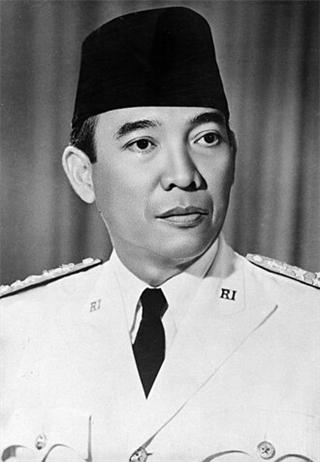
Colonial authority appeared secure in the 1930s, when the repression of the communist uprisings of 1926–1927 and the exile of nationalist leaders kept open opposition in check, but the Great Depression cut export earnings sharply and the German occupation of the Netherlands in May 1940 left the colony isolated. Japan invaded in early 1942 and within weeks the Dutch surrendered. The Japanese interned Dutch civilians, mobilised Indonesians for labour and military training, and promoted nationalist leaders such as Sukarno. Two days after Japan’s surrender, on 17 August 1945, Sukarno and Hatta proclaimed the independence of Indonesia. The Netherlands, returning with British help, sought to restore its rule, and four years of war and diplomacy followed. The Linggadjati Agreement of 1946 recognised the Republic’s authority on Java and Sumatra, but Dutch ‘police actions’ in July 1947 and December 1948 brought large areas back under Dutch control, including the Republic’s capital at Yogyakarta. International pressure, above all from the United States and the United Nations, and continuing guerrilla resistance forced a settlement. After the Round Table Conference at The Hague, the Netherlands transferred sovereignty to the Republic of the United States of Indonesia on 27 December 1949. Only Netherlands New Guinea remained Dutch, until it passed to United Nations administration in 1962 and to Indonesia in 1963.
The Dutch East Indies turned a scattered trading empire into a colonial state covering the whole Indonesian archipelago, enriching the Netherlands through the Cultivation System and plantation exports, and in uniting hundreds of societies under one administration it drew the borders and bred the nationalism of independent Indonesia.
References
- Ricklefs, M.C. (2008) A History of Modern Indonesia since c. 1200. 4th edn. Basingstoke: Palgrave Macmillan.
- Vickers, A. (2005) A History of Modern Indonesia. Cambridge: Cambridge University Press.
- Elson, R.E. (1994) Village Java under the Cultivation System, 1830–1870. Sydney: Allen & Unwin.
- Carey, P. (2007) The Power of Prophecy: Prince Dipanagara and the End of an Old Order in Java, 1785–1855. Leiden: KITLV Press.
Connections
Open the full connections map →