Europe
Free Hanseatic City of Bremen
At a glance
- A Weser port that won self-government from its archbishops after Frederick Barbarossa's privilege of 1186.
- A Hanseatic city and free imperial city, it resisted Swedish claims and survived the end of the Holy Roman Empire in 1806.
- Through Bremerhaven it became a great emigration port, and it is now the smallest state of the Federal Republic of Germany.
Rise & Fall
- 1186Frederick Barbarossa's Gelnhausen Privilege confirms the citizens' rights
- 1404The stone Roland statue is set up in the market square
- 1646The Linz Diploma confirms Bremen as a free imperial city
- 1811Napoleon annexes Bremen to France
- 1827Johann Smidt founds Bremerhaven at the mouth of the Weser
- 1857Norddeutscher Lloyd is founded in Bremen
- 1947The Land of Bremen is re-established with Bremerhaven
- 1949Bremen becomes a state of the Federal Republic of Germany
Foundation
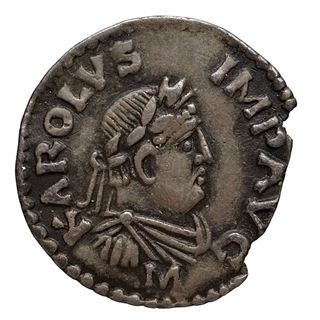
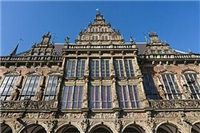
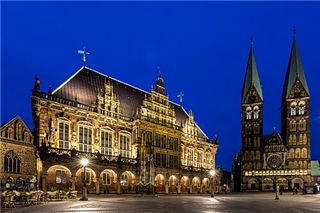
Bremen grew up on a sand ridge on the right bank of the Weser, about 60 kilometres from the North Sea. Charlemagne made it the seat of a bishopric in 787, with the Anglo-Saxon missionary Willehad as first bishop, and after Vikings sacked Hamburg in 845 Archbishop Ansgar moved to Bremen, which became the seat of the archbishops of Hamburg-Bremen, leaders of the mission to Scandinavia. Archbishop Adalbert (1043–1072) hoped to make the see a northern patriarchate, and around 1075 the chronicler Adam of Bremen recorded its history and the geography of the North. A merchant community grew beside the cathedral and the market, and in 1186 Emperor Frederick Barbarossa issued the Gelnhausen Privilege, which confirmed the citizens' rights, limited the archbishop's claims over them and established that a serf who lived in the city for a year and a day without being claimed became free. The privilege is regarded as the founding charter of the city's liberties. Over the following centuries the council gradually took over jurisdiction, defence and finance from the archbishops, who came to reside mostly outside the city at Bremervörde. The stone Roland erected in the market square in 1404, a symbol of civic rights, and the town hall built in 1405–1410 expressed this self-government, although the archbishops never formally gave up their claims, and the city's imperial immediacy was confirmed only in 1646.
Socioeconomy
Bremen's wealth came from the Weser, which linked the city to the North Sea and to a hinterland reaching into Westphalia and Lower Saxony. Merchants traded grain, timber, herring, cloth and wine, and brewers produced beer in large quantities for export to the Netherlands and Scandinavia. Bremen took part in the Hanseatic League from the thirteenth century, traditionally from 1260, but was an awkward member: it was expelled in 1285 for breaking a blockade of Norway and readmitted only in 1358. Silting of the Weser made the port hard to reach for larger ships, so the city built harbours downstream, at Vegesack in 1619–1623 and later at Bremerhaven. Society was dominated by merchant and shipowning families who sat on the council, while craftsmen organised in guilds periodically demanded a voice, as in the rising of the 104 men in 1530–1532. The Reformation arrived with Heinrich von Zütphen's preaching in 1522, and from the 1580s the city followed the Reformed rather than the Lutheran confession, setting it apart from most of northern Germany. From the eighteenth century Bremen specialised in colonial goods, above all tobacco, coffee and later cotton; its cotton exchange was founded in 1872, and Ludwig Roselius's Kaffee HAG marketed decaffeinated coffee from 1906. Between 1830 and the mid-twentieth century, by commonly cited estimates, some seven million emigrants, most bound for the United States, left Europe through Bremen and Bremerhaven.
Military
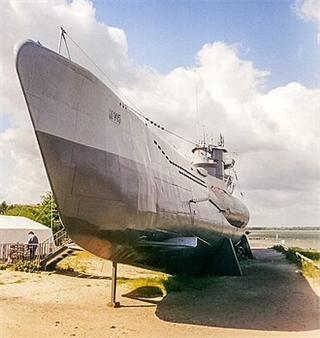
As a merchant city, Bremen relied on walls, citizen militia, hired soldiers and diplomacy rather than conquest. In the seventeenth century it was ringed with bastions whose outline survives in the park belt of the Wallanlagen around the old town. In the Middle Ages the city fought the archbishops and the nobles of the surrounding country to protect its trade on the Weser. During the Thirty Years' War it avoided occupation by spending heavily on defences. The greatest threat came from Sweden, which received the secularised archbishopric as the Duchy of Bremen-Verden in 1648 and claimed the city as part of it. Bremen resisted in two short wars, in 1654 and 1666; the second ended with the Peace of Habenhausen, by which the city kept its independence, though on unfavourable terms. In the Napoleonic Wars Bremen hoped to stay neutral, but French troops occupied it from 1806 and Napoleon annexed it to France at the start of 1811, until allied troops freed it in 1813. In the modern era its military importance lay in shipbuilding: the AG Weser and Bremer Vulkan yards built warships and U-boats, and during the Second World War forced labourers built the huge Valentin submarine bunker at Farge. Allied bombing destroyed much of the city before British troops captured it in April 1945.
Governance & Law

Bremen was governed for centuries by its council (Rat), whose members, drawn from the leading merchant families, co-opted their own successors and chose burgomasters from among themselves. The citizens met in an assembly, the Bürgerschaft, which the council consulted on taxes and major decisions, and a series of constitutional settlements, among them the Tafel of 1433 and the Neue Eintracht of 1534, regulated relations between council and citizens. Bremen's legal status long remained ambiguous: the archbishops regarded it as their city, and its imperial immediacy was confirmed only by the Linz Diploma of Emperor Ferdinand III in 1646, just before Sweden acquired the surrounding duchy. In 1803 the Imperial Recess left Bremen among the six free imperial cities that survived the reorganisation of the Empire, and after Napoleonic rule the Congress of Vienna confirmed it as one of the four free cities of the German Confederation. Johann Smidt, burgomaster for most of the period from 1821 to 1857, represented the city at the Congress and in 1827 bought land from Hanover at the mouth of the Weser to found Bremerhaven. In the nineteenth century the council took the name of Senate, and constitutional reforms after 1848 turned the Bürgerschaft into an elected parliament. The present constitution of the Free Hanseatic City of Bremen dates from 1947.
Global & Regional Impact

Bremen's influence came through trade, shipping and migration rather than military power. In the Middle Ages its people helped carry German commerce and Christianity eastwards: merchants of Bremen and Lübeck set up the field hospital at the siege of Acre in 1190 from which the Teutonic Order grew, and Riga was founded in 1201 by Albert of Buxhoeveden, a canon of Bremen cathedral, with Bremen merchants among the early settlers of Livonia. In the sixteenth century Bremen ships traded as far as Iceland and Shetland. In the nineteenth century Bremerhaven and the shipping company Norddeutscher Lloyd, founded in Bremen in 1857, made the city one of the great emigration ports of Europe and a link between Germany and the United States; Lloyd liners such as the Kaiser Wilhelm der Grosse of 1897 and the Bremen of 1929 won the Blue Riband for the fastest Atlantic crossing. The Gothic and Weser Renaissance town hall and the Roland statue were listed together as a UNESCO World Heritage Site in 2004, and the Brothers Grimm's tale of the Town Musicians of Bremen made the city's name familiar to children worldwide. Bremen's survival as a state, with Hamburg the last of the medieval free cities, keeps alive in modern German federalism the tradition of urban self-government that once characterised the Holy Roman Empire.
Into the Present
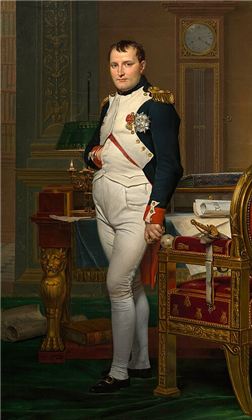
Unlike almost all the free cities of the Holy Roman Empire, Bremen never lost its identity as a state, although its independence was interrupted twice. Napoleon made it the chief town of the French department of Bouches-du-Weser from 1811 until its liberation in 1813. It joined the North German Confederation in 1867 and the German Empire in 1871 as a federal state with its own Senate, entering the German customs union only in 1888, when it was granted a free port. After the revolution of 1918 a short-lived Bremen Soviet Republic was crushed by government troops in February 1919. Under the Nazis the city's self-government was subordinated to a Reich governor; wartime bombing destroyed much of the old town and the port. After 1945 Bremen and Bremerhaven formed an American enclave inside the British zone, serving as the supply port for United States forces, and in January 1947 the American military government re-established the Land of Bremen, including Bremerhaven, which took its present name that year. Since 1949 the Free Hanseatic City of Bremen has been a state of the Federal Republic of Germany, the smallest by area and population. The decline of shipbuilding, with the closure of AG Weser in 1983 and the collapse of Bremer Vulkan in 1996–1997, left the state with heavy debts, but it remains a major port, logistics, car-making and aerospace centre.
Bremen is one of the very few medieval German city-states to survive into the present, keeping its self-government from the privilege of 1186 through Hanseatic membership, Swedish claims and Napoleonic annexation to become the smallest state of modern Germany and a port that carried millions of emigrants overseas.
References
- Dollinger, P. (1970) The German Hansa. Translated by D.S. Ault and S.H. Steinberg. London: Macmillan.
- Hammel-Kiesow, R. (2000) Die Hanse. Munich: C.H. Beck.
- Schwarzwälder, H. (1975–1985) Geschichte der Freien Hansestadt Bremen. 4 vols. Bremen: Röver.
- Whaley, J. (2012) Germany and the Holy Roman Empire. 2 vols. Oxford: Oxford University Press.
Connections
Open the full connections map →