South & Southeast Asia
Mataram Sultanate
At a glance
- An inland Javanese sultanate founded by Panembahan Senapati around 1587, built on the rice lands of Central Java.
- Sultan Agung conquered the coastal states, Madura and Surabaya, but twice failed to take Dutch Batavia, in 1628 and 1629.
- Rebellion and succession wars made it dependent on the Dutch, and the Treaty of Giyanti split it in two in 1755.
Rise & Fall
- c. 1587Panembahan Senapati rules Mataram from Kotagede, throwing off Pajang’s authority
- 1625Surabaya surrenders to Sultan Agung after a long siege
- 1628First of two failed Mataram sieges of Dutch Batavia
- 1633Sultan Agung introduces the Javanese calendar
- 1677Trunajaya’s rebels sack the capital Plered
- 1742Rebels sack Kartasura during the Chinese War
- 1755The Treaty of Giyanti divides Mataram into Surakarta and Yogyakarta
Foundation
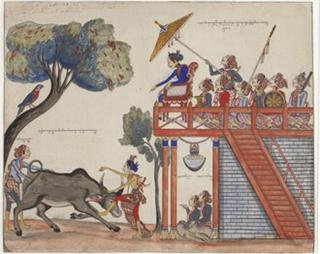
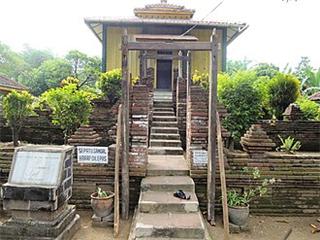
The Sultanate of Mataram grew from a frontier settlement in the fertile plain of south-central Java, near present-day Yogyakarta. Javanese tradition, recorded in the later Babad Tanah Jawi, relates that Sultan Hadiwijaya of Pajang granted the forested land of Mataram to his commander Ki Ageng Pemanahan as a reward for helping to defeat Arya Penangsang of Jipang in the mid-sixteenth century. Pemanahan settled at Kotagede, and after his death in about 1584 his son Sutawijaya, who had been raised at the Pajang court, refused to pay homage to his overlord. Following the death of Hadiwijaya and the eclipse of Pajang, Sutawijaya ruled from around 1587 under the title Panembahan Senapati ing Alaga, ‘commander in the field’. The chronology of these years rests largely on court chronicles and on Dutch reports written long afterwards, so dates before 1600 are approximate. Senapati subdued Pajang and Demak and campaigned against Madiun and the East Javanese coastal powers led by Surabaya, though he died in 1601 without controlling the north coast. His son Panembahan Hanyakrawati, remembered as Seda ing Krapyak after his death on a hunt in 1613, continued these wars and prepared the ground for the great conquests of his own successor, Sultan Agung.
Socioeconomy

Mataram was an inland, agrarian state whose wealth came from the wet-rice fields of the volcanic plains of Central Java. Most Javanese lived in villages (desa) of peasant cultivators who owed a share of their harvest and labour to the holders of royal land grants, while a court aristocracy of princes and officials, the priyayi, lived on these appanages. Unlike the commercial port cities of the north coast, which had grown rich on the spice and rice trade, Mataram drew its revenues mainly from land, and its conquest of the coast in the 1610s and 1620s brought devastation and depopulation to former trading centres such as Surabaya, Tuban and Gresik. Rice, timber and other produce were still exported through Jepara and Semarang, increasingly to the Dutch at Batavia. Religion combined Islam, adopted by the Javanese courts during the previous centuries, with older Javanese and Hindu-Buddhist traditions: rulers claimed the Islamic titles of sultan or susuhunan and also a mystical bond with Ratu Kidul, the spirit queen of the southern ocean. Sultan Agung’s calendar of 1633 expressed this synthesis, joining the lunar months of the Islamic year to the Javanese Saka era. Court arts, including wayang shadow theatre, gamelan music and dance, flourished in the royal palace, the kraton.
Military

Mataram’s armies were large levies of peasants raised through the appanage holders and regional lords, armed with spears, pikes, the kris and bows, and supplemented by firearms and cannon acquired through trade. Their strength lay in numbers and in long sieges rather than in technology. Sultan Agung (r. 1613–1645) conducted a series of campaigns against the coastal states of the pasisir: Lasem fell in 1616, Pasuruan in 1617 and Tuban in 1619, and in 1624 his forces conquered Madura. Surabaya, the strongest rival, surrendered in 1625 after a long siege during which, according to Dutch reports, the besiegers cut off its water supply by damming the Brantas river. In 1628 and again in 1629 Agung sent large armies against Batavia, the base of the Dutch East India Company under Jan Pieterszoon Coen, but both sieges failed; in 1629 Dutch ships destroyed the rice stores gathered for the army at Tegal and Cirebon, and thousands of soldiers died of hunger and disease. Agung then turned east, conquering the holy town of Giri in 1636 and campaigning against Hindu Blambangan, which Balinese forces helped to defend. Later rulers could not command such armies: the forces of Amangkurat I were defeated by Trunajaya’s rebels at Gegodog in 1676, and from 1677 the dynasty depended on Company troops.
Governance & Law
The ruler stood at the centre of a concentric realm. Around the capital (kutagara) lay the core lands (nagara agung), whose rice fields were assigned as appanages to princes and officials; beyond them were the outer provinces (mancanagara) of eastern Central Java and East Java, and the coastal districts, each governed by regents (bupati) who sent tribute and attended the court at fixed times. A chief minister (patih) supervised the administration. Appanages were not hereditary property and the king could reassign them, but in practice regional lords built their own followings and rebellions were frequent. Royal power relied heavily on the personal authority of the ruler, on marriage alliances and hostages, and on the sacred aura of the court. Sultan Agung took the title of sultan with the sanction of Mecca in 1641, while his son Amangkurat I (r. 1646–1677) tried to centralise power by force, killing rival princes and, according to Dutch witnesses, having thousands of Islamic teachers and their families massacred around 1648. Later rulers bore the title susuhunan, and their dependence on treaties with the Dutch East India Company steadily narrowed royal authority, as the Company obtained ports, monopolies, garrisons and a voice in the appointment of senior officials.
Global & Regional Impact
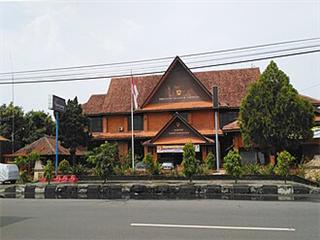
Mataram created the political and cultural framework of Central Java for the following three centuries. Its conquests ended the independence of the commercial port states of the north coast, shifting the centre of Javanese life inland and leaving the coast and its trade increasingly to the Dutch and to Chinese merchants. The court fostered the distinctive Javanese Islamic culture that the historian M.C. Ricklefs called a ‘mystic synthesis’, combining Islamic identity with reverence for Javanese spiritual forces. Sultan Agung’s Javanese calendar remains in ceremonial use, and the royal cemetery he began at Imogiri, south of Yogyakarta, is still the burial place of the rulers of Surakarta and Yogyakarta. The court chronicles known as the Babad Tanah Jawi, compiled in the Kartasura and Surakarta period, shaped how later Javanese understood their past, presenting Mataram as the heir of Majapahit and Demak. The kraton traditions of etiquette, refined speech levels, wayang and gamelan were inherited by its successor courts. At the same time, the dynasty’s repeated calls for Dutch help set the pattern by which the Dutch East India Company became the dominant power in Java. In modern Indonesia Sultan Agung is honoured for his attacks on Batavia, and the Sultan of Yogyakarta, heir of the Mataram line, also serves as governor of the Special Region of Yogyakarta.
Decline & Fall
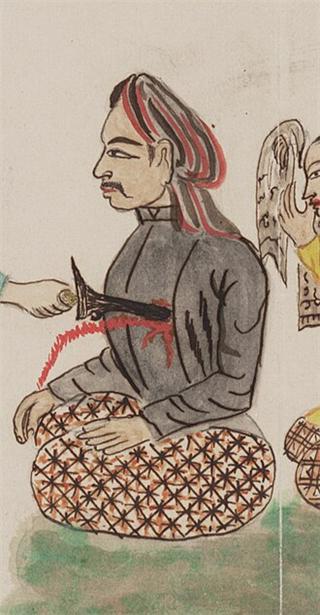
The collapse of royal authority began under Amangkurat I, whose violence alienated the nobility, the Islamic teachers and the provinces. In the mid-1670s the Madurese prince Trunajaya, allied with Makassarese fighters exiled after the Dutch conquest of Makassar, led a rebellion that took the capital Plered in 1677; the old king fled and died on the way to the coast. His son Amangkurat II secured the help of the Dutch East India Company in exchange for ports, revenues and trade monopolies, defeated Trunajaya by 1680 and built a new capital at Kartasura. The price of survival was rising dependence. Three wars of succession (1704–1708, 1719–1723 and 1746–1757) were each decided with Company troops, and each settlement cost Mataram territory. During the Chinese War of 1740–1743 rebels sacked Kartasura in 1742, and Pakubuwana II regained his throne only by ceding the whole north coast; he then moved the court to Surakarta in 1745–1746. On his deathbed in 1749 he surrendered the sovereignty of the kingdom to the Company. His brother Mangkubumi had already risen in revolt, and the Treaty of Giyanti of 13 February 1755 divided the realm between Pakubuwana III at Surakarta and Mangkubumi, who became Sultan Hamengkubuwana I of Yogyakarta, ending Mataram as a single state.
Mataram, the great inland sultanate of Sultan Agung, united most of Java in the early seventeenth century and shaped Javanese court culture for centuries, but rebellion, succession wars and growing reliance on the Dutch East India Company led to its division into Surakarta and Yogyakarta in 1755.
Test yourself
5 questions on this page, from its key events and facts.
The questions open here once the page has loaded.
References
- de Graaf, H.J. (1958) De regering van Sultan Agung, vorst van Mataram, 1613–1645, en die van zijn voorganger Panembahan Séda-ing-Krapjak, 1601–1613. ’s-Gravenhage: Martinus Nijhoff.
- Moertono, S. (1968) State and Statecraft in Old Java: A Study of the Later Mataram Period, 16th to 19th Century. Ithaca: Cornell University Modern Indonesia Project.
- Ricklefs, M.C. (1974) Jogjakarta under Sultan Mangkubumi, 1749–1792: A History of the Division of Java. London: Oxford University Press.
- Ricklefs, M.C. (1993) War, Culture and Economy in Java, 1677–1726. Sydney: Allen & Unwin.
- Ricklefs, M.C. (2001) A History of Modern Indonesia since c. 1200. 3rd edn. Basingstoke: Palgrave.
Connections
Open the full connections map →