Europe
United Kingdom
At a glance
- The UK took its present form in 1922, when the Irish Free State left and Northern Ireland stayed in the union.
- It fought both world wars to victory, standing alone against Nazi Germany in 1940, but emerged exhausted and in debt.
- After 1945 it built a welfare state, gave up its empire, joined and then left the European Union.
Rise & Fall
- 1922The Irish Free State leaves; Northern Ireland remains in the United Kingdom
- 1940Dunkirk evacuation and the Battle of Britain; Churchill becomes Prime Minister
- 1948The National Health Service is founded
- 1956The Suez Crisis exposes the limits of British power
- 1973The UK joins the European Economic Community
- 1997Hong Kong is handed over to China
- 1998The Good Friday Agreement is signed in Belfast
- 2020The UK leaves the European Union on 31 January
Foundation
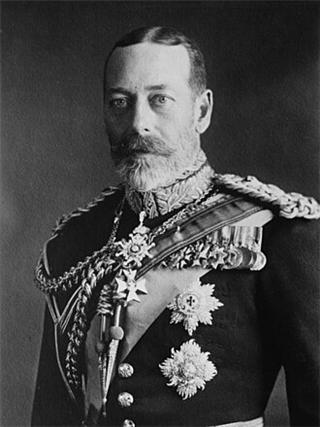
The present United Kingdom took shape with the partition of Ireland. The United Kingdom of Great Britain and Ireland, created by the Acts of Union of 1800, had faced a war of independence in Ireland from 1919 to 1921. The Government of Ireland Act of 1920 set up separate home-rule parliaments for Northern and Southern Ireland, and the Anglo-Irish Treaty of December 1921 provided for an Irish Free State with dominion status. When the Free State came into being on 6 December 1922, the parliament of Northern Ireland exercised its right to opt out the next day, leaving the six north-eastern counties within the United Kingdom. The remaining state was otherwise continuous with its predecessor: the same Crown, Parliament at Westminster, civil service, armed forces and laws. The Royal and Parliamentary Titles Act of 1927 changed the formal name to the United Kingdom of Great Britain and Northern Ireland. In 1922 the state of about 44 million people, under King George V and the Conservative Prime Minister Andrew Bonar Law, still ruled the largest empire in history, held mandates over Palestine, Transjordan and Iraq, possessed the world's largest navy alongside that of the United States and was a leading member of the League of Nations, though it was heavily indebted after the First World War.
Socioeconomy

Between the wars the old staple industries of coal, cotton, shipbuilding and iron declined, leaving mass unemployment in South Wales, the North of England, Clydeside and Northern Ireland; the General Strike of May 1926 and the Jarrow March of 1936 became symbols of the era. Newer industries such as cars, electrical goods and chemicals grew in the Midlands and the South East, and suburban home ownership spread. Women gained the vote on equal terms with men in 1928. The Second World War brought total mobilisation, rationing and the Beveridge Report of 1942, which inspired the post-war welfare state: the Labour government of Clement Attlee nationalised coal, railways and other industries and founded the National Health Service in 1948. Immigration from the Caribbean, symbolised by the arrival of the Empire Windrush in 1948, and later from South Asia and elsewhere, made Britain an increasingly multi-ethnic society. The affluence of the 1950s and 1960s was followed by inflation and industrial conflict in the 1970s. From 1979 the governments of Margaret Thatcher privatised state industries, curbed trade unions and deregulated the City of London, accelerating a shift from manufacturing to services and finance. Religious practice declined steadily, although the Church of England remains established, and today about 68 million people live in the UK.
Military

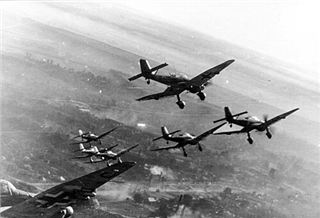
In 1922 the Royal Navy accepted parity with the United States under the Washington Naval Treaty, and the Royal Air Force, created in 1918, policed parts of the empire from the air. Rearmament from the mid-1930s produced the Hurricane and Spitfire fighters and the Chain Home radar network. In the Second World War the United Kingdom declared war on Germany on 3 September 1939, evacuated over 330,000 Allied troops from Dunkirk in 1940, held off the Luftwaffe in the Battle of Britain and, under Winston Churchill, fought on until joined by the Soviet Union and the United States in 1941. British and Commonwealth forces won at El Alamein in 1942, fought in Italy and Burma, and landed in Normandy on D-Day, 6 June 1944. About 450,000 British servicemen and civilians died. After 1945 the UK was a founding member of NATO, tested its first atomic bomb in 1952 and has kept a submarine-based nuclear deterrent since the late 1960s. Its forces fought in Korea, in colonial conflicts in Malaya, Kenya and Cyprus, at Suez in 1956 and in the Falklands War of 1982, and were deployed in Northern Ireland from 1969 to 2007. Later operations included the Gulf War of 1991, the Balkans, Afghanistan from 2001 and Iraq from 2003.
Governance & Law
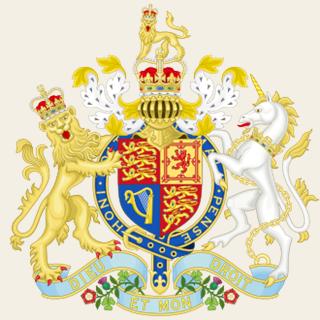
The United Kingdom is a constitutional monarchy without a single written constitution; its constitution rests on statute, common law and convention. Sovereignty lies with the Crown in Parliament, and executive power is exercised by a Prime Minister and Cabinet answerable to the elected House of Commons, chosen by first-past-the-post voting. The power of the unelected House of Lords was limited by the Parliament Acts of 1911 and 1949, and most hereditary peers were removed in 1999. The monarchs of the period have been George V, Edward VIII, who abdicated in 1936, George VI, Elizabeth II, the longest-reigning British monarch from 1952 to 2022, and Charles III. Three legal systems coexist: English law in England and Wales, Scots law and Northern Irish law. Northern Ireland had its own parliament at Stormont until 1972, when it was suspended amid the Troubles and direct rule from London was imposed. Devolution in 1999 created a Scottish Parliament, a National Assembly for Wales and, under the Good Friday Agreement of 1998, a power-sharing Northern Ireland Assembly. The Human Rights Act of 1998 and the creation of a Supreme Court in 2009 added new judicial checks. A large, permanent, politically neutral civil service, shaped by the Northcote–Trevelyan reforms of the nineteenth century, administers government.
Global & Regional Impact
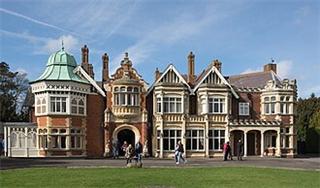
The United Kingdom's influence in the twentieth century was immense. Its resistance to Nazi Germany in 1940–1941, when it was the only major power still fighting, was decisive for the outcome of the Second World War, and the codebreakers of Bletchley Park, among them Alan Turing, contributed to Allied victory and to the birth of computing. As a permanent member of the United Nations Security Council, a founder of NATO and a nuclear power, it shaped the post-war order, and John Maynard Keynes helped design the Bretton Woods system. Decolonisation turned most of the empire into independent states, many of which joined the Commonwealth of Nations and kept parliamentary institutions on the Westminster model, English common law and the English language. British science produced penicillin, the jet engine, the structure of DNA, discovered at Cambridge in 1953, and the first cloned mammal, Dolly the sheep. British popular culture, from the BBC, founded in 1922, to the Beatles, James Bond and the Premier League, reached a global audience, and English became the world's chief language of international communication, a position reinforced by both British and American influence. London remained one of the world's leading financial centres.
Into the Present
The United Kingdom still exists, but its place in the world has been transformed. The Second World War left it victorious but nearly bankrupt, and India's independence in 1947 began a decolonisation that accelerated after the Suez Crisis of 1956 exposed the limits of British power; most African and Caribbean colonies became independent in the 1960s, and the handover of Hong Kong to China in 1997 ended the empire as a major territorial power. Economic growth lagged behind that of Western European rivals, the pound was devalued in 1949 and 1967, and the government sought help from the International Monetary Fund in 1976. Having declined to join the European Economic Community at its foundation, the UK entered it in 1973 under Edward Heath and confirmed membership by referendum in 1975. The Good Friday Agreement of 1998 largely ended a conflict in Northern Ireland that had cost about 3,500 lives, and Scots voted to remain in the union in 2014. In a referendum in 2016, 51.9 per cent voted to leave the European Union, and the UK left on 31 January 2020. Today it is a constitutional monarchy under Charles III, one of the world's largest economies, a nuclear power and a permanent member of the Security Council.
The United Kingdom, in its post-1922 form, led the last phase of the British Empire, stood against Nazi Germany in 1940, founded a welfare state and shaped the post-war international order; its passage from imperial power to a European and then post-European middle power is a central story of twentieth-century history.
References
- Clarke, P. (1996) Hope and Glory: Britain 1900–1990. London: Allen Lane.
- Edgerton, D. (2018) The Rise and Fall of the British Nation: A Twentieth-Century History. London: Allen Lane.
- Hennessy, P. (1992) Never Again: Britain 1945–1951. London: Jonathan Cape.
- Morgan, K.O. (1990) The People's Peace: British History 1945–1989. Oxford: Oxford University Press.
- Mowat, C.L. (1955) Britain between the Wars, 1918–1940. London: Methuen.
- Taylor, A.J.P. (1965) English History 1914–1945. Oxford: Clarendon Press.
Connections
Open the full connections map →