South & Southeast Asia
Republic of India
At a glance
- India became a republic on 26 January 1950, when the constitution drafted under B.R. Ambedkar came into force.
- It has remained a parliamentary democracy, interrupted only by the Emergency of 1975–1977, with regular elections since 1951–1952.
- Now the world's most populous country, it is a nuclear power and one of the five largest economies by nominal output.
Rise & Fall
- 1950The constitution comes into force and India becomes a republic on 26 January
- 1962China defeats India in the Sino-Indian War
- 1971India's victory in the Bangladesh Liberation War creates Bangladesh
- 1975Indira Gandhi declares the Emergency, suspending civil liberties until 1977
- 1984Operation Blue Star; Indira Gandhi assassinated; the Bhopal gas disaster
- 1991Economic liberalisation begins after a balance-of-payments crisis
- 1998Nuclear tests at Pokhran; India declares itself a nuclear-weapon state
- 2023Chandrayaan-3 lands near the Moon's south pole; India hosts the G20 summit
Foundation
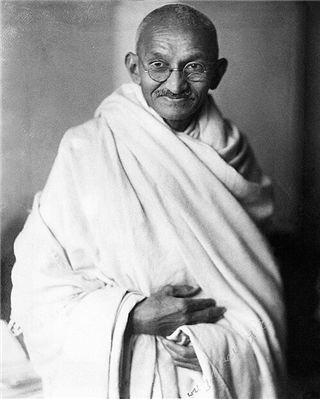
The Republic of India was the outcome of a national movement that had challenged British rule since the founding of the Indian National Congress in 1885 and, under Mahatma Gandhi from 1920, mobilised millions through campaigns of non-cooperation and civil disobedience. Independence came on 15 August 1947 together with partition: the Muslim-majority provinces of the north-west and east became Pakistan, and the division was accompanied by communal violence that killed hundreds of thousands and displaced some 15 million people. The Dominion of India, led by Prime Minister Jawaharlal Nehru, integrated more than five hundred princely states, using force in Hyderabad in 1948, and fought a first war with Pakistan over Kashmir in 1947–1948. A Constituent Assembly elected by the provincial legislatures had been at work since December 1946, and its drafting committee, chaired by B.R. Ambedkar, produced one of the longest written constitutions in the world. Adopted on 26 November 1949, it came into force on 26 January 1950, the anniversary of the Congress declaration of complete independence (purna swaraj) in 1930. India became a sovereign democratic republic with Rajendra Prasad as its first president and Nehru as prime minister, while choosing to remain within the Commonwealth.
Socioeconomy

India's population has grown from about 360 million in 1951 to more than 1.4 billion, and around 2023 it overtook China as the most populous country. It is home to around 80 per cent Hindus, some 14 per cent Muslims, one of the largest Muslim populations in the world, and Christian, Sikh, Buddhist and Jain minorities; the constitution recognises twenty-two scheduled languages, with Hindi and English used by the central government. The constitution abolished untouchability and reserved places in legislatures, education and public employment for Scheduled Castes and Scheduled Tribes, extended to Other Backward Classes after the Mandal Commission report was implemented in 1990, yet caste continues to shape marriage, politics and work. Nehru's five-year plans built heavy industry, dams and institutions such as the Indian Institutes of Technology, but growth was slow until the 1980s. The Green Revolution of the late 1960s, using high-yielding wheat and rice, ended dependence on food aid. After the liberalisation of 1991, growth accelerated, driven by services such as information technology and later by manufacturing and infrastructure, and India became one of the five largest economies in the world by nominal output. Hundreds of millions have left extreme poverty, though much employment remains informal and agricultural, and inequality is high.
Military

India inherited a large share of the British Indian Army and has since maintained one of the biggest armed forces in the world, with well over a million active personnel. Its first wars were fought over territory and borders. In December 1961 Indian troops took Goa, Daman and Diu from Portugal. In October–November 1962 China defeated Indian forces in the Sino-Indian War in Ladakh and the North-East Frontier Agency, a humiliation that led to rapid rearmament. The war with Pakistan in 1965 ended in stalemate and the Tashkent Declaration. In December 1971 India intervened in the Bangladesh Liberation War, and within two weeks some 93,000 Pakistani soldiers surrendered at Dhaka, creating Bangladesh and confirming India's military primacy in South Asia. India tested a nuclear device at Pokhran in 1974 and declared itself a nuclear-weapon state after further tests in May 1998; Pakistan replied with its own tests. In 1999 the Kargil War drove Pakistani forces from heights in Kashmir. The army has also fought long counter-insurgencies, in Nagaland and Mizoram, in Punjab in the 1980s, in Kashmir since 1989, and against Maoist Naxalites, and an Indian Peace Keeping Force served in Sri Lanka in 1987–1990. In June 2020 a clash with Chinese troops in the Galwan Valley caused the first deaths on that border since 1975.
Governance & Law

India is a parliamentary democracy and a federal union. The president is head of state, elected indirectly, while executive power lies with the prime minister and the council of ministers, responsible to the Lok Sabha, the lower house elected by universal adult suffrage. The first general election of 1951–1952, with an electorate of about 173 million, most of them illiterate, was the largest democratic exercise held until then; an independent Election Commission has run every election since. The Supreme Court, through doctrines such as the basic structure of the constitution set out in the Kesavananda Bharati case of 1973, has become one of the most powerful courts in the world. States were reorganised on linguistic lines from 1956 and now number twenty-eight, with eight union territories. Congress governed almost without interruption until 1977, under Nehru, Lal Bahadur Shastri and Indira Gandhi, who nationalised the banks in 1969. Her Emergency of June 1975 to March 1977 suspended civil liberties and jailed opponents, and the voters' rejection of her in 1977 confirmed the strength of electoral democracy. Coalition governments became the norm from 1989, under Atal Bihari Vajpayee and Manmohan Singh among others, until the Bharatiya Janata Party of Narendra Modi won outright majorities in 2014 and 2019; since 2024 it has governed with coalition partners.
Global & Regional Impact
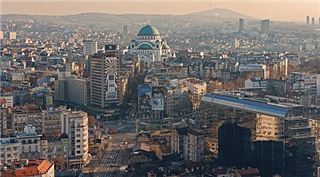
The survival of democracy in a poor, vast and extremely diverse country has made the Republic of India one of the most closely studied political systems of the twentieth century, and its constitution has influenced other post-colonial states. Under Nehru India was a leader of decolonisation and, with Yugoslavia, Egypt and Indonesia, of the Non-Aligned Movement founded at Belgrade in 1961, and Indian troops served widely in United Nations peacekeeping missions. Its intervention in 1971 created Bangladesh, and it remains the dominant power in South Asia, a role that has brought tension with Pakistan and China and suspicion from smaller neighbours. India's space programme, run by the Indian Space Research Organisation, placed a probe in orbit around Mars in 2014 and in August 2023, with Chandrayaan-3, made the first landing near the Moon's south pole. Its information technology industry, centred on Bengaluru and Hyderabad, transformed global services, and its pharmaceutical firms became major suppliers of generic medicines worldwide. Indian cinema, with Hindi films from Mumbai and large industries in Tamil, Telugu and other languages, produces more films than any other country, and a diaspora of tens of millions carries Indian culture and influence abroad. India hosted the G20 summit in New Delhi in September 2023.
Into the Present

The Republic of India has not declined, but it has passed through severe crises that transformed it. Nehru's death in 1964 was followed by war, drought and food shortages, and the Emergency of 1975–1977 showed how fragile civil liberties could be. In 1984 the army's assault on the Golden Temple at Amritsar, Operation Blue Star, was followed by Indira Gandhi's assassination by her Sikh bodyguards and anti-Sikh massacres in Delhi, and in December the gas leak at Bhopal killed thousands. Rajiv Gandhi was assassinated in 1991 in the same year that a balance-of-payments crisis brought India close to default. The government of P.V. Narasimha Rao, with Manmohan Singh as finance minister, responded by dismantling the licence system, opening the economy to foreign investment and reducing tariffs. The destruction of the Babri Masjid at Ayodhya in December 1992 and the riots that followed, and the Gujarat violence of 2002, marked the rise of Hindu nationalism as a central force in politics. Since 2014 Modi's governments have introduced a national goods and services tax, revoked the special status of Jammu and Kashmir in 2019 and invested heavily in infrastructure, while critics point to pressure on minorities, the press and institutions. Today India is the world's most populous country and a rising great power.
The Republic of India matters as the largest democracy in history, a federal union that has held together over 1.4 billion people of many languages and faiths through regular elections since 1951, and as a nuclear-armed rising power whose economy, technology, culture and diplomacy now carry global weight.
Test yourself
5 questions on this page, from its key events and facts.
The questions open here once the page has loaded.
References
- Guha, R. (2007) India after Gandhi: The History of the World's Largest Democracy. London: Macmillan.
- Austin, G. (1966) The Indian Constitution: Cornerstone of a Nation. Oxford: Clarendon Press.
- Brass, P.R. (1994) The Politics of India since Independence. 2nd edn. Cambridge: Cambridge University Press.
- Khilnani, S. (1997) The Idea of India. London: Hamish Hamilton.
- Metcalf, B.D. and Metcalf, T.R. (2006) A Concise History of Modern India. 2nd edn. Cambridge: Cambridge University Press.
Connections
Open the full connections map →