Sub-Saharan Africa
Republic of South Africa
At a glance
- The Union of South Africa became a republic on 31 May 1961 and left the Commonwealth under Hendrik Verwoerd.
- For three decades it enforced grand apartheid, created ethnic homelands and fought a border war in Namibia and Angola.
- Negotiations from 1990 led to the 1994 elections, Nelson Mandela’s presidency and the democratic constitution of 1996.
Rise & Fall
- 1961The Union becomes the Republic of South Africa and leaves the Commonwealth
- 1964Nelson Mandela is sentenced to life imprisonment at the end of the Rivonia Trial
- 1976Police fire on protesting students in Soweto, setting off a national uprising
- 1990F. W. de Klerk unbans the ANC; Mandela is released after 27 years in prison
- 1994The first democratic elections make Nelson Mandela president
- 1996A new constitution with a Bill of Rights is adopted
- 2012Police kill 34 striking miners at Marikana
- 2024The ANC loses its majority and forms a Government of National Unity
Foundation
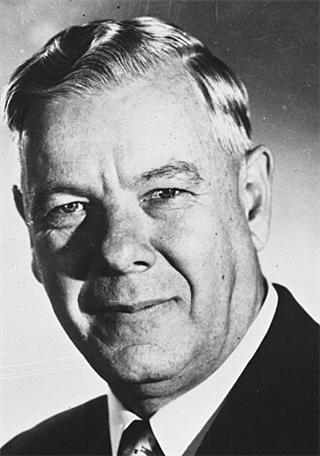
The Republic of South Africa was proclaimed on 31 May 1961, when the Union of South Africa ended its link with the British Crown. A republic was the long-standing goal of the Afrikaner nationalist National Party, in power since 1948, and of its prime minister Hendrik Verwoerd, who won a referendum of white voters on 5 October 1960 with about 52 per cent of the vote. When other Commonwealth members criticised apartheid at the London conference of March 1961, Verwoerd withdrew the application to remain a member, and the republic left the Commonwealth. C. R. Swart, the last governor-general, became the first state president, a largely ceremonial office, while executive power stayed with the prime minister. The new state was born amid crisis. The Sharpeville massacre of 21 March 1960 had been followed by a state of emergency and the banning of the African National Congress and the Pan Africanist Congress, and in December 1961 the ANC and the South African Communist Party launched an armed wing, Umkhonto we Sizwe, with Nelson Mandela as its first commander. The republic kept the Union’s territory, its three capitals of Pretoria, Cape Town and Bloemfontein, and its rule over South West Africa, which the United Nations later declared illegal.
Socioeconomy
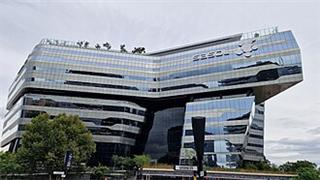
For three decades the republic was organised by apartheid. The Population Registration Act classified every person by race, the Group Areas Act divided the cities, and pass laws controlled the movement of Africans, while the state removed an estimated 3.5 million people from their homes between 1960 and the early 1980s to enforce segregation. Bantu Education gave African children deliberately inferior schooling. The economy grew fast in the 1960s on gold, other minerals and manufacturing, supported by state corporations in steel, electricity and synthetic fuels such as Sasol, and the high gold price of the 1970s brought further income, but growth slowed in the 1980s under sanctions, strikes and debt. Since 1994 the democratic state has extended electricity, water, housing and social grants to millions of households, and a Black middle class has grown through education and Black Economic Empowerment policies. Yet South Africa remains one of the most unequal societies in the world, with unemployment above 30 per cent, a severe HIV epidemic in the 1990s and 2000s, high crime, and repeated power cuts, known as load-shedding, caused by failures at the state utility Eskom. It is among the largest and most industrialised economies in Africa, with major mining, financial, agricultural and automotive sectors.
Military
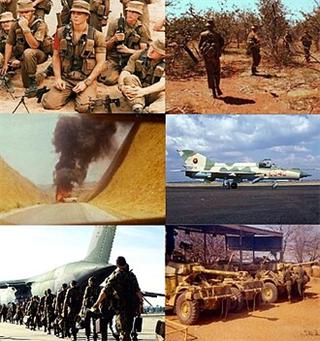
The South African Defence Force grew into the strongest military in sub-Saharan Africa. Facing a United Nations arms embargo, voluntary from 1963 and mandatory from 1977, the state built a large arms industry around Armscor and developed nuclear weapons, assembling six devices in the 1980s before dismantling them around 1990–1991, the first country to give up nuclear weapons it had built itself. From 1966 the army fought the South West African People’s Organisation in the South African Border War, which spread into Angola after 1975, when South African forces intervened in the Angolan civil war against the MPLA government and its Cuban allies. The fighting around Cuito Cuanavale in 1987–1988 ended without a decisive victory but pushed all sides towards the New York Accords of December 1988, which led to Namibian independence in 1990 and the withdrawal of Cuban troops from Angola. The army and police were also used at home against township uprisings and, in cross-border raids, against ANC bases in neighbouring states. In 1994 the SADF merged with the guerrilla armies of the ANC and the PAC and the homeland forces to form the South African National Defence Force, which has since served in peacekeeping missions across Africa.
Governance & Law
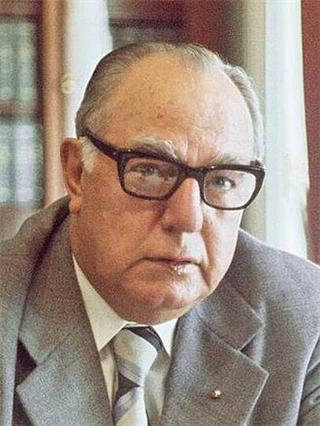
Until 1984 the republic kept a Westminster-style parliament elected by white voters only. Verwoerd (1958–1966), John Vorster (1966–1978) and P. W. Botha (1978–1989) led National Party governments that ruled through security laws, detention without trial and the banning of opponents. Grand apartheid assigned Africans to ten ethnic ‘homelands’, four of which, Transkei (1976), Bophuthatswana (1977), Venda (1979) and Ciskei (1981), were declared independent, although no other country recognised them. The constitution of 1983 created a tricameral parliament with chambers for whites, Coloured people and Indians but none for Africans, and an executive state president, an office Botha took in 1984. F. W. de Klerk, president from 1989, unbanned the ANC and freed Nelson Mandela in 1990, and negotiations produced an interim constitution and the first democratic elections on 27 April 1994. The constitution adopted in 1996, with a Bill of Rights and a Constitutional Court, created a republic with an executive president elected by the National Assembly, nine provinces and eleven official languages. The ANC governed under Mandela, Thabo Mbeki, Kgalema Motlanthe, Jacob Zuma and Cyril Ramaphosa until it lost its majority in 2024 and formed a Government of National Unity.
Global & Regional Impact

Apartheid South Africa became the target of one of the largest international campaigns of the twentieth century. The United Nations repeatedly condemned apartheid, and in 1973 the General Assembly adopted a convention declaring it a crime against humanity; sports, cultural and consumer boycotts and disinvestment campaigns spread across Western countries, and the United States Comprehensive Anti-Apartheid Act of 1986 imposed sanctions over President Ronald Reagan’s veto. Within the country, the Soweto uprising of 1976, the Black Consciousness movement of Steve Biko, who died in police custody in 1977, and the United Democratic Front, founded in 1983, created new forms of mass resistance. The negotiated transition of 1990–1994 made South Africa a worldwide symbol of reconciliation, and Mandela and de Klerk shared the Nobel Peace Prize in 1993. The Truth and Reconciliation Commission, chaired by Archbishop Desmond Tutu from 1996, became a model studied by many societies emerging from conflict. Since 1994 South Africa has been an influential voice in African and global diplomacy, joining the BRICS group in 2011, hosting the 2010 FIFA World Cup and in 2023 bringing a case against Israel under the Genocide Convention at the International Court of Justice. Its writers, among them the Nobel laureates Nadine Gordimer and J. M. Coetzee, reached a world audience.
Into the Present

The apartheid state was transformed rather than overthrown. Township revolts from 1984, states of emergency from 1985, international sanctions, the debt crisis of 1985 and the end of the Cold War convinced F. W. de Klerk that white minority rule could not last. On 2 February 1990 he announced the unbanning of the ANC, the PAC and the Communist Party, and Mandela was released on 11 February after 27 years in prison. Negotiations at the Convention for a Democratic South Africa (CODESA) and later the Multi-Party Negotiating Forum survived violence between ANC supporters and the Inkatha Freedom Party and the assassination of Chris Hani in April 1993. The elections of 27 April 1994 made Mandela president, the homelands were reincorporated, and South Africa rejoined the Commonwealth. Since then the republic has been a constitutional democracy with regular elections, a free press and an independent judiciary, but it has struggled with corruption, notably the ‘state capture’ under Jacob Zuma investigated by the Zondo Commission, with the police killing of 34 striking miners at Marikana in 2012, and with crime and slow growth. In the 2024 election the ANC won about 40 per cent of the vote, and Ramaphosa was re-elected president at the head of a coalition that includes the Democratic Alliance.
The Republic of South Africa moved from the most elaborate system of legal racial segregation of the twentieth century to a negotiated multiracial democracy in 1994, and as one of Africa’s largest economies and a leading voice of the Global South it remains central to the continent’s politics.
References
- Dubow, S. (2014) Apartheid, 1948–1994. Oxford: Oxford University Press.
- Giliomee, H. (2003) The Afrikaners: Biography of a People. Charlottesville: University of Virginia Press.
- Mandela, N. (1994) Long Walk to Freedom. Boston: Little, Brown.
- Sparks, A. (1990) The Mind of South Africa. London: Heinemann.
- Thompson, L. (2001) A History of South Africa. 3rd edn. New Haven: Yale University Press.
Connections
Open the full connections map →