Sub-Saharan Africa
Tanzania
At a glance
- Tanzania was created on 26 April 1964 by the union of mainland Tanganyika and the islands of Zanzibar.
- Julius Nyerere’s Arusha Declaration of 1967 made it Africa’s best-known experiment in socialism, known as ujamaa.
- It has had no successful coup or civil war, and Swahili gives it one of the strongest national identities in Africa.
Rise & Fall
- 1964Tanganyika and Zanzibar unite on 26 April; the name Tanzania is adopted in October
- 1967The Arusha Declaration launches ujamaa socialism
- 1973Dodoma is designated the future capital
- 1975The Tanzania–Zambia Railway is completed
- 1977TANU and the Afro-Shirazi Party merge as Chama Cha Mapinduzi
- 1979Tanzanian forces capture Kampala and overthrow Idi Amin
- 1992Opposition parties are legalised
- 2021Samia Suluhu Hassan becomes the first woman president
Foundation

Tanzania was formed by the union of two newly independent states. Tanganyika, the mainland part of former German East Africa, which Britain had administered as a League of Nations mandate and then a United Nations trust territory, became independent on 9 December 1961 under Julius Nyerere and his Tanganyika African National Union (TANU), and a republic a year later. Zanzibar, a British protectorate ruled by a sultan of Omani descent, became independent in December 1963, but on 12 January 1964 a revolution overthrew Sultan Jamshid bin Abdullah and the Arab-dominated government, and thousands of Arabs and South Asians were killed. The Afro-Shirazi Party leader Abeid Amani Karume became president of the new People’s Republic of Zanzibar. Partly to contain the instability of the islands and the competition of Cold War powers there, Nyerere and Karume signed the Articles of Union, and on 26 April 1964 the United Republic of Tanganyika and Zanzibar came into being, renamed the United Republic of Tanzania on 29 October 1964. Nyerere became president and Karume first vice-president. The union was asymmetrical: Zanzibar kept its own president, government and legislature for its internal affairs, while the union government handled foreign affairs, defence and other union matters and also governed the mainland directly.
Socioeconomy

Tanzania is a large and mostly rural country with more than 120 ethnic groups, none of them dominant, and a population divided between Christians and Muslims, with Zanzibar overwhelmingly Muslim. Most people have lived by farming maize, cassava, rice and bananas, while exports have included coffee, cotton, sisal, cashew nuts, tea and Zanzibar’s cloves, and later gold, tourism and natural gas. Nyerere’s Arusha Declaration of February 1967 committed the country to ujamaa, ‘familyhood’, a form of African socialism: banks, major industries and plantations were nationalised, and party and state leaders were barred from holding shares or second salaries. From 1973 to 1976 the government moved millions of rural people, often by force, into planned villages, which made schools, clinics and water supplies easier to provide but disrupted farming. Combined with drought, the oil shocks and the cost of the war with Uganda, this left the economy in deep crisis by the early 1980s, with shortages of basic goods, although ujamaa also brought real gains in literacy and primary schooling. Since liberalisation in the mid-1980s the economy has grown steadily, led by mining, tourism around Mount Kilimanjaro, the Serengeti and Zanzibar, and the port of Dar es Salaam, the largest city and an outlet for several landlocked neighbours.
Military

Tanzania’s armed forces were rebuilt after a crisis at the very start of the union. In January 1964 soldiers of the Tanganyika Rifles mutinied over pay and the slow Africanisation of their officer corps, and Nyerere had to ask British Royal Marines to restore order. He disbanded most of the old army and created the Tanzania People’s Defence Force, closely tied to the ruling party and trained with help from China among others. Tanzania’s main military commitment was to the liberation of southern Africa: Dar es Salaam hosted the Liberation Committee of the Organisation of African Unity, and FRELIMO of Mozambique, the ANC of South Africa and other movements trained in Tanzanian camps. The army’s largest war came in 1978–1979. After Idi Amin’s Ugandan forces invaded and annexed the Kagera Salient in late 1978, Tanzania mobilised tens of thousands of soldiers and militia, drove the invaders out and, with Ugandan exile forces, advanced to capture Kampala on 11 April 1979, defeating Libyan troops sent to help Amin. The victory ended Amin’s rule but cost Tanzania heavily, and its forces stayed in Uganda until 1981. Since then Tanzanian troops have served in peacekeeping, notably in the United Nations Force Intervention Brigade that helped defeat the M23 rebellion in eastern Congo in 2013.
Governance & Law
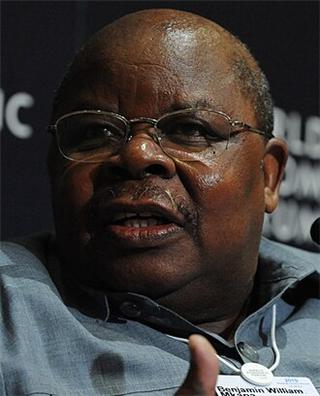
Tanzania has been governed by one dominant party since its creation. The interim constitution of 1965 made it a legal one-party state, with TANU on the mainland and the Afro-Shirazi Party in Zanzibar, though voters could choose between two party candidates in each constituency. In 1977 the two parties merged to form Chama Cha Mapinduzi (CCM), the ‘Party of the Revolution’, which has held power ever since. Nyerere, known as Mwalimu (‘teacher’), governed through the party and a strong civil service, promoted a national ethic of self-reliance and decentralised administration to the regions in 1972. He stepped down as president in 1985, among the first African leaders to leave office voluntarily, and was succeeded by Ali Hassan Mwinyi, a former president of Zanzibar. In 1992 the constitution was amended to allow opposition parties, and multi-party elections have been held every five years since 1995. Presidents have observed a limit of two five-year terms: Benjamin Mkapa (1995–2005), Jakaya Kikwete (2005–2015) and John Magufuli, who was elected in 2015, restricted the opposition and the press, and died in office in March 2021, early in his second term. His vice-president, Samia Suluhu Hassan, became the first woman president. Dodoma was designated the capital in 1973, but the government moved there only gradually, mostly after 2016.
Global & Regional Impact
Tanzania’s influence has been greater than its economic weight. Nyerere was one of the most respected leaders of independent Africa, a founder of the Organisation of African Unity in 1963 and a prominent voice of the Non-Aligned Movement, and his writings on ujamaa and self-reliance influenced development thinking far beyond Africa. Tanzania was the principal rear base of the southern African liberation struggle: FRELIMO was founded in Dar es Salaam in 1962, and the ANC ran its Solomon Mahlangu Freedom College at Mazimbu near Morogoro. The Chinese-built Tanzania–Zambia Railway, completed in 1975, gave Zambia an outlet to the sea that avoided white-ruled Rhodesia and South Africa. Making Swahili the language of government, primary schooling and national life helped create one of the strongest national identities in Africa, and Tanzania has been among the continent’s most politically stable states, without a successful coup or civil war. Its overthrow of Amin in 1979 set a precedent for regional intervention. Arusha has hosted the revived East African Community since 2000, the International Criminal Tribunal for Rwanda from 1994 to 2015 and the African Court on Human and Peoples’ Rights. Tanzania has also sheltered large numbers of refugees from Burundi, Rwanda and Congo.
Into the Present

Tanzania has not ended, but its founding project has been transformed. By the early 1980s ujamaa had failed economically: agricultural exports had fallen, industries ran far below capacity and the state could not pay for imports. Nyerere resisted the conditions of the International Monetary Fund, but after his retirement Ali Hassan Mwinyi signed an agreement with the IMF in 1986, devalued the shilling and liberalised trade, while the Zanzibar Declaration of 1991 relaxed the leadership code that had barred officials from business. Multi-party politics came in 1992, though CCM has won every national election, most recently in October 2025, when Samia Suluhu Hassan was declared winner with about 98 per cent after Chadema was barred and protests were put down with many deaths. The union with Zanzibar remains the main political strain: elections on the islands in 1995, 2000 and later were bitterly disputed between CCM and the Civic United Front, and in January 2001 security forces killed dozens of opposition protesters, especially on Pemba. A government of national unity was formed in Zanzibar in 2010. Today Tanzania, with its capital at Dodoma and its commercial centre at Dar es Salaam, has a population of over 60 million, steady growth based on agriculture, mining, tourism and infrastructure such as a new standard-gauge railway, and is a member of both the East African Community and the Southern African Development Community.
Tanzania joined Tanganyika and Zanzibar in one of Africa’s few lasting unions of independent states, and under Julius Nyerere it became the rear base of southern Africa’s liberation struggles, a leading experiment in African socialism and, held together by Swahili, one of the continent’s most stable nations.
Test yourself
5 questions on this page, from its key events and facts.
The questions open here once the page has loaded.
References
- Coulson, A. (1982) Tanzania: A Political Economy. Oxford: Clarendon Press.
- Hyden, G. (1980) Beyond Ujamaa in Tanzania: Underdevelopment and an Uncaptured Peasantry. London: Heinemann.
- Iliffe, J. (1979) A Modern History of Tanganyika. Cambridge: Cambridge University Press.
- Pratt, C. (1976) The Critical Phase in Tanzania, 1945–1968: Nyerere and the Emergence of a Socialist Strategy. Cambridge: Cambridge University Press.
- Scott, J.C. (1998) Seeing Like a State: How Certain Schemes to Improve the Human Condition Have Failed. New Haven: Yale University Press.
Connections
Open the full connections map →