Sub-Saharan Africa
Liberia
At a glance
- Founded by African American settlers, Liberia became Africa’s first republic on 26 July 1847.
- With Ethiopia, it was one of only two African states to escape European colonisation during the partition of Africa.
- A settler elite ruled until Samuel Doe’s coup in 1980, which was followed by civil wars from 1989 to 2003.
Rise & Fall
- 1822American Colonization Society settlers land at Cape Mesurado, later Monrovia
- 1847Liberia declares independence under President Joseph Jenkins Roberts
- 1926Firestone receives a vast rubber concession
- 1930A forced labour scandal forces President Charles King to resign
- 1944William Tubman begins a presidency lasting until 1971
- 1980Samuel Doe’s coup ends True Whig Party rule
- 1989Charles Taylor’s invasion starts the first Liberian civil war
- 2006Ellen Johnson Sirleaf becomes Africa’s first elected female head of state
Foundation
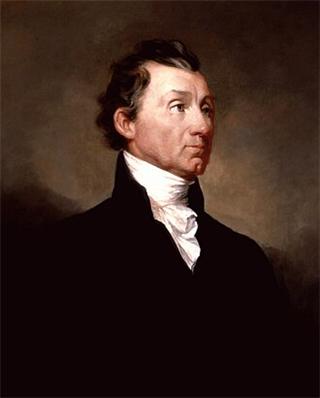
Liberia grew out of the work of the American Colonization Society, founded in 1816 by a coalition of white philanthropists, clergy and slaveholders who wished to resettle free African Americans in Africa. After a failed first attempt on Sherbro Island in 1820, the society’s agents acquired land at Cape Mesurado in December 1821, where from 1822 the settlement later named Monrovia, after President James Monroe, was established. Under agents such as Jehudi Ashmun the colony survived disease and conflict with neighbouring peoples, and it was joined by other settlements founded by state colonisation societies, including Maryland in Liberia at Cape Palmas. Alongside free-born and formerly enslaved African Americans, the colony absorbed thousands of “recaptives”, Africans freed from slave ships by the United States Navy and known locally as Congoes. Because the society was a private body, Britain refused to recognise its authority to levy customs duties, and this dispute pushed the settlers towards independence. On 26 July 1847 a convention declared the Republic of Liberia, adopting a constitution modelled on that of the United States and the motto “The love of liberty brought us here”. Joseph Jenkins Roberts, a merchant born in Virginia, became the first president. Britain and France recognised the republic in the following years, but the United States did so only in 1862.
Socioeconomy
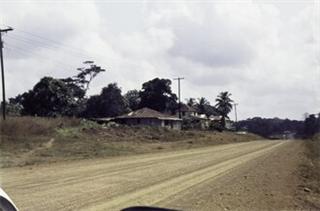
Liberian society was long divided between the Americo-Liberian settlers and their descendants, a few per cent of the population concentrated in coastal towns, and the indigenous majority, including the Kpelle, Bassa, Grebo, Kru, Vai, Gola, Kissi, Loma, Mano, Dan and Mandinka. Settlers built a society modelled on the American South, with Protestant churches, Masonic lodges and two-storey houses, and many indigenous children were raised in settler households as wards. In the nineteenth century the economy depended on coastal trade in palm oil, camwood and coffee, and on settler sugar and coffee farms along the St Paul river, which declined with competition from Brazil and elsewhere. The Firestone Tire and Rubber Company’s concession of 1926 created one of the world’s largest rubber plantations at Harbel, and rubber remained the leading export until iron ore mining began at Bomi Hills in the 1950s, followed by the Bong and Nimba mines. A ship registry founded in 1948 made Liberia one of the largest flags of convenience in the world. The country has used the United States dollar alongside its own currency. The Vai script, an indigenous syllabary devised in the 1830s, and the Poro and Sande societies of the interior reflect the rich cultures of the indigenous peoples.
Military

For most of its history Liberia relied on militia and a small army rather than on military strength to survive. Settler militias fought repeated wars against indigenous peoples in the nineteenth century, among them the Grebo and Kru of the southeastern coast, and the Liberian Frontier Force, created in 1908 under American and British officers, extended government authority into the interior, often brutally. Liberia joined the First World War on the Allied side in 1917, and in 1918 a German submarine shelled Monrovia. In the Second World War the United States built Roberts Field airport and a port at Monrovia, and Liberia declared war on Germany and Japan in 1944. The army’s role changed dramatically on 12 April 1980, when Master Sergeant Samuel Doe and other soldiers overthrew and killed President William Tolbert. In December 1989 Charles Taylor’s National Patriotic Front of Liberia invaded from Côte d’Ivoire, starting a civil war in which factions fought largely along ethnic lines and used child soldiers. A West African intervention force, ECOMOG, led by Nigeria, entered Monrovia in 1990. A second war from 1999, waged by the LURD and MODEL rebel groups, ended in 2003. The two wars killed an estimated 250,000 people and displaced over a million, and a United Nations mission, UNMIL, kept the peace until 2018.
Governance & Law

The constitution of 1847 created a presidency, a bicameral legislature and a supreme court, and limited citizenship to people of African descent, a provision that remains in force. In practice power was held by a narrow Americo-Liberian elite. The True Whig Party governed without interruption from 1878 to 1980, making Liberia for much of the twentieth century a one-party state, and indigenous people were long excluded from citizenship, voting and office. The interior was ruled indirectly through chiefs under district commissioners, and forced labour and taxation there were frequent sources of abuse. In 1930 a League of Nations commission found that officials had shipped labourers to the Spanish island of Fernando Po under conditions resembling slavery, and President Charles D. B. King and Vice-President Allen Yancy resigned. Edwin Barclay (1930–1944) resisted proposals for international trusteeship. William Tubman (1944–1971) pursued an Open Door Policy towards foreign investment and a Unification Policy that extended voting rights and representation to the interior, while maintaining personal control through patronage and security services. After the civil wars a transitional government led to elections in 2005, which made Ellen Johnson Sirleaf Africa’s first elected female head of state. George Weah was elected in 2017, and Joseph Boakai defeated him in 2023.
Global & Regional Impact

Liberia holds a distinctive place in African and Atlantic history. Founded as a refuge for formerly enslaved people from the Americas, it became, with Ethiopia, one of only two African states to remain independent during the European partition of the continent, and it was a founding member of the League of Nations, the United Nations and the Organisation of African Unity. Its early statesmen and scholars, especially Edward Wilmot Blyden, who taught at Liberia College and wrote on African identity, helped shape Pan-Africanism, and Marcus Garvey’s movement looked to Liberia in the early 1920s as a possible homeland. At the same time the republic’s treatment of indigenous peoples, the forced labour scandal of 1930 and the dominance of foreign concessions such as Firestone made it a case study in how independence could coexist with deep inequality and dependency. The civil wars of 1989–2003 destabilised the whole region, spreading into Sierra Leone, and the conviction of Charles Taylor in 2012 by the Special Court for Sierra Leone was the first conviction of a former head of state by an international tribunal since Nuremberg. Liberian women’s peace activism, led by Leymah Gbowee, helped end the second war, and Johnson Sirleaf and Gbowee shared the Nobel Peace Prize in 2011.
Into the Present
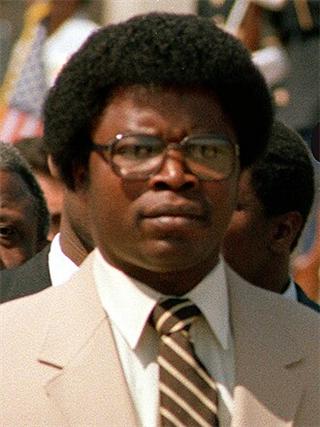
Liberia’s independence was repeatedly threatened from outside. It lost territory claimed on its northwest and east to British Sierra Leone and French colonies in agreements of 1885, 1892 and the early 1900s, and debts from a ruinous loan of 1871 led to an American-supervised customs receivership under a loan of 1912. The settler order ended violently in 1980, when Samuel Doe’s coup brought the first indigenous Liberian to power and thirteen senior officials of the old regime were publicly executed. Doe’s rule became increasingly repressive and ethnically partisan, and the rigged election of 1985 deepened divisions. The civil war that began in 1989 destroyed the state: Doe was captured and killed in 1990, rival factions controlled much of the country, and Taylor, elected president in 1997, faced a renewed insurgency until he resigned and went into exile in Nigeria in August 2003, a week before the Accra peace agreement was signed. Reconstruction under Johnson Sirleaf from 2006 brought debt relief and renewed investment, but the Ebola epidemic of 2014–2015 killed several thousand Liberians and strained a weak health system. Today Liberia is a fragile multi-party democracy of about five million people that has held peaceful transfers of power, though it remains one of the poorest countries in the world.
Liberia, founded by African American settlers and declared a republic in 1847, is Africa’s oldest republic and one of only two African states never colonised by Europe, yet its long domination by a settler elite, its dependence on foreign concessions and the civil wars of 1989–2003 shaped a troubled modern history.
References
- Clegg, C.A. (2004) The Price of Liberty: African Americans and the Making of Liberia. Chapel Hill: University of North Carolina Press.
- Ellis, S. (1999) The Mask of Anarchy: The Destruction of Liberia and the Religious Dimension of an African Civil War. London: Hurst.
- Liebenow, J.G. (1987) Liberia: The Quest for Democracy. Bloomington: Indiana University Press.
- Sawyer, A. (1992) The Emergence of Autocracy in Liberia: Tragedy and Challenge. San Francisco: ICS Press.
- Johnson Sirleaf, E. (2009) This Child Will Be Great: Memoir of a Remarkable Life by Africa’s First Woman President. New York: Harper.
Connections
Open the full connections map →