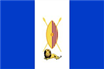
Sub-Saharan Africa
Swazi Kingdom
At a glance
- A Nguni kingdom built by the Dlamini dynasty under Sobhuza I and Mswati II, the king after whom the Swazi are named.
- The king (Ngwenyama) rules alongside the queen mother (Ndlovukati), and kingship is renewed each year in the Incwala.
- After concessions, Boer and British rule, it regained independence in 1968 and remains one of the world’s last absolute monarchies.
Rise & Fall
- c. 1745The Dlamini under Ngwane III settle near the lower Pongola river
- c. 1820Sobhuza I moves north to the Ezulwini valley under Ndwandwe pressure
- c. 1840Mswati II begins his reign and builds the age-regiment system
- 1894Swaziland becomes a protectorate of the South African Republic
- 1907The Partition Proclamation leaves the Swazi only about a third of their land
- 1968Swaziland becomes independent under Sobhuza II
- 1973Sobhuza II repeals the constitution and bans political parties
- 2018Mswati III renames the country the Kingdom of Eswatini
Foundation

The Swazi Kingdom traces its origins to the Dlamini, a Nguni-speaking royal clan that moved southwards through the coastal lowlands of what is now southern Mozambique. Around 1745, according to tradition and genealogical reckoning, the Dlamini under Ngwane III settled near the lower Pongola river, and the Swazi still call their country kaNgwane, “the land of Ngwane”, after him. Under Ngwane and his successor Ndvungunye the chiefdom remained small, one of several competing for land and cattle in the region between the Drakensberg escarpment and the Lubombo mountains. The decisive change came under Sobhuza I, also called Somhlolo (r. c. 1815–c. 1839). Pressed by the expanding Ndwandwe Kingdom of Zwide in the late 1810s, he led his people north into the hills of central Eswatini and settled in the Ezulwini valley. There he built a new kingdom by absorbing Sotho- and Nguni-speaking chiefdoms already living in the area, the emakhandzambili, and by incorporating refugees from the wars of the period. Sobhuza combined force with diplomacy: he married Thandile, a daughter of Zwide, who later became an influential queen mother, and he avoided open war with the rising Zulu Kingdom of Shaka. By his death the core of the later Swazi state was established.
Socioeconomy
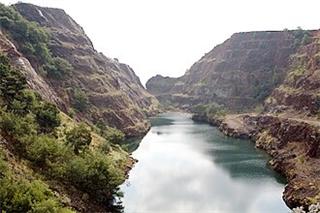
Swazi society was built on homesteads of extended families who kept cattle, grew sorghum and later maize, and lived under chiefs who owed allegiance to the king. Cattle were the main measure of wealth and were exchanged as bridewealth, and the king’s herds, swollen by raiding and tribute, underpinned royal patronage. Clans were ranked, with the Dlamini royal clan at the top and incorporated groups placed according to when and how they had joined the nation. Religious life centred on the ancestors and on the sacred kingship, renewed every year in the Incwala, a ceremony held around the summer solstice in which the king tastes the first fruits and the nation reaffirms its unity. The Umhlanga, or reed dance, gathers young women to bring reeds to the queen mother. In the nineteenth century European traders, missionaries and farmers arrived, and from the 1880s gold prospectors, ranchers and speculators obtained concessions. In the twentieth century the economy came to rest on sugar, citrus, timber and wood pulp, asbestos from the Havelock mine and iron ore from Ngwenya, where an ancient haematite working is among the oldest known mines in the world. Many Swazi men worked in South African mines. Today the country belongs to the Southern African Customs Union, and its currency, the lilangeni, is pegged to the South African rand.
Military

Military power rested on age-regiments, emabutfo, which gathered young men from across the kingdom regardless of clan and bound them directly to the king. Mswati II (r. c. 1840–1868) developed this system on the model of his Zulu neighbours and used it to make the Swazi a major regional power. His regiments raided northwards into what became the eastern Transvaal and southern Mozambique, seizing cattle and captives and forcing tribute from smaller chiefdoms, and he intervened in succession disputes in the Gaza kingdom. Relations with the Zulu were the main threat: Zulu armies attacked the Swazi in the 1830s and again under Mpande in the 1840s, and Mswati sought support from the British in Natal and from Boer settlers at Lydenburg, to whom he ceded land in 1846 and 1855. Swazi forces generally avoided pitched battles with Zulu armies, retreating to mountain strongholds and caves where cattle and people could shelter. In 1879 several thousand Swazi warriors joined the British in storming the stronghold of the Pedi king Sekhukhune, a campaign that confirmed their reputation. The regiments survived colonial rule as a social and ceremonial institution, and a modern Umbutfo Eswatini Defence Force was created after independence, although the kingdom has not fought a foreign war since.
Governance & Law
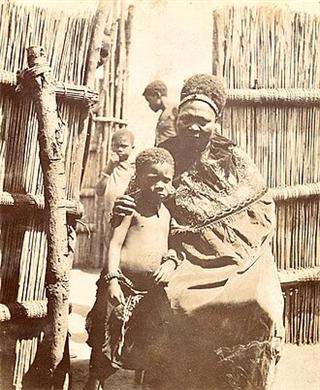
The kingdom has a dual monarchy. The king, the Ngwenyama (“lion”), rules together with his mother or a senior wife as Ndlovukati (“she-elephant”), who keeps her own royal village and has a role in ritual and law; for much of history the two capitals stood close together, with Lobamba as the queen mother’s seat and the traditional and legislative centre. The king is chosen from among the sons of his predecessor by the royal council, usually as the only son of a wife selected for the role, which often meant long regencies. Advisory bodies include the Liqoqo, a council of senior princes and chiefs, and the Libandla, a wider national council. Chiefs administer land held for the nation by the king, Swazi Nation Land, which still covers much of the country. The regent Labotsibeni Mdluli governed from 1899 to 1921 for her grandson Sobhuza II, who then reigned until 1982, one of the longest reigns in recorded history. After independence Sobhuza combined these institutions with a modern state: in 1973 he repealed the independence constitution and banned political parties, and in 1978 he introduced the tinkhundla system of local constituencies, under which candidates stand as individuals. Mswati III, crowned in 1986, approved a new constitution in 2005 but retains executive authority.
Global & Regional Impact

The Swazi Kingdom is one of three African monarchies that survived the colonial era as sovereign states, together with Lesotho and Morocco, and the only one that remains an absolute monarchy. Its history shows how an African kingdom could use the rivalries of its neighbours, the Zulu, the Boer republics and Britain, to preserve a core of independence through the upheavals of the nineteenth century. The name Swazi comes from Mswati II, whose conquests gave the nation its reputation, and the kingdom’s institutions, from the age-regiments to the Incwala and Umhlanga, are among the best-described in African anthropology, especially through the work of Hilda Kuper. The concessions of Mbandzeni’s reign became a well-known example of how European speculators acquired African land and rights with little regard for local understanding. Under Sobhuza II, traditional authority was turned into a basis for modern national politics, a model studied by historians of post-colonial Africa. In recent decades Eswatini has drawn international attention for the persistence of absolute monarchy, for its very high rate of HIV infection, and for the pro-democracy protests of 2021, which were met with force. Swazi-speaking communities also live in South Africa, especially in Mpumalanga.
Into the Present
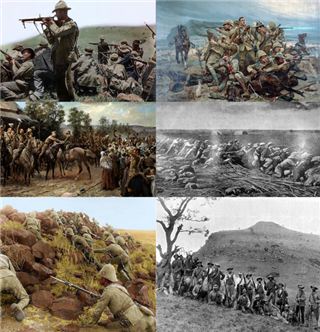
The kingdom’s independence was undermined in the reign of Mbandzeni (r. 1875–1889), who granted hundreds of concessions to Europeans covering land, grazing, minerals, customs, and even postal and licensing rights, until almost the whole country was claimed by outsiders. The conventions of Pretoria in 1881 and London in 1884 recognised Swazi independence, but in 1890 Britain and the South African Republic set up a joint provisional government, and the convention of 1894 made Swaziland a protectorate of the South African Republic. After the Second Boer War Britain took over, administering the territory first through the Transvaal from 1903 and from 1906 as a High Commission territory. The Partition Proclamation of 1907 left the Swazi with only about a third of their land. Sobhuza II spent decades recovering it, appealing unsuccessfully to the Privy Council in the 1920s and later buying land back through national funds. Independence came on 6 September 1968 with Sobhuza as king. His Imbokodvo National Movement dominated parliament, and in 1973 he assumed full powers. After his death in 1982 a period of palace rivalry ended with the coronation of Mswati III in 1986. In 2018 he renamed the country the Kingdom of Eswatini; it remains an absolute monarchy.
The Swazi Kingdom, founded by the Dlamini in the eighteenth century and expanded by Sobhuza I and Mswati II, survived Zulu pressure, Boer and British rule and the loss of most of its land to concessionaires, re-emerging in 1968 as one of Africa’s few surviving monarchies and one of the last absolute monarchies in the world.
Test yourself
5 questions on this page, from its key events and facts.
The questions open here once the page has loaded.
References
- Bonner, P. (1983) Kings, Commoners and Concessionaires: The Evolution and Dissolution of the Nineteenth-Century Swazi State. Cambridge: Cambridge University Press.
- Kuper, H. (1947) An African Aristocracy: Rank among the Swazi. London: Oxford University Press.
- Kuper, H. (1978) Sobhuza II, Ngwenyama and King of Swaziland: The Story of an Hereditary Ruler and his Country. London: Duckworth.
- Booth, A.R. (1983) Swaziland: Tradition and Change in a Southern African Kingdom. Boulder: Westview Press.
- Matsebula, J.S.M. (1972) A History of Swaziland. Cape Town: Longman.
Connections
Open the full connections map →