Islamic Caliphates & Middle East
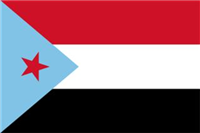
South Yemen
At a glance
- Founded in 1967 when the National Liberation Front took power in Aden as British rule in southern Arabia ended.
- The only Marxist–Leninist state in the Arab world, ruled by the Yemeni Socialist Party and allied with the Soviet Union.
- A party civil war in 1986 and the end of Soviet support led to unification with North Yemen on 22 May 1990.
Rise & Fall
- 1963The NLF begins its armed uprising in the Radfan mountains
- 1967Britain withdraws and the People’s Republic of South Yemen is proclaimed on 30 November
- 1969The Corrective Move removes President Qahtan al-Shaabi
- 1970The country is renamed the People’s Democratic Republic of Yemen
- 1978The Yemeni Socialist Party is founded
- 1979Border war with North Yemen; treaty of friendship with the Soviet Union
- 1986Party civil war in Aden kills thousands, including Abdul Fattah Ismail
- 1990Unification with North Yemen forms the Republic of Yemen on 22 May
Foundation
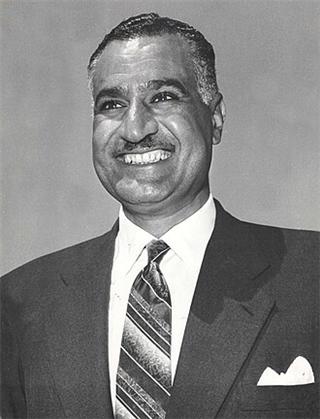
South Yemen emerged from the end of British rule in southern Arabia. Britain had held Aden since 1839 and built it into a major port and military base, while the sultanates, emirates and sheikhdoms of its hinterland formed the Aden Protectorate under British treaties. In the 1960s Britain grouped most of these states with Aden in the Federation of South Arabia, ruled by conservative sultans, but nationalist opposition grew among Aden’s workers and the tribes of the interior. On 14 October 1963 the National Liberation Front (NLF) launched an armed uprising in the Radfan mountains, beginning the Aden Emergency, a guerrilla and urban war against British forces and the federal government. The NLF also fought a rival nationalist group, the Front for the Liberation of Occupied South Yemen (FLOSY), backed by Nasser’s Egypt, and by 1967 it had defeated FLOSY and taken over most of the protectorate states as their rulers fled. Britain negotiated its withdrawal with the NLF, and on 30 November 1967, as the last British troops left, the People’s Republic of South Yemen was proclaimed in Aden with Qahtan al-Shaabi as president. The new state abolished the sultanates and sheikhdoms, uniting for the first time under one government a territory stretching from Aden and Lahej to Hadhramaut, Mahra and the island of Socotra.
Socioeconomy

South Yemen was a poor country of under two million people at independence, most of them farmers, herders and fishermen, with Aden as its only large city. Its economy suffered an immediate shock: the closure of the Suez Canal after the Arab–Israeli war of June 1967 and the departure of the British base removed much of the shipping and spending on which Aden had lived, and the canal did not reopen until 1975. The government pursued a socialist transformation. Agrarian reform laws, above all that of 1970, broke up the estates of sultans and landlords and organised peasants into cooperatives and state farms; fishing was organised in cooperatives; and banks, insurance companies, trading houses and later the Aden oil refinery were nationalised. Remittances from South Yemenis working in Saudi Arabia and the Gulf states, together with aid from the Soviet Union and its allies, kept the economy afloat. The regime expanded schooling and literacy, built clinics, and promoted the rights of women: the Family Law of 1974 restricted polygamy, set a minimum age of marriage and gave women rights in divorce, making South Yemen’s family legislation among the most progressive in the Arab world. Islam remained the religion of almost the entire population, but the state curbed the power of religious institutions and tribal leaders. Oil found in Shabwa in the 1980s promised revenue only shortly before unification.
Military
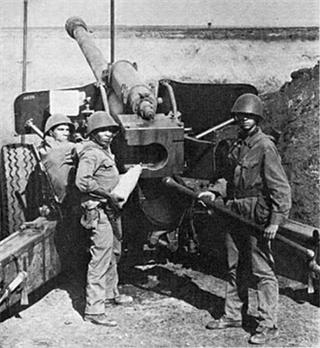
The armed forces of South Yemen were built from the army of the Federation of South Arabia and the guerrilla fighters of the NLF, and the ruling party worked hard to bring them under political control. From the early 1970s the Soviet Union supplied weapons, training and advisers, and Cuban and East German specialists helped with the army, militia and security services. In return the Soviet navy gained the use of facilities at Aden, which became an important point of Soviet presence in the Indian Ocean and the Horn of Africa. South Yemen supported revolutionary movements in neighbouring states. It provided bases and supplies to the guerrillas of the Dhofar rebellion against the Sultanate of Oman until the rebellion was defeated in the mid-1970s, and it backed the leftist National Democratic Front in North Yemen. Relations with the Yemen Arab Republic in the north swung between talks on unity and open war: short border wars were fought in 1972 and in 1979, both ended by Arab mediation with renewed promises of unification. South Yemen also clashed with Saudi Arabia on their border in 1969, and in 1977–1978 it sent military support to Ethiopia during the Ogaden War. The most destructive fighting, however, was internal, when units loyal to rival party factions fought each other in Aden in January 1986.
Governance & Law

South Yemen was a one-party state that became the only Marxist–Leninist regime in the Arab world. Its first president, Qahtan al-Shaabi, was removed in June 1969 in what the NLF’s left wing called the Corrective Move, and power passed to a collective leadership including Salim Rubaya Ali as head of the Presidential Council, the party ideologue Abdul Fattah Ismail and later Ali Nasir Muhammad as prime minister. The constitution of 1970 renamed the country the People’s Democratic Republic of Yemen and created a Supreme People’s Council as its legislature. In 1978 the ruling front merged with smaller leftist parties to form the Yemeni Socialist Party (YSP), organised on the Soviet model with a politburo, central committee and a general secretary who held real power. Leadership struggles were frequent and often violent: Salim Rubaya Ali was overthrown and executed in June 1978, Abdul Fattah Ismail became head of state and was pushed into exile in Moscow in 1980, and Ali Nasir Muhammad then held the posts of party leader, head of state and prime minister. The regime replaced the old sultanates with governorates, initially known by numbers rather than names, to weaken regional and tribal loyalties. Security services, mass organisations and a people’s militia extended control over society, but personal and regional networks continued to shape party factions.
Global & Regional Impact

For more than two decades South Yemen was a distinctive experiment: the only Arab state to declare itself Marxist–Leninist and to build its institutions on the Soviet model. Its revolutionary origins in the struggle against British colonial rule made the NLF a symbol for radical movements across the Arab world, and its support for the Dhofar rebels and other leftist groups made it a factor in the politics of the Arabian Peninsula and the Horn of Africa during the Cold War. Conservative neighbours, above all Saudi Arabia and Oman, regarded it as a threat, while the Soviet Union valued it as an ally and naval foothold at the mouth of the Red Sea. Inside the country the regime’s reforms had lasting effects. It dismantled the power of the sultans and sheikhs, unified a fragmented territory under a single administration, extended education and health services, and gave women legal rights and public roles unusual in the region; many southern women worked as teachers, doctors, judges and party officials. These achievements were offset by repression, economic stagnation and the purges and violence of party politics. After unification, the memory of the separate southern state and resentment of northern dominance fuelled southern regionalism, which grew into a movement calling for autonomy or independence for the south.
Decline & Fall
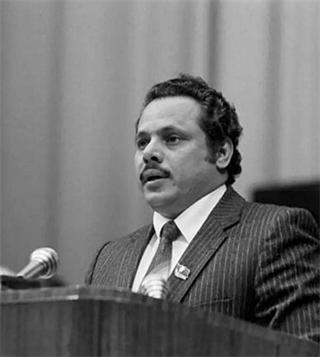
The crisis that ended South Yemen began within its ruling party. Ali Nasir Muhammad pursued a more pragmatic course, improving relations with Saudi Arabia, Oman and the West, and Abdul Fattah Ismail returned from Moscow in 1985 to lead the opposition to him. On 13 January 1986 Ali Nasir’s bodyguards opened fire on members of the politburo at a meeting in Aden, and the confrontation became a short civil war fought with tanks, artillery and naval guns across the city. Thousands were killed, among them Abdul Fattah Ismail, and Ali Nasir fled to North Yemen with tens of thousands of supporters. The victors installed Haidar Abu Bakr al-Attas as president, with Ali Salim al-Beidh as general secretary of the party, but the state was gravely weakened. At the same time the Soviet Union under Mikhail Gorbachev cut back its aid, and the collapse of communism in Eastern Europe in 1989 removed the regime’s external model and support. Talks on unity with the north gained new urgency, encouraged by plans to develop oil in the border region jointly. In November 1989 the two leaderships agreed a unity constitution, and on 22 May 1990 South Yemen united with the Yemen Arab Republic to form the Republic of Yemen, with Ali Abdullah Saleh as president and al-Beidh as vice-president. A southern attempt at secession in 1994 was defeated in a brief civil war.
South Yemen was born from the anti-colonial struggle against British rule in Aden, became the Arab world’s only Marxist–Leninist state and a Soviet ally, transformed society and women’s rights in the south, and after a ruinous party civil war in 1986 united with North Yemen in 1990.
References
- Halliday, F. (1990) Revolution and Foreign Policy: The Case of South Yemen, 1967–1987. Cambridge: Cambridge University Press.
- Dresch, P. (2000) A History of Modern Yemen. Cambridge: Cambridge University Press.
- Lackner, H. (1985) P.D.R. Yemen: Outpost of Socialist Development in Arabia. London: Ithaca Press.
- Halliday, F. (1974) Arabia without Sultans. Harmondsworth: Penguin.
Connections
Open the full connections map →