Islamic Caliphates & Middle East
United Arab Emirates
At a glance
- A federation of seven emirates formed in 1971–1972 from the British-protected Trucial States, with Abu Dhabi as its capital.
- Abu Dhabi's oil and Dubai's ports, airline and free zones made it a global hub of trade, finance and aviation.
- Since the 2010s it has acted as an assertive regional power, from Yemen to the Abraham Accords with Israel in 2020.
Rise & Fall
- 1968Zayed and Rashid agree to form a union after Britain announces its withdrawal from the Gulf
- 1971Six sheikhdoms proclaim the United Arab Emirates on 2 December
- 1972Ras al-Khaimah joins as the seventh emirate
- 1979Jebel Ali port opens; Rashid of Dubai becomes prime minister
- 1981The Gulf Cooperation Council is founded in Abu Dhabi
- 2004Zayed dies and is succeeded by Khalifa bin Zayed
- 2009Abu Dhabi rescues Dubai during the Dubai World debt crisis
- 2020The UAE signs the Abraham Accords with Israel
Foundation
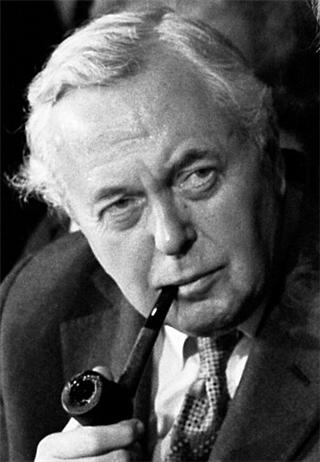
The United Arab Emirates grew out of the Trucial States, a group of sheikhdoms on the southern shore of the Gulf bound to Britain by the General Maritime Treaty of 1820, the Perpetual Maritime Truce of 1853 and the Exclusive Agreement of 1892, under which Britain conducted their foreign relations and guaranteed their defence. In January 1968 the British government of Harold Wilson announced that it would withdraw its forces from east of Suez by the end of 1971. A month later Zayed bin Sultan Al Nahyan, ruler of Abu Dhabi since 1966, and Rashid bin Saeed Al Maktoum of Dubai agreed at a meeting in the desert between their two emirates to form a union and invited the other rulers to join them. Negotiations for a nine-member federation that would have included Bahrain and Qatar broke down over representation and the choice of capital, and both chose separate independence in 1971. On 2 December 1971 six sheikhdoms, Abu Dhabi, Dubai, Sharjah, Ajman, Umm al-Quwain and Fujairah, proclaimed the United Arab Emirates under a provisional constitution, with Zayed as president and Rashid as vice-president. Ras al-Khaimah, which had held out for better terms and had just lost the Greater and Lesser Tunbs islands to Iran, joined on 10 February 1972.
Socioeconomy

At independence the federation was thinly populated, and many of its people had until recently lived from pearling, fishing, date cultivation and herding; the pearling industry had collapsed in the 1930s with the Great Depression and the spread of Japanese cultured pearls. Oil changed everything. Abu Dhabi began exporting crude in 1962 and Dubai in 1969, and the price rises of 1973–1974 gave the new state revenues far beyond its immediate needs. The Abu Dhabi Investment Authority, founded in 1976, became one of the largest sovereign wealth funds in the world. Dubai, with smaller reserves, built on its older role as an entrepôt: Port Rashid opened in 1972, the deep-water port of Jebel Ali in 1979 and the Jebel Ali Free Zone in 1985, the year the airline Emirates was launched. Tourism, real estate, finance, logistics and aviation followed, and the population rose from a few hundred thousand to around ten million, of whom citizens make up only about a tenth. Most residents are migrant workers from South Asia, other Arab countries and the Philippines, employed under the sponsorship system known as kafala, which has drawn persistent criticism over labour rights. Citizens receive generous state employment, housing and welfare. Islam is the official religion, while churches and temples serve the foreign communities.
Military
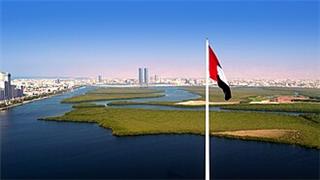
The federation inherited the Trucial Oman Scouts, a British-officered force founded in 1951 as the Trucial Oman Levies, which became the Union Defence Force. The larger emirates kept armies of their own, and although the rulers agreed in 1976 to unify their forces, Dubai retained a separate command for years afterwards. On the eve of independence Iran occupied the Greater and Lesser Tunbs, claimed by Ras al-Khaimah, and landed troops on Abu Musa under an agreement with Sharjah; the UAE still disputes all three islands. Lacking strategic depth, the state relied first on Britain and then on the United States, while spending heavily on advanced aircraft, missile defences and naval forces. Emirati units joined the coalition that expelled Iraq from Kuwait in 1991, served in Somalia, Kosovo and Afghanistan, and flew in the 2011 air campaign over Libya. The largest commitment came in Yemen from 2015, where the UAE was the main partner of Saudi Arabia in the coalition against the Houthi movement; 45 Emirati soldiers died in a missile strike near Marib in September 2015. The UAE reduced its ground presence in 2019 but backed allied southern Yemeni forces until a dispute with Saudi Arabia led it to withdraw its last units in December 2025. Military service for male citizens was introduced in 2014, and a domestic arms industry has grown around the EDGE group, founded in 2019.
Governance & Law
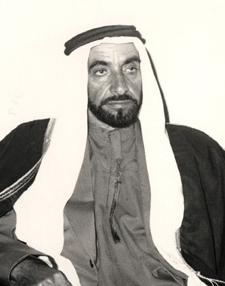
The constitution, provisional in 1971 and made permanent in 1996, created a federation in which the seven emirates keep their own rulers, courts and control of their natural resources, while the federal government handles foreign affairs, defence, immigration, currency and common services. Supreme authority lies with the Federal Supreme Council of the seven rulers, in which Abu Dhabi and Dubai hold a veto on substantive matters. The council elects the president and vice-president for renewable five-year terms; in practice the presidency has always gone to the ruler of Abu Dhabi and the vice-presidency, and since 1979 the premiership, to the ruler of Dubai. A Council of Ministers runs the federal administration, and the Federal National Council, an advisory body of 40 members, has had half its seats filled since 2006 by an electoral college whose members are chosen by the rulers. Political parties are not permitted and dissent is closely controlled, as the mass trial of 94 activists in 2013 showed. Zayed governed by consensus and by sharing Abu Dhabi's revenues with the poorer northern emirates. Khalifa bin Zayed Al Nahyan succeeded him in 2004 and Mohamed bin Zayed Al Nahyan, long the de facto leader, in 2022, while Mohammed bin Rashid Al Maktoum, ruler of Dubai, has been vice-president and prime minister since 2006.
Global & Regional Impact

The UAE is the most successful federation formed among Arab states in the twentieth century, surviving where projects of Arab union from the United Arab Republic onward failed. Its model of rapid, state-led development, combining oil revenues with free zones, airlines, ports and real-estate projects, has been studied and imitated across the Gulf, and Dubai became shorthand for the region's transformation, symbolised by the Burj Khalifa, the tallest building in the world since 2010. Emirates and Etihad made Dubai and Abu Dhabi hubs of long-haul aviation, and DP World, the Dubai port operator, runs terminals on several continents. Through the Abu Dhabi Investment Authority, Mubadala and other funds the country became a major investor worldwide. The UAE was a founding member of the Gulf Cooperation Council, established in Abu Dhabi in 1981. From the 2010s it pursued an assertive foreign policy, opposing the Muslim Brotherhood, backing allied forces in Libya and Yemen, joining the boycott of Qatar from 2017 to 2021 and signing the Abraham Accords with Israel in 2020. Cultural and scientific projects such as the Louvre Abu Dhabi, opened in 2017, the Hope probe, which reached Mars orbit in 2021, and the hosting of Expo 2020 and of the COP28 climate conference in 2023 projected the image of a modern, outward-looking state.
Into the Present
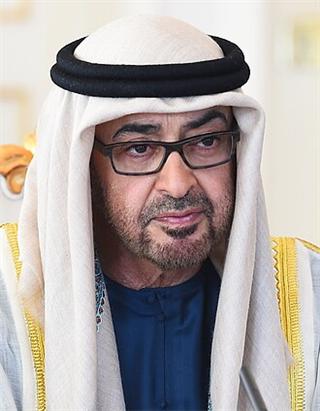
The United Arab Emirates has not declined: it remains a federation of seven emirates under its 1971 constitution and the same ruling families. Its history since independence has been one of consolidation and transformation rather than rupture. Federal institutions gained strength over time, the defence forces were unified and the provisional constitution became permanent in 1996, while Abu Dhabi's wealth increasingly bound the other emirates to the centre. That dependence became clear when Abu Dhabi provided 10 billion dollars to Dubai during the debt crisis of Dubai World in 2009, after which the tower then nearing completion was named Burj Khalifa in honour of the president. The economy has diversified, with non-oil activities now forming most of its output, although hydrocarbons still fund much of the state; the country introduced value added tax in 2018 and a federal corporate tax in 2023, and the Barakah nuclear power plant, the first in the Arab world, began commercial operation in 2021. Its challenges include dependence on foreign labour, criticism of its human rights record, the security risks of its regional interventions, shown by Houthi missile and drone attacks on Abu Dhabi in January 2022, and preparation for a world less dependent on oil. Under Mohamed bin Zayed the UAE stands as one of the most influential smaller powers in the Middle East.
The United Arab Emirates, formed by six Trucial sheikhdoms in 1971 and joined by Ras al-Khaimah in 1972, is the most enduring federation of Arab states, turning Abu Dhabi's oil wealth and Dubai's trading tradition into a global hub of commerce, aviation and finance and becoming an assertive regional power.
References
- Davidson, C.M. (2005) The United Arab Emirates: A Study in Survival. Boulder: Lynne Rienner.
- Davidson, C.M. (2008) Dubai: The Vulnerability of Success. London: Hurst.
- Heard-Bey, F. (1982) From Trucial States to United Arab Emirates: A Society in Transition. London: Longman.
- Zahlan, R.S. (1978) The Origins of the United Arab Emirates: A Political and Social History of the Trucial States. London: Macmillan.
Connections
Open the full connections map →