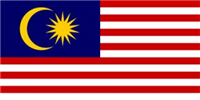
South & Southeast Asia
Malaysia
At a glance
- Malaysia was formed on 16 September 1963 from Malaya, Singapore, Sabah and Sarawak; Singapore left in 1965.
- Its king is elected every five years from nine hereditary Malay rulers, a system unique in the world.
- The New Economic Policy after the 1969 riots reshaped wealth between ethnic groups as the economy industrialised rapidly.
Rise & Fall
- 1963Malaysia is proclaimed on 16 September; Indonesia steps up its Confrontation
- 1965Singapore is separated from the federation on 9 August
- 1969Racial riots of 13 May lead to emergency rule and the New Economic Policy
- 1981Mahathir Mohamad becomes prime minister, serving until 2003
- 1998Capital controls and the dismissal of Anwar Ibrahim spark the Reformasi movement
- 2018The Barisan Nasional loses power for the first time since independence
- 2022Anwar Ibrahim becomes prime minister of a unity government
Foundation
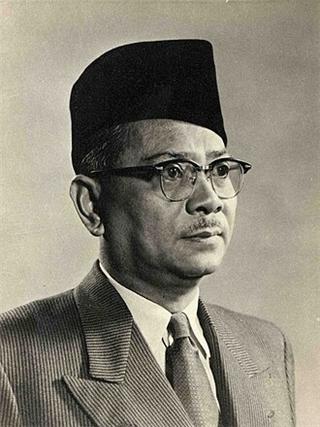
Malaysia grew out of Britain's possessions in the Malay world: the Straits Settlements of Penang, Malacca and Singapore, the Malay sultanates brought under British protection between 1874 and 1914, and, in Borneo, the territories of the North Borneo Chartered Company and the Brooke Rajahs of Sarawak, which became Crown colonies in 1946. After the Second World War, Malay opposition defeated the British plan for a centralised Malayan Union, and the Federation of Malaya was created in 1948, while a communist insurgency, the Malayan Emergency, was fought from 1948 to 1960. Malaya became independent on 31 August 1957 under Tunku Abdul Rahman, leader of the Alliance of the United Malays National Organisation (UMNO), the Malayan Chinese Association and the Malayan Indian Congress. In May 1961 the Tunku proposed a wider federation including Singapore, North Borneo, Sarawak and Brunei, partly to balance Singapore's Chinese majority with the peoples of Borneo and to contain left-wing politics in Singapore. The Cobbold Commission reported in 1962 that most Borneo people supported the plan, special safeguards were agreed for the Borneo states, and Malaysia was proclaimed on 16 September 1963. Brunei stayed out, chiefly over oil revenues and the sultan's status, and the Philippines and Indonesia rejected the new federation.
Socioeconomy
Malaysia's society is defined by its ethnic plurality. Of some 34 million people, roughly seven in ten citizens are Bumiputera, Malays and the indigenous peoples of Sabah and Sarawak such as the Iban and Kadazan-Dusun, about a quarter are Chinese and less than a tenth are of Indian descent, mostly Tamil. Islam is the religion of the federation and of all Malays, while Buddhism, Christianity, Hinduism and Chinese religions are widely practised. At independence the economy rested on natural rubber and tin, of which Malaya was the world's largest producer, and wealth was concentrated among Chinese and foreign firms while most Malays were rural smallholders. The New Economic Policy of 1971–1990 sought to eradicate poverty and end the identification of race with economic function, setting a target of 30 per cent Bumiputera ownership of corporate equity and expanding Malay access to universities and the civil service; poverty fell from about half of households in 1970 to under a fifth by 1990. Malaysia then industrialised rapidly. Free trade zones from 1972 drew electronics firms to Penang, the state oil company Petronas was founded in 1974, the national car Proton followed in 1985, and the country became the second-largest producer of palm oil after Indonesia. Today it is an upper-middle-income economy with a large semiconductor industry.
Military
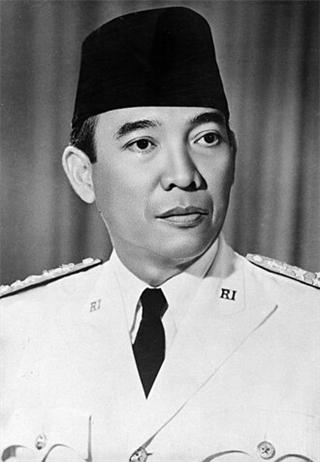
The Malaysian Armed Forces grew from the Malay Regiment, founded in 1933, and from units raised during the Malayan Emergency, and for its first years the federation relied heavily on Britain, Australia and New Zealand. Its first test was the Confrontation of 1963–1966, when Indonesia under Sukarno sent raiders across the Borneo border and landed small parties on the peninsula; Commonwealth forces, including British Gurkha battalions, defeated the incursions in a largely secret jungle war, and the conflict ended after Suharto's rise with an agreement in August 1966. A second communist insurgency led by the Malayan Communist Party was fought along the Thai border from 1968 until the peace accords signed at Hat Yai in December 1989, and a separate communist insurgency in Sarawak ended in 1990. Under the Five Power Defence Arrangements of 1971, Malaysia, Singapore, Britain, Australia and New Zealand agreed to consult if either of the first two was threatened, an arrangement that still continues. Malayan and Malaysian troops have served in United Nations missions from the Congo in the 1960s to Somalia and Bosnia in the 1990s and Lebanon. In 2013 security forces expelled armed followers of a claimant to the Sultanate of Sulu who landed at Lahad Datu in Sabah, and Malaysia maintains claims and patrols in the South China Sea.
Governance & Law

Malaysia is a federal constitutional monarchy of thirteen states and three federal territories: Kuala Lumpur, Labuan and Putrajaya, the administrative centre to which ministries moved from 1999. Its head of state, the Yang di-Pertuan Agong, is elected for five years by the Conference of Rulers from among the nine hereditary Malay rulers, in a rotation unique in the world. Executive power lies with the prime minister and cabinet, responsible to the elected Dewan Rakyat. Article 153 of the constitution protects the special position of the Malays and the natives of Sabah and Sarawak, while the two Borneo states retain control over immigration and other powers under the Malaysia Agreement of 1963. For more than six decades the country was governed by the same coalition, the Alliance and from 1973 the Barisan Nasional, led by UMNO. Mahathir Mohamad, prime minister from 1981 to 2003, strengthened the executive, curbed the rulers' legal immunities in 1993 and dismissed senior judges in the judicial crisis of 1988. Preventive detention under the Internal Security Act was used against opponents until the law was repealed in 2012. After the Barisan Nasional's defeat in 2018, governments changed several times, and since 2022 Anwar Ibrahim has led a unity coalition that includes his former rivals in UMNO.
Global & Regional Impact

Malaysia has been a significant middle power in Southeast Asia. It was a founding member of the Association of Southeast Asian Nations (ASEAN) in 1967, whose Kuala Lumpur declaration of 1971 proposed the region as a Zone of Peace, Freedom and Neutrality, and it has been active in the Commonwealth, the Non-Aligned Movement and the Organisation of Islamic Cooperation. Its development record, sustained growth from a commodity economy to an industrial exporter, made it one of the high-performing Asian economies studied by the World Bank in the 1990s. Mahathir's Look East policy, his advocacy of "Asian values" and his imposition of capital controls during the Asian financial crisis of 1997–1998, against orthodox advice, made Malaysia a reference point in debates on development and globalisation. Kuala Lumpur has become one of the leading centres of Islamic finance, and the Petronas Twin Towers, the tallest buildings in the world from 1998 to 2004, became symbols of the country's ambitions. The New Economic Policy remains among the most discussed examples of affirmative action for a majority population. Malaysia's experience of ethnic power-sharing, its separation from Singapore in 1965 and its federal bargain with Sabah and Sarawak have also shaped how the region thinks about nationhood and diversity.
Into the Present
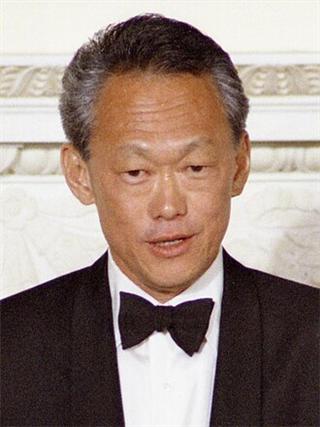
Malaysia has not declined but has been reshaped by a series of crises. Singapore's separation on 9 August 1965, after disputes between the People's Action Party of Lee Kuan Yew and UMNO over Malay privileges and a "Malaysian Malaysia", reduced the federation to its present form. The racial riots of 13 May 1969 in Kuala Lumpur, which officially killed 196 people, led to the suspension of parliament, rule by a National Operations Council under Tun Abdul Razak, the national ideology of Rukun Negara and the New Economic Policy. The Asian financial crisis of 1997–1998 and Mahathir's dismissal and prosecution of his deputy, Anwar Ibrahim, provoked the Reformasi protest movement. The Barisan Nasional lost its two-thirds majority in 2008 and the popular vote in 2013, and the 1MDB scandal, in which billions of dollars were taken from a state investment fund, contributed to its defeat by the Pakatan Harapan coalition in May 2018, with Mahathir returning as prime minister at the age of ninety-two. Former prime minister Najib Razak was convicted of corruption in 2020 and imprisoned in 2022. After the collapse of the Pakatan government in 2020 and a hung parliament in 2022, Malaysia today is a competitive multi-party democracy and an upper-middle-income trading economy.
Malaysia matters as a federation that joined the Malay Peninsula with Sabah and Sarawak in 1963, survived Indonesian Confrontation, Singapore's departure and the 1969 riots, and through ethnic power-sharing and the New Economic Policy became one of Asia's most successful commodity-to-industry economies under a rotating elected monarchy.
Test yourself
5 questions on this page, from its key events and facts.
The questions open here once the page has loaded.
References
- Andaya, B.W. and Andaya, L.Y. (2001) A History of Malaysia. 2nd edn. Basingstoke: Palgrave.
- Cheah Boon Kheng (2002) Malaysia: The Making of a Nation. Singapore: Institute of Southeast Asian Studies.
- Harper, T.N. (1999) The End of Empire and the Making of Malaya. Cambridge: Cambridge University Press.
- Milne, R.S. and Mauzy, D.K. (1999) Malaysian Politics under Mahathir. London: Routledge.
- Gomez, E.T. and Jomo, K.S. (1997) Malaysia's Political Economy: Politics, Patronage and Profits. Cambridge: Cambridge University Press.
Connections
Open the full connections map →