Sub-Saharan Africa
Union of South Africa
At a glance
- A self-governing British dominion formed on 31 May 1910 from the Cape, Natal, Transvaal and Orange River colonies.
- Its gold mines, migrant labour system and land laws built Africa’s strongest economy on racial segregation.
- It fought in both world wars, gained full sovereignty in 1931 and became the apartheid republic in 1961.
Rise & Fall
- 1910The Union of South Africa is proclaimed, with Louis Botha as prime minister
- 1912The South African Native National Congress, later the ANC, is founded at Bloemfontein
- 1913The Natives Land Act restricts African land ownership to reserves
- 1915South African forces conquer German South West Africa
- 1931The Statute of Westminster confirms the Union’s legislative independence
- 1948D. F. Malan’s National Party wins power and begins apartheid
- 1960Police kill 69 protesters at Sharpeville; white voters approve a republic
- 1961The Union becomes the Republic of South Africa on 31 May
Foundation
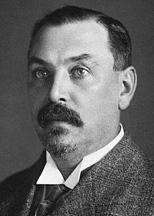
The Union of South Africa was created in the aftermath of the Second Boer War (1899–1902), in which Britain had conquered the South African Republic (Transvaal) and the Orange Free State. By the Treaty of Vereeniging in 1902 the two Boer republics became British colonies, and in 1906–1907 they received responsible government, which brought the Afrikaner generals Louis Botha and Jan Smuts to power in the Transvaal. Rivalry among the four colonies over railways and customs duties, together with a wish among white politicians to settle ‘native policy’ on a common footing, led to the National Convention of 1908–1909, which met in Durban, Cape Town and Bloemfontein. Its draft constitution was passed by the British Parliament as the South Africa Act 1909, and the Union came into being on 31 May 1910, eight years to the day after Vereeniging. The Cape Colony, the Natal Colony, the Transvaal Colony and the Orange River Colony became its four provinces. As a compromise, Pretoria became the administrative capital, Cape Town the legislative capital and Bloemfontein the seat of the Appellate Division. Botha, who formally founded the South African Party in 1911, became the first prime minister, and the Union joined Canada, Australia and New Zealand as a self-governing dominion of the British Empire.
Socioeconomy
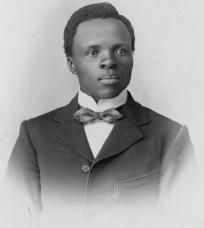
The Union’s economy rested on mining, above all the gold of the Witwatersrand, which made South Africa the world’s largest gold producer, together with the diamonds of Kimberley, coal and commercial farming. The mines depended on large numbers of African migrant workers, recruited from the reserves and from neighbouring territories such as Mozambique, who lived in compounds on low wages, while skilled work was reserved for whites under the Mines and Works Act of 1911. The Natives Land Act of 1913 confined African land ownership to reserves covering about 7 per cent of the country, raised to about 13 per cent by the Native Trust and Land Act of 1936; the writer Sol Plaatje condemned it in Native Life in South Africa (1916). Urban segregation followed with the Natives (Urban Areas) Act of 1923. Among whites, rapid urbanisation created a large class of impoverished Afrikaners, the ‘poor white problem’, which governments addressed through protected employment on the railways and in state industries such as the Iron and Steel Corporation (Iscor), founded in 1928. Manufacturing expanded strongly during the Second World War. Society was divided into legally defined groups of Europeans, Africans, Coloured people and Indians, the last including the community among whom Mohandas Gandhi worked until 1914.
Military

The Union Defence Force was established by the Defence Act of 1912. When the First World War began in 1914, Botha’s decision to invade German South West Africa provoked the Maritz Rebellion, a rising of Afrikaner commandos under leaders such as Christiaan de Wet and Manie Maritz, which government forces suppressed by early 1915. Botha then led the campaign that forced the German surrender in South West Africa in July 1915, and South African troops fought in German East Africa under Smuts and on the Western Front, where the South African Brigade suffered heavy losses at the Battle of Delville Wood in July 1916. The army was also used at home, most violently during the Rand Revolt of 1922, when Smuts sent troops, artillery and aircraft to crush an armed strike by white mineworkers. In September 1939 parliament voted by 80 to 67 to enter the Second World War, and Smuts replaced J. B. M. Hertzog as prime minister. Volunteer forces fought in the East African campaign against Italy and in North Africa, where some 10,000 South Africans were captured at the fall of Tobruk in June 1942, then at the Second Battle of El Alamein and in Italy. Black South Africans were officially confined to non-combatant roles.
Governance & Law

The Union was a parliamentary state on the Westminster model, with a governor-general representing the British Crown, a Senate, a House of Assembly and four provinces with elected councils. The franchise was the decisive issue. The Cape kept its qualified non-racial franchise, under which some African and Coloured men could vote, but only whites could sit in parliament, and in the other provinces the vote was reserved for whites; white women were enfranchised in 1930. Botha (1910–1919) and Smuts (1919–1924 and 1939–1948) led the South African Party and sought reconciliation between Afrikaners and English-speakers within the empire. J. B. M. Hertzog, who founded the National Party in 1914, governed from 1924 in a pact with the Labour Party, made Afrikaans an official language in 1925 and won recognition of dominion equality in the Balfour Declaration of 1926, confirmed by the Statute of Westminster in 1931 and the Status of the Union Act of 1934. Hertzog and Smuts merged their parties into the United Party in 1934, and in 1936 Cape Africans were removed from the common voters’ roll. In 1948 D. F. Malan’s Reunited National Party won power and began apartheid with laws such as the Population Registration Act and the Group Areas Act of 1950.
Global & Regional Impact
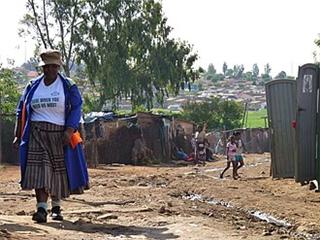
The Union shaped twentieth-century South Africa and much of southern Africa. Its laws on land, labour and residence created the legal framework that the National Party extended into apartheid after 1948, and the division of land under the Natives Land Act of 1913 became the basis of the later Bantustans. Organised resistance also began under the Union: the South African Native National Congress, renamed the African National Congress in 1923, was founded at Bloemfontein in 1912; Clements Kadalie’s Industrial and Commercial Workers’ Union organised tens of thousands of workers in the 1920s; and in the 1950s the ANC and its allies ran the Defiance Campaign of 1952 and adopted the Freedom Charter at Kliptown in 1955. Gandhi developed his method of satyagraha, non-violent resistance, among South African Indians before returning to India. Internationally, Smuts helped shape the League of Nations and is credited with drafting the preamble to the United Nations Charter in 1945, yet the Union’s refusal to place South West Africa under UN trusteeship and its racial laws made it a target of growing criticism at the United Nations. As a leading dominion it also took part in the evolution of the British Empire into the Commonwealth.
Decline & Fall

The Union did not collapse; it was transformed into a republic by the Afrikaner nationalists who had governed it since 1948. Under J. G. Strijdom (1954–1958) and Hendrik Verwoerd (from 1958) the National Party deepened apartheid, removed Coloured voters from the common roll in 1956 after a long constitutional struggle, and planned separate ethnic ‘homelands’ under the Promotion of Bantu Self-Government Act of 1959. On 21 March 1960 police at Sharpeville fired on a crowd protesting against the pass laws, killing 69 people; the government declared a state of emergency and banned the ANC and the Pan Africanist Congress. Verwoerd then held a referendum of white voters on 5 October 1960, in which about 52 per cent voted for a republic. At the Commonwealth Prime Ministers’ Conference in London in March 1961, faced with criticism of apartheid from other members, Verwoerd withdrew South Africa’s application to remain in the Commonwealth. On 31 May 1961 the Union of South Africa became the Republic of South Africa, with a state president, C. R. Swart, in place of the governor-general and the British monarch. Its territory, institutions and racial laws passed unchanged to the republic.
The Union of South Africa joined four British colonies into a self-governing dominion that became Africa’s strongest industrial economy and an ally of Britain in both world wars, while its land, labour and franchise laws built the legal structure of segregation that the National Party turned into apartheid after 1948.
References
- Dubow, S. (1989) Racial Segregation and the Origins of Apartheid in South Africa, 1919–36. Basingstoke: Macmillan.
- Giliomee, H. (2003) The Afrikaners: Biography of a People. Charlottesville: University of Virginia Press.
- Hancock, W.K. (1962) Smuts: The Sanguine Years, 1870–1919. Cambridge: Cambridge University Press.
- Thompson, L.M. (1960) The Unification of South Africa, 1902–1910. Oxford: Clarendon Press.
- Thompson, L. (2001) A History of South Africa. 3rd edn. New Haven: Yale University Press.
Connections
Open the full connections map →