Central & East Asia
Republic of China
At a glance
- Founded in 1912 after the Xinhai Revolution, it ended more than two thousand years of imperial rule in China.
- Under Chiang Kai-shek’s Nationalists it reunified much of China in 1928 and resisted Japan from 1937 to 1945.
- After losing the civil war in 1949 it moved to Taiwan, where martial-law rule gave way to democracy in the 1990s.
Rise & Fall
- 1911The Wuchang Uprising on 10 October begins the Xinhai Revolution
- 1912Sun Yat-sen becomes provisional president at Nanjing; the last Qing emperor abdicates
- 1928The Northern Expedition takes Beijing and the Nationalists reunify much of China
- 1937War with Japan begins after the Marco Polo Bridge Incident
- 1949Defeated in the civil war, the government moves to Taipei
- 1971UN Resolution 2758 transfers China’s seat to the People’s Republic
- 1987Martial law on Taiwan is lifted after 38 years
- 1996First direct presidential election, won by Lee Teng-hui
Foundation
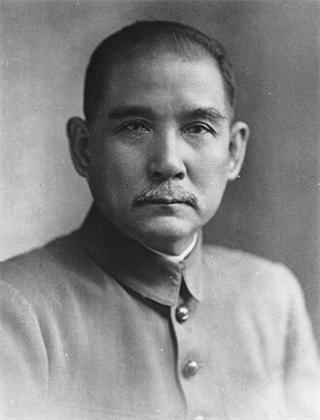
The Republic of China grew out of the revolutionary movement against the Qing Empire led by Sun Yat-sen, whose Tongmenghui, or Revolutionary Alliance, was founded in Tokyo in 1905. On 10 October 1911 an army mutiny at Wuchang, the Wuchang Uprising, set off the Xinhai Revolution, and within weeks most southern and central provinces had declared their independence from Beijing. Delegates of the rebel provinces met at Nanjing, and on 1 January 1912 Sun Yat-sen was inaugurated there as provisional president of the new republic. The revolutionaries lacked the strength to defeat the Qing’s Beiyang Army, so Sun agreed to stand aside in favour of its commander, Yuan Shikai, if he secured the dynasty’s abdication. On 12 February 1912 the six-year-old Xuantong Emperor, Puyi, abdicated, ending more than two thousand years of imperial rule, and in March Yuan was inaugurated as provisional president in Beijing under a Provisional Constitution. In the elections of 1912–13 Sun’s new Kuomintang, the Nationalist Party, won the largest share of seats, but its parliamentary leader Song Jiaoren was assassinated in March 1913, and Yuan crushed the ‘Second Revolution’ that followed. The republic thus began with a parliamentary framework that its first president quickly set aside, and in 1915–16 Yuan even tried to make himself emperor.
Socioeconomy
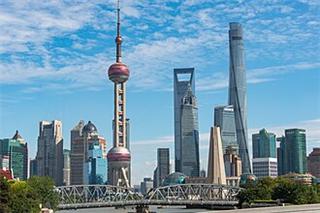
Republican China remained an overwhelmingly agrarian society, in which most of a population of more than 400 million lived as farmers and tenants, often burdened by rents, debt, banditry and the levies of local armies. Modern industry, banking and publishing were concentrated in the treaty ports, above all Shanghai, where foreign concessions, Chinese entrepreneurs and a new urban middle class shaped a commercial culture of department stores, newspapers and cinema. Intellectual life was transformed by the New Culture Movement, which promoted science, democracy and writing in the vernacular, championed by Hu Shi and by the writer Lu Xun. On 4 May 1919 students in Beijing protested against the transfer of German rights in Shandong to Japan at the Paris Peace Conference, and the May Fourth Movement fed modern Chinese nationalism and, in 1921, the founding of the Chinese Communist Party. During the ‘Nanjing decade’ the Nationalist government built roads and railways, recovered tariff autonomy and introduced a national paper currency, the fabi, in 1935. War and hyperinflation in the 1940s wrecked much of this progress. On Taiwan after 1949, land reform culminating in the Land-to-the-Tiller programme of 1953, American aid and export-led manufacturing produced rapid growth, and by the 1990s the island was a leading producer of electronics and semiconductors.
Military
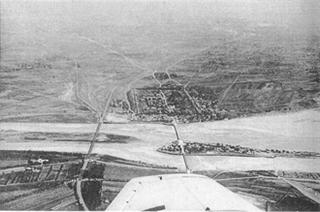
The early republic had no unified army: after Yuan Shikai’s death in 1916, commanders of the former Beiyang Army and provincial militarists fought a series of wars for control of Beijing and its revenues. With Soviet advice and arms Sun Yat-sen founded the Whampoa Military Academy near Guangzhou in 1924, headed by Chiang Kai-shek, whose National Revolutionary Army launched the Northern Expedition in 1926 and entered Beijing in 1928. Chiang turned on his Communist allies in the Shanghai massacre of April 1927 and fought them in a series of encirclement campaigns, forcing the Red Army onto the Long March in 1934–35. Full-scale war with Japan began after the Marco Polo Bridge Incident of July 1937. Chinese armies lost the Battle of Shanghai, Nanjing fell in December 1937 amid the Nanjing Massacre, and the government withdrew to Chongqing, where it held out until 1945 at a cost of millions of military and civilian lives. After Japan’s surrender the civil war resumed in 1946, and the Huaihai Campaign of 1948–49 destroyed the Nationalists’ best remaining forces. On Taiwan the armed forces held Kinmen at the Battle of Guningtou in October 1949 and through the Taiwan Strait crises of 1954–55 and 1958, backed from 1954 by a mutual defence treaty with the United States.
Governance & Law
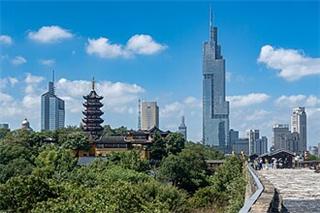
Sun Yat-sen’s Three Principles of the People, nationalism, democracy and the people’s livelihood, became the official doctrine of the Kuomintang, which Sun reorganised along Leninist lines in 1924. After 1928 the Nationalist government at Nanjing ruled through a period of one-party ‘political tutelage’ and adopted Sun’s design of five branches: the Executive, Legislative, Judicial, Examination and Control Yuan. In practice its authority beyond the lower Yangtze depended on bargains with regional militarists, and Chiang Kai-shek dominated both party and army. A constitution was adopted in December 1946 and took effect in 1947, but it was soon overridden by the Temporary Provisions against the Communist Rebellion of 1948. On Taiwan the government ruled under martial law from 1949 to 1987, following the suppression of the February 28 Incident of 1947 and through the years of political repression known as the White Terror. After Chiang Kai-shek’s death in 1975 and the brief presidency of Yen Chia-kan, his son Chiang Ching-kuo became president in 1978; he tolerated the founding of the Democratic Progressive Party in 1986 and lifted martial law in 1987. Under Lee Teng-hui the Temporary Provisions were abolished in 1991, the legislature was fully re-elected in 1992 and the president was directly elected from 1996, completing a peaceful transition to democracy.
Global & Regional Impact
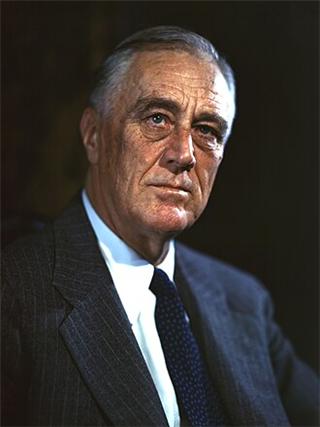
The Republic of China was one of the earliest republics in Asia, and its founding ended the imperial system that had governed China since 221 BCE. Its symbols and institutions, from the ‘Double Tenth’ national day to the five-branch constitution, carried Sun Yat-sen’s blend of Western republicanism and Chinese tradition, and Sun is honoured as ‘Father of the Nation’ in Taiwan and as a forerunner of the revolution in the People’s Republic of China. The Nationalist government ended most foreign privileges in China: the United States and Britain gave up extraterritoriality in 1943, and at the Cairo Conference that year Chiang Kai-shek met Franklin D. Roosevelt and Winston Churchill as an Allied leader. In 1945 the Republic became a founding member of the United Nations and one of the five permanent members of its Security Council. On Taiwan it became one of the ‘Four Asian Tigers’, and the Taiwan Semiconductor Manufacturing Company, founded in 1987, grew into the world’s largest contract chipmaker, placing the island at the heart of global technology supply chains. Its democratisation showed that a Chinese-speaking society could sustain competitive elections and a free press, and in 2019 it became the first place in Asia to legalise same-sex marriage. The question of its status remains among the most sensitive in international politics.
Into the Present

The Republic lost the mainland in 1949. As Communist armies advanced, the government moved from Nanjing to Guangzhou and Chongqing and, in December 1949, to Taipei, while between one and two million soldiers and civilians followed it to Taiwan, which Japan had ruled from 1895 to 1945. Chiang Kai-shek continued to claim to lead the legitimate government of all China, and with American support the Republic kept China’s seat at the United Nations until General Assembly Resolution 2758 transferred it to the People’s Republic in October 1971. Most states, including Japan in 1972 and the United States in 1979, then switched recognition to Beijing, although the United States kept unofficial ties and arms sales under the Taiwan Relations Act of 1979. Democratisation changed the character of the state: power passed peacefully to the opposition when Chen Shui-bian of the Democratic Progressive Party won the presidency in 2000, and later elections brought Ma Ying-jeou of the Kuomintang in 2008, Tsai Ing-wen, the first woman president, in 2016, and Lai Ching-te in 2024. The Republic of China today governs Taiwan, Penghu, Kinmen and Matsu, with about 23 million people, and is formally recognised by only a small number of states, while the People’s Republic claims the island and has not renounced the use of force.
The Republic of China ended two millennia of imperial rule, led China through warlordism and the war against Japan, and after losing the mainland in 1949 rebuilt itself on Taiwan, where an authoritarian one-party state became a wealthy democracy whose international status is still contested.
References
- Spence, J.D. (1990) The Search for Modern China. New York: W.W. Norton.
- Bergère, M.-C. (1998) Sun Yat-sen. Trans. J. Lloyd. Stanford: Stanford University Press.
- Taylor, J. (2009) The Generalissimo: Chiang Kai-shek and the Struggle for Modern China. Cambridge, MA: Belknap Press of Harvard University Press.
- Mitter, R. (2013) China’s War with Japan, 1937–1945: The Struggle for Survival. London: Allen Lane.
- Rubinstein, M.A. (ed.) (1999) Taiwan: A New History. Armonk, NY: M.E. Sharpe.
- Roy, D. (2003) Taiwan: A Political History. Ithaca: Cornell University Press.
Connections
Open the full connections map →