Sub-Saharan Africa
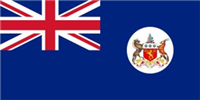
Cape Colony
At a glance
- Britain seized the Dutch Cape in 1795 to guard the route to India and kept it permanently from 1806.
- Frontier wars against the Xhosa, the end of slavery in 1834 and the Great Trek shaped the colony and the whole region.
- Self-governing from 1872 and enriched by diamonds, it became the Cape Province of the Union of South Africa in 1910.
Rise & Fall
- 1795British forces take the Cape after the Battle of Muizenberg
- 1806Britain reoccupies the colony after the Battle of Blaauwberg
- 1820About 4,000 British settlers arrive in the Eastern Cape
- 1834Slavery is abolished across the colony
- 1853A parliament is elected on a non-racial property franchise
- 1872The Cape receives responsible government under John Molteno
- 1890Cecil Rhodes becomes prime minister of the Cape
- 1910The colony becomes the Cape Province of the Union of South Africa
Foundation

The British Cape Colony was built on the settlement founded at Table Bay by the Dutch East India Company (VOC) in 1652. During the French Revolutionary Wars, after the Netherlands had become the French-allied Batavian Republic, Britain sent a fleet under Admiral George Elphinstone and troops under General James Craig to keep the sea route to India out of French hands. After the Battle of Muizenberg the company’s garrison surrendered in September 1795. The Peace of Amiens returned the Cape to the Batavian Republic in 1803, but a British force under General David Baird landed again and won the Battle of Blaauwberg on 8 January 1806, and the Netherlands formally ceded the colony in the Anglo-Dutch convention of 1814. Britain inherited a colony of some 25,000 settlers of Dutch, German and French Huguenot descent, a larger population of enslaved people brought from Asia and other parts of Africa, and Khoikhoi labourers, many of them dispossessed of their land. Its eastern border lay roughly along the Fish River, where settler farmers competed with Xhosa chiefdoms for grazing land. At first the Cape was valued above all as a naval station; only gradually did Britain take responsibility for its interior and frontier.
Socioeconomy

In the early nineteenth century the Cape economy rested on wine and wheat farming in the western districts, worked largely by slaves, and on livestock farming by trekboers in the interior. Britain ended the slave trade in 1807, and Ordinance 50 of 1828 freed the Khoikhoi from pass laws and gave them legal equality with settlers, a reform associated with the missionary John Philip. Slavery was abolished on 1 December 1834, followed by an apprenticeship that ended in 1838; compensation was paid in London and was widely felt by slave owners to be inadequate. Some 4,000 British immigrants, the 1820 Settlers, were placed in the Albany district of the Eastern Cape, and English replaced Dutch as the language of government and courts in the 1820s. From the 1830s merino wool from the Eastern Cape became the leading export, later joined by ostrich feathers and copper. The discovery of diamonds near the Orange River in 1867 and at Kimberley in 1871 transformed the economy, financing railways northwards and drawing migrant labour from across southern Africa. Cape Town grew into a cosmopolitan port with Muslim, Christian and Jewish communities, and the South African College, founded in 1829, became the University of Cape Town. By the 1904 census the colony had about 2.4 million inhabitants.
Military
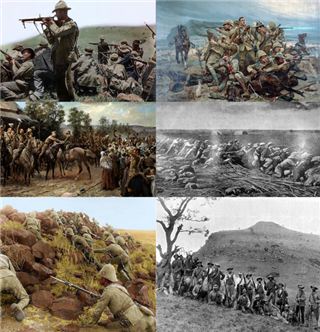
For most of its history the colony’s main wars were fought on its eastern frontier against the Xhosa. In the Fourth Frontier War of 1811–1812 British troops drove the Xhosa east of the Fish River and founded Grahamstown, which in 1819 survived an attack led by the Xhosa prophet Makhanda. The Sixth Frontier War of 1834–1836 led Governor Benjamin D’Urban to annex the Province of Queen Adelaide, an annexation reversed by the Colonial Office in 1836. The War of the Axe of 1846–1847 and the long war of 1850–1853 brought the creation of British Kaffraria between the Keiskamma and Kei rivers. After the Xhosa cattle-killing of 1856–1857, inspired by the prophecies of Nongqawuse, famine and resettlement broke Xhosa independence west of the Kei. The Ninth Frontier War of 1877–1878 completed the conquest. The Cape fought the Gun War of 1880–1881 when it tried to disarm the Basotho, a costly failure that led it to return Basutoland to direct British rule. Defence relied on British regular troops, colonial units such as the Cape Mounted Riflemen, settler commandos and African auxiliaries. During the Second Boer War of 1899–1902 Boer commandos invaded the Cape, besieging Kimberley and Mafeking, and several thousand Cape Afrikaners joined them as rebels.
Governance & Law
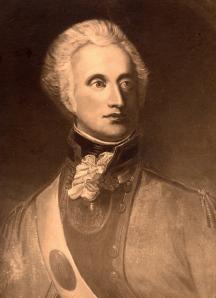
Until the 1820s the governor ruled almost without restraint. Lord Charles Somerset, governor from 1814 to 1826, controlled appointments, the press and land grants, and his autocracy led to the creation of an advisory council in 1825 and a charter of justice that introduced British-style courts while keeping Roman-Dutch law. Freedom of the press was conceded in the late 1820s. In 1853 the Cape received a representative parliament elected on a franchise based on property or income rather than race, so that some Coloured and African men could vote. Responsible government followed in 1872, with John Molteno as the first prime minister. The colony expanded steadily: British Kaffraria was annexed in 1866, Basutoland was attached from 1871 to 1884, Griqualand West was incorporated in 1880, the Transkeian territories were absorbed between 1879 and 1894, and British Bechuanaland in 1895. Cape politics was shaped by the Afrikaner Bond under Jan Hofmeyr and by English-speaking mining interests. Cecil Rhodes, prime minister from 1890 to 1896, raised the property qualification for voters through the Franchise and Ballot Act of 1892 and introduced the Glen Grey Act of 1894, which created individual land tenure and local councils in African areas. Sir George Grey, governor from 1854 to 1861, sought to assimilate the Xhosa of British Kaffraria through schools, hospitals and salaried headmen.
Global & Regional Impact

The Cape Colony laid many foundations of modern South Africa. The British occupation, the abolition of slavery and the Khoikhoi reforms helped provoke the Great Trek, in which several thousand Dutch-speaking farmers left the colony from 1835 to found republics in Natal, the Orange Free State and the Transvaal, the origin of the later conflict between Afrikaners and Britain. The frontier wars against the Xhosa set patterns of conquest, land loss and labour migration that shaped the Eastern Cape for generations. At the same time the Cape’s non-racial qualified franchise and its mission schools, such as Lovedale, produced the first generation of educated African leaders, among them the journalist John Tengo Jabavu, who influenced the early African National Congress. Afrikaans grew out of the Cape Dutch vernacular, and the Afrikaner nationalist movement had early roots in the colony. Diamond mining at Kimberley pioneered the compound system and the large mining houses, notably De Beers, that later dominated the gold fields of the Witwatersrand. The colony’s Roman-Dutch law, its parliament and its civil service were carried into the Union of South Africa, and Cape Town became the Union’s legislative capital. Rhodes’s ambitions, launched from the Cape, drove British expansion north of the Limpopo into the Rhodesias.
Decline & Fall
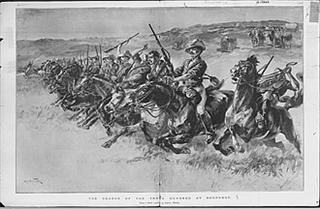
The colony’s political end came through unification rather than defeat. Rhodes’s involvement in the Jameson Raid of 1895–1896, an attempt to overthrow the government of the South African Republic, forced his resignation and deepened the divide between the Cape’s English-speaking and Afrikaner voters. Under the high commissioner Sir Alfred Milner, tensions with the Transvaal led to the Second Boer War of 1899–1902, in which the Cape served as Britain’s base and saw rebellion in its northern and western districts. After the British victory, the four colonies of the Cape, Natal, the Transvaal and the Orange River Colony moved towards union to manage railways, customs and the question of African rights in common. Delegates at the National Convention of 1908–1909, among them the Cape prime minister John X. Merriman, agreed a constitution that kept the Cape’s non-racial franchise within the province but allowed only white men to sit in the Union parliament. On 31 May 1910 the Cape Colony became the Cape Province of the Union of South Africa. Its franchise was later dismantled: African voters were removed from the common roll in 1936 and Coloured voters in 1956. The provinces of the Western, Eastern and Northern Cape created in 1994 still cover most of its territory.
The Cape Colony, held by Britain from 1795 and permanently from 1806, turned a Dutch refreshment station into the largest colony in southern Africa, and its frontier wars against the Xhosa, abolition of slavery, Great Trek, qualified non-racial franchise and diamond economy shaped the Union of South Africa formed in 1910.
References
- Elphick, R. and Giliomee, H. (eds) (1989) The Shaping of South African Society, 1652–1840. 2nd edn. Middletown, CT: Wesleyan University Press.
- Keegan, T. (1996) Colonial South Africa and the Origins of the Racial Order. Cape Town: David Philip.
- Mostert, N. (1992) Frontiers: The Epic of South Africa’s Creation and the Tragedy of the Xhosa People. London: Jonathan Cape.
- Peires, J.B. (1989) The Dead Will Arise: Nongqawuse and the Great Xhosa Cattle-Killing Movement of 1856–7. Johannesburg: Ravan Press.
- Rotberg, R.I. (1988) The Founder: Cecil Rhodes and the Pursuit of Power. New York: Oxford University Press.
- Ross, R. (1999) A Concise History of South Africa. Cambridge: Cambridge University Press.
Connections
Open the full connections map →