Inventions & Discoveries · Transport and navigation
Horseshoe
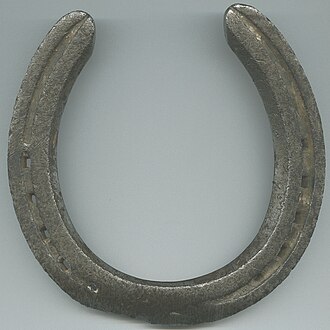
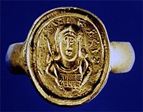
A horseshoe is a piece of equipment, usually nailed through the hoof wall, that protects a horse's hoof from wear. Its origin is uncertain, since worn iron was usually reforged: bronze shoes with apparent nail holes come from an Etruscan tomb of around 400 BCE, iron remnants from tombs in northeast China of the Goguryeo period dated to 414 CE, and a shoe with its nails from the tomb of the Frankish king Childeric I at Tournai. Written records of nailed shoes begin around 900 CE; by the Crusades horseshoes were widespread in Europe, and in China iron shoes became common under the Yuan dynasty.
On the inventions tree
- First known
- 414 CE
- Where
- Northeast China (Goguryeo tombs)
NoteFour bronze horseshoes with what seem to be nail holes, found in an Etruscan tomb of around 400 BCE, may be older, and Catullus's 'mule shoes' may mean the Roman hipposandal rather than a nailed shoe; there is no hard evidence that the Druids invented it.
See also





Cite this entry
- APA
- The Epoch Institute. (2026). Horseshoe. In The Epoch Institute Encyclopedia. https://the-epoch-institute.org/encyclopedia/horseshoe
- MLA
- “Horseshoe.” The Epoch Institute Encyclopedia, The Epoch Institute, 2026, https://the-epoch-institute.org/encyclopedia/horseshoe. Accessed .
- Chicago
- The Epoch Institute. “Horseshoe.” The Epoch Institute Encyclopedia. 2026. https://the-epoch-institute.org/encyclopedia/horseshoe.
- Harvard
- The Epoch Institute (2026) ‘Horseshoe’, The Epoch Institute Encyclopedia. Available at: https://the-epoch-institute.org/encyclopedia/horseshoe (Accessed: ).
Last reviewed October 2026Random entry ↻