Work / monument · text
Ségur Ordinance
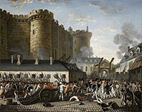
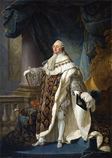
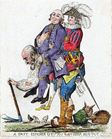
The Ségur Ordinance was a French regulation of 1781 that required candidates for officer commissions to prove four generations of nobility in the male line, or to be the son of an officer holding the Cross of Saint-Louis. Named after the minister of war Philippe Henri de Ségur, who had advised against it, it was approved by Louis XVI for the French infantry, cavalry and dragoons and extended in 1784 to the hussars, mounted chasseurs and foreign infantry regiments. Rich commoners and nobles of the robe could no longer buy their way in as officers. The Third Estate's outcry and the resentment of the robe nobility fed the crisis that led to the French Revolution.
See also
Cite this entry
- APA
- The Epoch Institute. (2026). Ségur Ordinance. In The Epoch Institute Encyclopedia. https://the-epoch-institute.org/encyclopedia/segur-ordinance
- MLA
- “Ségur Ordinance.” The Epoch Institute Encyclopedia, The Epoch Institute, 2026, https://the-epoch-institute.org/encyclopedia/segur-ordinance. Accessed .
- Chicago
- The Epoch Institute. “Ségur Ordinance.” The Epoch Institute Encyclopedia. 2026. https://the-epoch-institute.org/encyclopedia/segur-ordinance.
- Harvard
- The Epoch Institute (2026) ‘Ségur Ordinance’, The Epoch Institute Encyclopedia. Available at: https://the-epoch-institute.org/encyclopedia/segur-ordinance (Accessed: ).
Last reviewed October 2026Random entry ↻