Inventions & Discoveries · Medicine and health
Stethoscope
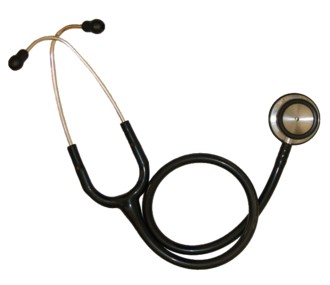
The stethoscope is a medical device for listening to the sounds of the heart, lungs and intestines and to blood flow, a practice called auscultation. René Laennec invented it in 1816 at the Necker-Enfants Malades Hospital in Paris: a monaural wooden tube, devised after he found that a rolled piece of paper carried heart sounds without his ear touching the patient's chest. Golding Bird described one with a flexible tube in 1840, and Arthur Leared made a binaural stethoscope in 1851. George Philip Cammann's design of the following year, with a plug for each ear, has remained essentially unchanged since.
On the inventions tree
- First known
- 1816
- Where
- Paris
- Credited to
- René Laennec
See also

Cite this entry
- APA
- The Epoch Institute. (2026). Stethoscope. In The Epoch Institute Encyclopedia. https://the-epoch-institute.org/encyclopedia/stethoscope
- MLA
- “Stethoscope.” The Epoch Institute Encyclopedia, The Epoch Institute, 2026, https://the-epoch-institute.org/encyclopedia/stethoscope. Accessed .
- Chicago
- The Epoch Institute. “Stethoscope.” The Epoch Institute Encyclopedia. 2026. https://the-epoch-institute.org/encyclopedia/stethoscope.
- Harvard
- The Epoch Institute (2026) ‘Stethoscope’, The Epoch Institute Encyclopedia. Available at: https://the-epoch-institute.org/encyclopedia/stethoscope (Accessed: ).
Last reviewed October 2026Random entry ↻