Encyclopedia: S
2,773 entries under S · page 25 of 28: Stuart Munro-Hay – Suleyman Shah of Germiyan
- Stuart Munro-HayPersonStuart Munro-Hay was a British historian and archaeologist who specialised in the history of Aksum and Ethiopia.
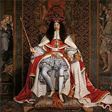 Stuart RestorationEventThe Stuart Restoration was the return of the monarchy in England, Scotland and Ireland in 1660, when Charles II came back from exile after the collapse of the…
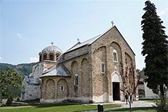 Studenica MonasteryPlaceStudenica Monastery is a Serbian Orthodox monastery in central Serbia, founded by Stefan Nemanja around 1190 and his burial place.
 Sture familyPeople / groupThe Sture family was a Swedish noble family whose members governed Sweden as regents during the late Kalmar Union.
- Sturlung AgeWar · c. 1220–1264The Sturlung Age was a period of violent conflict in Iceland in the 13th century, named after the powerful Sturlung family.
 SturmiPersonSturmi, or Sturm, was a Bavarian-born disciple of Saint Boniface and the founder and first abbot of the abbey of Fulda, established in 744.
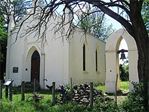 StutterheimPlaceStutterheim is a small town in the Eastern Cape of South Africa, in the former British Kaffraria.
 StuttgartPlaceStuttgart is the capital of the German state of Baden-Württemberg, lying in a basin beside the Neckar.
 StyriaPlaceStyria (Steiermark) is a mountainous region of south-eastern Austria, with its capital at Graz.
- Su ChuoPersonSu Chuo (498–546) was a Chinese official who served as chief adviser to Yuwen Tai, the regent of the Western Wei.
- Su DingfangPersonSu Dingfang (592–667) was a general of the Tang dynasty.
- Su JunPersonSu Jun was a general of the Eastern Jin dynasty who led a rebellion in 327–329.
- Su WeiPersonSu Wei was a chancellor of the Sui dynasty of China.
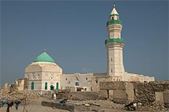 SuakinPlaceSuakin is a port town on the Red Sea coast of Sudan, built largely on a small coral island.
 Sub-Saharan AfricaPlaceSub-Saharan Africa is the part of Africa south of the Sahara.
- SubahInstitutionA subah was a province of the Mughal Empire, governed by a subahdar.
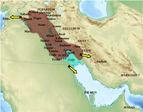 SubartuPlaceSubartu was an ancient name for a region of northern Mesopotamia.
- SubathuPlaceSubathu is a hill cantonment in Solan district, Himachal Pradesh, India, near the former princely state of Kuthar.
- SubedarInstitutionA subedar was a provincial governor or military officer in India.
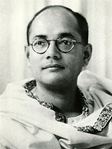 Subhas Chandra BosePersonSubhas Chandra Bose was an Indian nationalist leader, twice president of the Indian National Congress.
 Subhi BarakatPersonSubhi Barakat was a Syrian politician from Antioch who led the Syrian Federation created by the French mandate authorities in 1922.
 Šubić familyPeople / groupThe Šubić of Bribir were a Croatian noble family from Bribir in northern Dalmatia, one of the twelve noble tribes of Croatia.
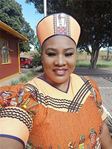 Subiya peoplePeople / groupThe Subiya are a Bantu people living along the Chobe and Zambezi rivers where Zambia, Namibia and Botswana meet.
- Sublime PorteInstitutionThe Sublime Porte was the name given to the central government of the Ottoman Empire, after the gate leading to the grand vizier's offices in Istanbul.
 SuboticaPlaceSubotica is a city in northern Serbia, in the Bačka part of Vojvodina, close to the Hungarian border.
- SubsidyTermA subsidy is a payment made by a state to support another party.
 SubutaiPersonSubutai was one of the leading generals of Genghis Khan and his successor Ögedei.
- Succession crisisHistorical factorA succession crisis refers to the recurring pattern in which disputes over who should inherit power weakened empires.
 SuceavaPlaceSuceava is a city in north-eastern Romania, in the historical region of Bukovina.
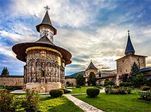 Sucevița MonasteryWork / monumentSucevița Monastery is a fortified Orthodox monastery in Suceava County, north-eastern Romania, founded in the 1580s by the Movilă family.
- Suchet SinghPersonSuchet Singh was one of the Dogra brothers who held powerful positions at the Lahore court of the Sikh Empire.
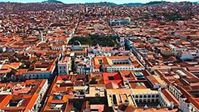 SucrePlaceSucre is the constitutional capital of Bolivia, founded by the Spanish in 1538 as La Plata and also called Chuquisaca.
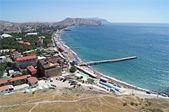 SudakPlaceSudak is a town on the south-east coast of the Crimea, on the Black Sea.
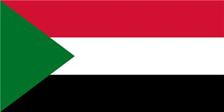 SudanPlaceSudan refers both to the modern country on the Nile and, historically, to the bilad al-Sudan, the broad belt of West and Central African savannah south of the Sahara.
 Sudan National MuseumInstitutionThe Sudan National Museum in Khartoum, opened in 1971, is the largest museum in Sudan.
 Sudanese Union – African Democratic RallyPeople / groupThe Sudanese Union – African Democratic Rally (US-RDA) was a political party in French Sudan, now Mali, founded in 1946 as the local section of the African Democratic…
- Sudarshan ShahPersonSudarshan Shah was the ruler of Garhwal who regained part of his family's kingdom after the Anglo-Nepalese War.
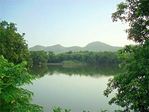 Sudarshana LakeWork / monumentSudarshana Lake was an ancient reservoir near Junagadh in Saurashtra, Gujarat, built under the Maurya emperor Chandragupta by his governor Pushyagupta and improved…
 SuddhodanaPersonSuddhodana was a chief of the Shakya clan and the father of Siddhartha Gautama, the Buddha.
 Sudebnik of 1497Work / monumentThe Sudebnik of 1497 was the first law code of the unified Muscovite state, issued by Ivan III.
 Sudeten German PartyPeople / groupThe Sudeten German Party was the political party of the German minority in Czechoslovakia, founded by Konrad Henlein in 1933 as the Sudeten German Home Front and…
 Sudeten GermansPeople / groupThe Sudeten Germans were the German-speaking inhabitants of Bohemia, Moravia and Czech Silesia, about three million people in interwar Czechoslovakia.
 SudetenlandPlaceThe Sudetenland was the name used in the 20th century for the border regions of Bohemia, Moravia and Czech Silesia inhabited mainly by German speakers.
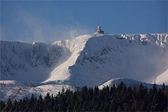 SudetesPlaceThe Sudetes are a mountain range of central Europe along the border of the Czech Republic and Poland, with a small part in Germany, stretching about 300 km from Lusatia…
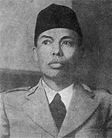 SudirmanPersonSudirman was the first commander-in-chief of the Indonesian armed forces during the war of independence against the Netherlands.
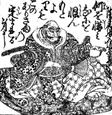 Sue HarukataPersonSue Harukata was a senior retainer of the Ōuchi clan of western Japan who rebelled against his lord Ōuchi Yoshitaka in 1551, forcing him to suicide and installing a…
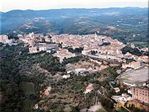 Suessa AuruncaPlaceSuessa Aurunca was a town of the Aurunci in northern Campania, now Sessa Aurunca.
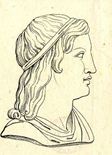 SuetoniusPersonSuetonius was a Roman biographer and imperial official who served as a secretary to the emperors Trajan and Hadrian.
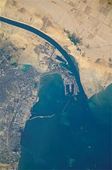 Suez CanalWork / monumentThe Suez Canal is a sea-level waterway across the Isthmus of Suez in Egypt, linking the Mediterranean with the Red Sea.
 Suez CrisisCrisis · War · 1956The Suez Crisis was the international crisis of 1956 in which Britain, France and Israel invaded Egypt after Gamal Abdel Nasser nationalised the Suez Canal.
- SufetulaPlaceSufetula, modern Sbeitla in central Tunisia, was a Roman town that flourished from the 2nd century CE, known for its well-preserved forum with three temples to the…
- SuffeteInstitutionA suffete was one of the chief elected magistrates of Carthage and other Phoenician cities.
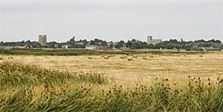 SuffolkPlaceSuffolk is a county of East Anglia in eastern England, with Ipswich as its county town.
- SufismReligion / ideaSufism is the mystical tradition of Islam, which seeks direct personal experience of God through devotion, prayer and spiritual discipline, often within orders led by…
- SufriyyaReligion / ideaThe Sufriyya were a moderate branch of the Kharijites, the early Islamic movement that rejected both Ali and the Umayyads, which emerged in Iraq in the late 7th century.
- Sugar plantationTermA sugar plantation is a large agricultural estate growing sugarcane for sugar production, typically using intensive labour.
- SugarcaneTermSugarcane is a tall tropical grass whose stalks are crushed to produce sugar.
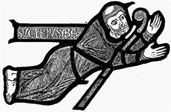 SugerPersonSuger was abbot of Saint-Denis near Paris from 1122 and an adviser to the French kings Louis VI and Louis VII, serving as regent while Louis VII was on the Second…
 Sugita GenpakuPersonSugita Genpaku was a Japanese physician and scholar of rangaku, or Dutch learning.
- Sugu-OkamotoPlaceSugu-Okamoto is an archaeological site in Kasuga, Fukuoka Prefecture, Japan, regarded as the centre of the Yayoi-period state of Na.
 SuhartoPersonSuharto was an Indonesian army general who took power after the failed coup of 1965, during mass killings of alleged communists, and was president from 1967 to 1998.
 SuhlPlaceSuhl is a town in the Thuringian Forest in southern Thuringia, Germany, known since the 16th century for gun-making and metalworking.
- SuhungmungPersonSuhungmung (r. 1497–1539) was a king of the Ahom kingdom in Assam, also known by the Hindu title Swarganarayan and as Dihingia Raja.
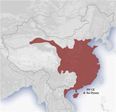 Sui dynastyStateThe Sui dynasty reunified China in 581–589 after centuries of division and ruled until 618.
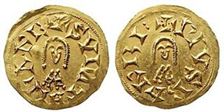 SuintilaPersonSuintila was king of the Visigoths from 621 to 631.
 SuitbertPersonSuitbert was an Anglo-Saxon missionary who came to Frisia with Willibrord around 690 and was consecrated a bishop for the mission.
 SuiyuanPlaceSuiyuan was a province of the Republic of China in what is now central Inner Mongolia, with its capital at Guisui, modern Hohhot.
 SuizhouPlaceSuizhou is a city in northern Hubei, on the corridor between the Han River valley and the Huai plain.
- Sujan Singh of ShahpuraPersonSujan Singh of Shahpura was a Rajput of the Ranawat branch of the Sisodia house of Mewar.
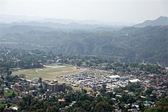 Sujanpur TiraPlaceSujanpur Tira is a town on the Beas river in the Hamirpur district of Himachal Pradesh, India.
 SukaphaaPersonSukaphaa was a Tai prince from Mong Mao in the Shan region who founded the Ahom kingdom of Assam.
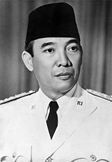 SukarnoPersonSukarno was the leader of the Indonesian independence movement and the first president of Indonesia.
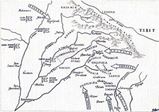 Sukerchakia mislPeople / groupThe Sukerchakia misl was one of the Sikh confederacies of 18th-century Punjab, based at Gujranwala and founded by Charat Singh.
- Suket SatyagrahaEventThe Suket Satyagraha was a popular movement in the princely state of Suket, in the hills of present-day Himachal Pradesh, in February 1948.
 SukhraPersonSukhra, also called Zarmihr, was a Sasanian nobleman of the House of Karen who dominated the Iranian court in the 480s.
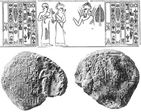 SukkalInstitutionSukkal was a title of high office in ancient Elam, originally meaning envoy or minister.
 SukkalmahInstitutionSukkalmah, meaning grand regent, was the title of the supreme ruler of Elam during the Sukkalmah period.
- Sukkalmah periodReligion / ideaThe Sukkalmah period was the era of Elamite history c. 1970–1500 BCE, when Elam was ruled by grand regents called sukkalmahs.
 SukkurPlaceSukkur is a city on the right bank of the Indus in Sindh province, Pakistan, opposite Rohri.
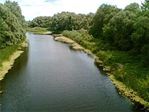 Sula (river)PlaceThe Sula is a river of north-eastern Ukraine, about 360 km long, a left tributary of the Dnieper.
- Sulaiman Badrul Alam ShahPersonSulaiman Badrul Alam Shah was sultan of Johor and Riau from 1722 to 1760.
- Sulaimanu of KanoPersonSulaimanu was the first Fulani emir of Kano in northern Nigeria, ruling from 1807 to 1819.
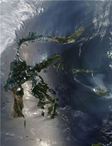 SulawesiPlaceSulawesi is a large island in eastern Indonesia.
- Sulayhid dynastyStateThe Sulayhid dynasty was an Isma'ili Shia dynasty that ruled much of Yemen from about 1047 to 1138 as allies of the Fatimid caliphs of Cairo.
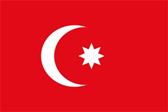 Sulayman Abu Layla PashaPersonSulayman Abu Layla Pasha was the first Mamluk governor of Baghdad, ruling from 1749 to 1762.
 Sulayman al-BaruniPersonSulayman al-Baruni was an Ibadi Berber scholar and politician from the Nafusa Mountains of Libya.
- Sulayman BalPersonSulayman Bal was a Fulbe Muslim cleric of Futa Toro in the middle Senegal valley who led the Torodbe clerical movement against the Denianke kings and the Moorish…
- Sulayman ibn HudPersonSulayman ibn Hud, known as al-Musta'in, was the founder of the Banu Hud dynasty of the Taifa of Zaragoza.
- Sulayman ibn Muhammad Al HamidPersonSulayman ibn Muhammad Al Hamid was emir of the Banu Khalid, who ruled al-Hasa in eastern Arabia, in the mid-eighteenth century.
- Sulayman ibn Sulayman al-NabhaniPersonSulayman ibn Sulayman al-Nabhani was a ruler of the Nabhani dynasty of Oman, remembered as a poet-king.
 SulaymaniyahPlaceSulaymaniyah is a city in the Kurdistan Region of north-eastern Iraq, near the Iranian border.
 Suleiman ibn QutalmishPersonSuleiman ibn Qutalmish was a Seljuk prince who founded the Sultanate of Rum in Anatolia.
- Suleiman SolongPersonSuleiman Solong was the founder of the Darfur Sultanate in the early seventeenth century.
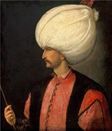 Suleiman the MagnificentPersonSuleiman the Magnificent, known in Turkish as Kanuni, the Lawgiver, was Ottoman sultan from 1520 to 1566.
- SulejaPlaceSuleja is a town in Niger State, Nigeria, just north of the Federal Capital Territory.
 Sulejman VokshiPersonSulejman Vokshi was an Albanian military leader from Gjakova and a commander of the League of Prizren, formed in 1878 to resist the transfer of Albanian-inhabited lands…
 Süleyman AskerîPersonSüleyman Askerî was an Ottoman officer of the Special Organisation.
- Suleyman II of EshrefPersonSuleyman II was the last bey of the Eshrefids, a Turkmen beylik centred on Beyşehir in central Anatolia.
- Süleyman Pasha (Candarid)PersonSüleyman Pasha was a ruler of the Candarid beylik in northern Anatolia in the early 14th century, son of its founder Şemseddin Yaman Candar.
- Suleyman Shah of GermiyanPersonSuleyman Shah was a bey of Germiyan, a Turkish principality centred on Kütahya in western Anatolia.