Encyclopedia: S
2,800 entries under S · page 28 of 28: Sviatopolk I of Kiev – Słupsk
- Sviatopolk I of KievPersonSviatopolk I, called the Accursed, was a son of Vladimir the Great who ruled Turov in his father's lifetime.
 Sviatopolk II of KievPersonSviatopolk II Iziaslavich was Grand Prince of Kiev from 1093 until his death.
 Sviatoslav I of KievPersonSviatoslav I of Kiev was a prince of Kievan Rus in the tenth century.
 Sviatoslav II of KievPersonSviatoslav II (1027–1076) was a son of Yaroslav the Wise who received Chernigov under his father's will in 1054.
- Sviatoslav VsevolodovichPersonSviatoslav Vsevolodovich (1196–1252) was a son of Vsevolod the Big Nest of Vladimir-Suzdal and prince of Yuryev-Polsky.
- Sviatoslav's campaign against the KhazarsCampaign · 960sSviatoslav's campaign against the Khazars was a series of military expeditions by the prince of Kievan Rus in the 960s.
 Sviatoslav's invasion of BulgariaWar · 968–971Sviatoslav's invasion of Bulgaria was the campaign of 968–971 in which Sviatoslav I of Kiev, first invited by the Byzantines, conquered much of the First Bulgarian…
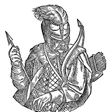 ŠvitrigailaPersonŠvitrigaila was a son of Algirdas and Grand Duke of Lithuania from 1430 to 1432.
- Swa Saw KePersonSwa Saw Ke was king of Ava in Upper Burma from 1367 to 1400, consolidating the kingdom founded by Thado Minbya in 1365.
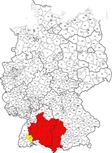 SwabiaPlaceSwabia is a historic region of south-western Germany, taking its name from the Suebi and corresponding roughly to the land settled by the Alemanni between the upper…
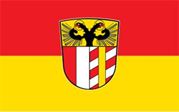 Swabia (Bavaria)PlaceSwabia is an administrative region of Bavaria, Germany, often called Bavarian Swabia, with its capital at Augsburg.
 Swabian CircleInstitutionThe Swabian Circle was one of the Imperial Circles into which the Holy Roman Empire was divided from 1500 to organise defence, coinage and peace-keeping.
 Swabian JuraPlaceThe Swabian Jura, or Swabian Alb, is a limestone upland in south-western Germany, running about 200 km from the Black Forest to the Ries crater.
 Swabian LeaguePeople / groupThe Swabian League was an alliance of princes, knights and imperial cities in south-western Germany, founded at Esslingen in 1488 with the backing of Emperor Frederick…
 Swabian WarWar · 1499The Swabian War was fought in 1499 between the Old Swiss Confederacy and its allies and the Habsburg emperor Maximilian I with the Swabian League.
 Swabian-Alemannic FastnachtEventSwabian-Alemannic Fastnacht, or Fasnet, is the traditional carnival of south-western Germany, northern Switzerland, Alsace and Vorarlberg, held before Lent.
 SwahiliPeople / groupThe Swahili are a people of the East African coast, whose culture developed through interaction between Bantu-speaking Africans and Arab and Persian traders.
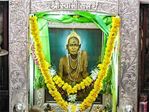 Swami SamarthPersonSwami Samarth was a Hindu saint who lived at Akkalkot in western India from about 1856 until his death in 1878.
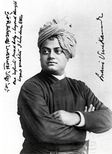 Swami VivekanandaPersonSwami Vivekananda was an Indian Hindu monk, a disciple of Ramakrishna, who did much to introduce Vedanta and yoga to the West.
 SwanseaPlaceSwansea is a coastal city in south Wales at the mouth of the River Tawe.
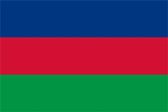 SWAPOPeople / groupSWAPO, the South West Africa People's Organisation, is the Namibian liberation movement founded in 1960.
- SwargadeoTermSwargadeo, "lord of heaven", was the title of the kings of the Ahom kingdom of Assam, rendering the Tai Ahom title Chao-pha.
- Swarup Singh of MewarPersonSwarup Singh was Maharana of Mewar from 1842 to 1861.
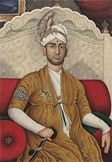 Swathi ThirunalPersonSwathi Thirunal Rama Varma (1813–1846) was Maharaja of Travancore from 1829 to 1846.
- SwatiPeople / groupThe Swati, or Swazi, are a Nguni-speaking people of southern Africa.
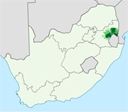 Swazi languageTermSwazi, or siSwati, is a Bantu language of the Nguni group, closely related to Zulu.
- Swaziland ConventionsTreaty · 1890–1894The Swaziland Conventions were three agreements between Britain and the South African Republic (Transvaal) on the status of Swaziland, concluded in 1890, 1893 and 1894.
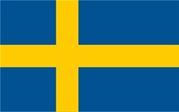 SwedenPlaceSweden is a kingdom in northern Europe on the eastern side of the Scandinavian Peninsula.
 Swedish AcademyInstitutionThe Swedish Academy was founded by King Gustav III in 1786 to promote the purity and strength of the Swedish language, on the model of the Académie française.
 Swedish East India CompanyInstitutionThe Swedish East India Company was a chartered trading company founded in 1731 and based in Gothenburg.
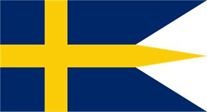 Swedish EmpireStateThe Swedish Empire refers to the period, known in Swedish as Stormaktstiden or the Age of Great Power, when Sweden dominated the Baltic region in the seventeenth and…
 Swedish EstoniaStateSwedish Estonia was the Duchy of Estonia under the Swedish crown from 1561, when Reval and the northern Estonian nobility submitted to Eric XIV during the collapse of…
 Swedish–Norwegian WarWar · 1814The Swedish–Norwegian War was a short war in July and August 1814 between Sweden and Norway, which had declared independence after the Treaty of Kiel transferred it…
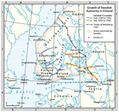 Swedish–Novgorodian WarsWar · 12th–14th centuryThe Swedish–Novgorodian Wars were a series of conflicts between Sweden and the Novgorod Republic over Finland, Karelia and the trade routes of the Gulf of Finland and…
- Sweet Dew IncidentEventThe Sweet Dew Incident was a failed attempt in 835 by the Tang emperor Wenzong and his officials Li Xun and Zheng Zhu to destroy the power of the palace eunuchs.
 Sweet potatoTermThe sweet potato is a starchy root crop native to the Americas that spread across the world after the sixteenth century through Spanish and Portuguese trade networks.
 Sweyn ForkbeardPersonSweyn Forkbeard (c. 960–1014) was King of Denmark from about 986, after rebelling against his father Harald Bluetooth, and from 1000 also overlord of Norway.
 Sweyn HaakonssonPersonSweyn Haakonsson was a Norwegian earl of Lade, a son of Håkon Sigurdsson.
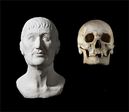 Sweyn II of DenmarkPersonSweyn II Estridsen was King of Denmark from 1047 to 1076, a nephew of Cnut the Great through his mother Estrid.
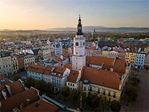 ŚwidnicaPlaceŚwidnica is a town in Lower Silesia, Poland, at the foot of the Sudetes.
 Świętopełk II, Duke of PomeraniaPersonŚwiętopełk II the Great (c. 1195–1266) was Duke of Pomerelia, the most powerful of the Samborides.
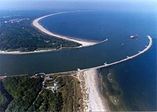 ŚwinaPlaceThe Świna (German: Swine) is a strait in north-western Poland connecting the Szczecin Lagoon with the Baltic Sea between the islands of Usedom and Wolin.
 SwindonPlaceSwindon is a large town in Wiltshire, south-west England.
 Swiss Banking Act of 1934Work / monumentThe Swiss Banking Act of 1934, the Federal Act on Banks and Savings Banks, was the first federal law regulating Swiss banks, passed after the banking crises of the…
- Swiss Federal CouncilInstitutionThe Swiss Federal Council is the seven-member executive of the Swiss Confederation, created by the federal constitution of 1848.
 Swiss GuardsPeople / groupSwiss Guards were Swiss mercenary units serving as bodyguards and palace troops at foreign courts from the late fifteenth century.
 Swiss peasant war of 1653Revolt · 1653The Swiss peasant war of 1653 was a revolt of the rural subjects of Lucerne, Bern, Solothurn and Basel against their patrician city governments, set off by a…
 SwitzerlandPlaceSwitzerland is a mountainous country in central Europe whose territory formed part of the Holy Roman Empire in the medieval period.
 Sword of GoujianWork / monumentThe Sword of Goujian is a bronze sword of the State of Yue found in 1965 in a Chu tomb near Jiangling in Hubei.
 SyagriusPersonSyagrius was the last Roman ruler in northern Gaul, governing the region around Soissons after the death of his father Aegidius in 464 or 465.
- Syair Awang SemaunWork / monumentThe Syair Awang Semaun is a traditional epic poem of Brunei recounting the deeds of the legendary hero Awang Semaun and his brothers, among them Awang Alak Betatar…
- Syamsuddin of PasaiPersonSyamsuddin of Pasai, also called Shams al-Din al-Sumatrani, was a Sufi scholar and the leading religious authority at the court of Iskandar Muda in Aceh.
- Syarif Abdurrahman AlkadriePersonSyarif Abdurrahman Alkadrie (c. 1742–1808) was a trader of Hadrami Arab descent, son of a religious teacher, who founded Pontianak in western Borneo in 1771.
 Syarif Kasim IIPersonSyarif Kasim II (1893–1968) was the twelfth and last Sultan of Siak Sri Indrapura in Sumatra, reigning from 1915.
- Syarif Muhammad AlkadriePersonSyarif Muhammad Alkadrie was sultan of Pontianak in West Kalimantan, Indonesia, from 1895 until his death in 1944.
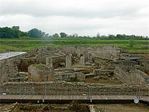 SybarisPlaceSybaris was a Greek city on the Gulf of Taranto in southern Italy, founded by Achaean colonists around 720 BCE and so wealthy that its name became a byword for luxury.
- Sydir BilyiPersonSydir Bilyi (1735–1788) was a Zaporozhian Cossack officer who, after the destruction of the Zaporozhian Sich in 1775, became the first ataman of the Host of Loyal…
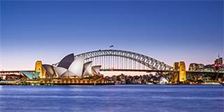 SydneyPlaceSydney is the capital of New South Wales and the largest city in Australia, on Port Jackson on the south-east coast.
 Sydney CovePlaceSydney Cove is a small bay on the southern shore of Port Jackson, at the heart of modern Sydney, Australia.
 Sydney, Nova ScotiaPlaceSydney is the main town of Cape Breton Island in Nova Scotia, Canada.
- Syed Hussain JamalullailPersonSyed Hussain Jamalullail (died 1873) was the founder of the ruling house of Perlis in the northern Malay Peninsula.
- SyennesisTermSyennesis was the name, or perhaps the title, of the native kings of Cilicia in southern Anatolia during the period of Achaemenid rule.
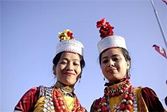 SyiemTermSyiem is the title of the chief of a traditional Khasi state, or hima, in the hills of present-day Meghalaya, India.
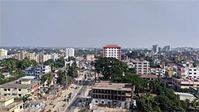 SylhetPlaceSylhet is a city in north-eastern Bangladesh on the Surma river and the centre of Sylhet Division.
 SylosonPersonSyloson was a brother of Polycrates, tyrant of Samos, who banished him.
- Sylvain RouxPersonSylvain Roux (died 1823) was a French colonial agent who led the reoccupation of Île Sainte-Marie, off the north-east coast of Madagascar, from 1818 and became its…
 Sylvanus OlympioPersonSylvanus Olympio (1902–1963) was a Togolese businessman and nationalist who led French Togoland to independence.
- Sylvester PatentWork / monumentThe Sylvester Patent was a set of decrees issued by Emperor Franz Joseph I on New Year's Eve, 31 December 1851, which revoked the Austrian constitution of March 1849…
- SymePlaceSyme (Symi) is a small, rocky Greek island in the Dodecanese, north of Rhodes and close to the coast of Turkey.
 Symon PetliuraPersonSymon Petliura (1879–1926) was a Ukrainian journalist and socialist politician who became the leading figure of the Ukrainian People's Republic.
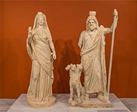 SyncretismReligion / ideaSyncretism is the blending of different religious, philosophical or cultural traditions into new combined forms.
 SynesiusPersonSynesius was a Greek philosopher from Cyrene, a pupil of Hypatia in Alexandria, who became Bishop of Ptolemais in Cyrenaica around 410.
 Syngman RheePersonSyngman Rhee was a Korean independence activist and the first President of South Korea, from 1948 to 1960.
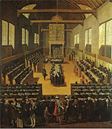 Synod of DortEventThe Synod of Dort was an international assembly of the Reformed churches held at Dordrecht in the Dutch Republic in 1618–1619.
- Synod of WhitbyEventThe Synod of Whitby was a church council held in 664 at the abbey of Whitby, presided over by King Oswiu of Northumbria.
 Synthetic dyeTermSynthetic dyes are colourants produced by industrial chemistry rather than extracted from plants or animals, a technology that developed rapidly from the mid-nineteenth…
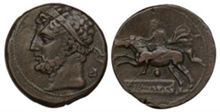 SyphaxPersonSyphax was king of the Masaesyli of western Numidia in the late 3rd century BCE, ruling from Siga and later Cirta.
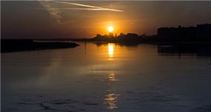 Syr DaryaPlaceThe Syr Darya is a major river of Central Asia that flows from the Tian Shan mountains north-westwards to the Aral Sea.
 SyriaPlaceSyria is a historical region of the eastern Mediterranean, lying between Anatolia, Mesopotamia, Arabia and Egypt.
 Syria PalaestinaPlaceSyria Palaestina was the Roman province formed when the emperor Hadrian renamed the province of Judaea after crushing the Bar Kokhba revolt in 135 CE.
- SyriacTermSyriac is a dialect of Aramaic that became the main literary and liturgical language of many Christian communities in the Near East from the early centuries CE.
 Syriac ChristiansPeople / groupSyriac Christians are the Christian communities of the Middle East whose liturgy and literature use Syriac, a form of Aramaic.
 Syrian Coastal Mountain RangePlaceThe Syrian Coastal Mountain Range runs north to south parallel to the Mediterranean coast of Syria, between the coastal plain and the Orontes valley, rising to about…
 Syrian National CongressInstitutionThe Syrian National Congress was an assembly of delegates from Syria, Lebanon and Palestine that met in Damascus in 1919 and 1920.
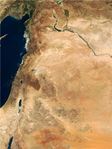 Syrian WarsWarThe Syrian Wars were a series of conflicts fought between the Ptolemaic and Seleucid kingdoms during the third and second centuries BCE.
 SyrizaPeople / groupSyriza, the Coalition of the Radical Left, is a Greek left-wing party formed as an electoral alliance in 2004 and as a single party in 2012.
- SyrmiaPlaceSyrmia is a fertile region between the Danube and Sava rivers, today divided between Serbia and Croatia.
- SyrmusPersonSyrmus was king of the Triballi, a Thracian people of the plains south of the Danube, at the time of Alexander the Great's northern campaign of 335 BCE.
- Syro-Ephraimite WarWar · c. 735–732 BCEThe Syro-Ephraimite War was a conflict of about 735–732 BCE in which Rezin of Aram-Damascus and Pekah of Israel, or Ephraim, attacked Judah after its king Ahaz refused…
 SyrosPlaceSyros is a Greek island in the Cyclades in the Aegean Sea.
- Syrym DatulyPersonSyrym Datuly was a Kazakh batyr of the Baiuly tribes of the Junior Zhuz who led a revolt from 1783 to 1797 against Russian colonial pressure and the khans who…
 Systema NaturaeWork / monumentSystema Naturae is the work in which Carl Linnaeus set out his classification of nature into the three kingdoms of animals, plants and minerals, divided into classes…
 SzczecinPlaceSzczecin (German: Stettin) is a port city in north-western Poland on the lower Oder, near the Baltic.
 SzegedPlaceSzeged is the largest city of southern Hungary, on the Tisza River near the Serbian and Romanian borders.
 SzékelysPeople / groupThe Székelys, or Szeklers, are a Hungarian-speaking people living mainly in south-eastern Transylvania, in present-day Romania.
 SzékesfehérvárPlaceSzékesfehérvár is a city in central Hungary, between Lake Balaton and Budapest.
- SzlachtaPeople / groupThe szlachta was the hereditary noble class of Poland and later of the Polish-Lithuanian Commonwealth.
 Sæberht of EssexPersonSæberht was king of the East Saxons from about 604 until about 616 and the first Christian king of Essex.
 Søren KierkegaardPersonSøren Kierkegaard was a Danish philosopher and theologian, regarded as the first existentialist.
 SłupskPlaceSłupsk (German: Stolp) is a city in the Pomeranian Voivodeship of northern Poland, on the Słupia river near the Baltic coast.