Inventions & Discoveries · Writing and counting
Zero
Zero is the number for an empty quantity and the placeholder digit of positional notation, which in its modern use derives from India, where a Jain text internally dated to 458 CE uses a decimal place-value system including zero. Brahmagupta set out rules for calculating with zero in the 7th century, and Islamic mathematicians, among them al-Khwarizmi, transmitted it to Europe, where Fibonacci popularised it. Mesoamerica used zero independently, in Long Count dates from 36 BCE.

On the inventions tree
- First known
- 458 CE
- Where
- India
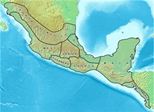
Also arose independentlyMesoamerica: south-central Mexico and Central America (earliest at Chiapa de Corzo, Chiapas) (36 BCE)
NotePlaceholder zeros are older, in Babylonian texts from about 700 BCE, and Ptolemy used a zero by 150 CE; Brahmagupta set out rules for calculating with zero in the 7th century.
See also




Cite this entry
- APA
- The Epoch Institute. (2026). Zero. In The Epoch Institute Encyclopedia. https://the-epoch-institute.org/encyclopedia/zero
- MLA
- “Zero.” The Epoch Institute Encyclopedia, The Epoch Institute, 2026, https://the-epoch-institute.org/encyclopedia/zero. Accessed .
- Chicago
- The Epoch Institute. “Zero.” The Epoch Institute Encyclopedia. 2026. https://the-epoch-institute.org/encyclopedia/zero.
- Harvard
- The Epoch Institute (2026) ‘Zero’, The Epoch Institute Encyclopedia. Available at: https://the-epoch-institute.org/encyclopedia/zero (Accessed: ).
Last reviewed October 2026Random entry ↻