Glossary · Term
Hindu–Arabic numeral system
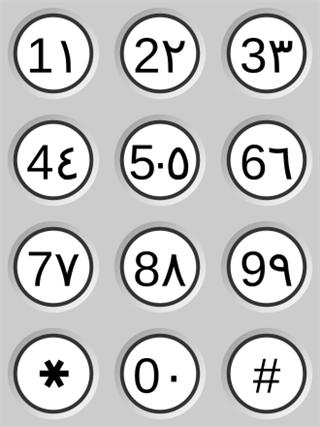
The Hindu–Arabic numeral system is the decimal place-value system of writing numbers with ten digits, including zero, used throughout the world today. It developed in India by the 6th or 7th century, was taken up by mathematicians of the Islamic world such as al-Khwarizmi, and reached Europe through Spain and Italy. Fibonacci's Liber Abaci of 1202 did much to spread it among European merchants.
Mentioned in 1 state history
See also







Cite this entry
- APA
- The Epoch Institute. (2026). Hindu–Arabic numeral system. In The Epoch Institute Encyclopedia. https://the-epoch-institute.org/encyclopedia/hindu-arabic-numeral-system
- MLA
- “Hindu–Arabic numeral system.” The Epoch Institute Encyclopedia, The Epoch Institute, 2026, https://the-epoch-institute.org/encyclopedia/hindu-arabic-numeral-system. Accessed .
- Chicago
- The Epoch Institute. “Hindu–Arabic numeral system.” The Epoch Institute Encyclopedia. 2026. https://the-epoch-institute.org/encyclopedia/hindu-arabic-numeral-system.
- Harvard
- The Epoch Institute (2026) ‘Hindu–Arabic numeral system’, The Epoch Institute Encyclopedia. Available at: https://the-epoch-institute.org/encyclopedia/hindu-arabic-numeral-system (Accessed: ).
Last reviewed October 2026Random entry ↻