Person
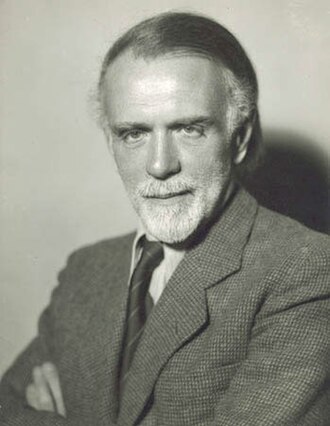
Zoltán Kodály
Zoltán Kodály was a Hungarian composer, ethnomusicologist and music educator, born in Kecskemét, known for the Kodály method of music teaching. From 1905 he recorded folk songs in remote villages on phonograph cylinders and introduced his friend Béla Bartók to folk-song collecting. His works blend Western European styles with Hungarian folk music; his first major success was the Psalmus Hungaricus in 1923, followed by Háry János (1926) and the Dances of Galánta (1933). From 1935 he worked to reform music teaching in Hungary's schools, and his principles, built on singing and on folk songs in the pupils' mother tongue, spread after the Second World War. He died in Budapest in 1967.
Songs in history
See also



Cite this entry
- APA
- The Epoch Institute. (2026). Zoltán Kodály. In The Epoch Institute Encyclopedia. https://the-epoch-institute.org/encyclopedia/zoltan-kodaly
- MLA
- “Zoltán Kodály.” The Epoch Institute Encyclopedia, The Epoch Institute, 2026, https://the-epoch-institute.org/encyclopedia/zoltan-kodaly. Accessed .
- Chicago
- The Epoch Institute. “Zoltán Kodály.” The Epoch Institute Encyclopedia. 2026. https://the-epoch-institute.org/encyclopedia/zoltan-kodaly.
- Harvard
- The Epoch Institute (2026) ‘Zoltán Kodály’, The Epoch Institute Encyclopedia. Available at: https://the-epoch-institute.org/encyclopedia/zoltan-kodaly (Accessed: ).
Last reviewed October 2026Random entry ↻