Event
Byzantine Iconoclasm
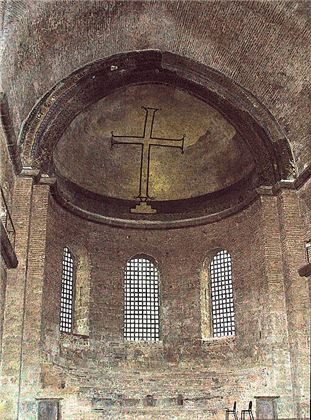
Byzantine Iconoclasm refers to two periods, 730–787 CE and 815–843 CE, during which Byzantine emperors banned the veneration of religious images and destroyed many icons. The policy provoked bitter religious and political conflict within the Byzantine Empire and strained relations with the papacy. It ended with the restoration of icon veneration in 843, still celebrated in the Orthodox Church.
Mentioned in 1 profile
Mentioned in 2 state histories
See also





Cite this entry
- APA
- The Epoch Institute. (2026). Byzantine Iconoclasm. In The Epoch Institute Encyclopedia. https://the-epoch-institute.org/encyclopedia/byzantine-iconoclasm
- MLA
- “Byzantine Iconoclasm.” The Epoch Institute Encyclopedia, The Epoch Institute, 2026, https://the-epoch-institute.org/encyclopedia/byzantine-iconoclasm. Accessed .
- Chicago
- The Epoch Institute. “Byzantine Iconoclasm.” The Epoch Institute Encyclopedia. 2026. https://the-epoch-institute.org/encyclopedia/byzantine-iconoclasm.
- Harvard
- The Epoch Institute (2026) ‘Byzantine Iconoclasm’, The Epoch Institute Encyclopedia. Available at: https://the-epoch-institute.org/encyclopedia/byzantine-iconoclasm (Accessed: ).
Last reviewed October 2026Random entry ↻